Polyclonal Antibodies
Anti-STAT1 Rabbit Polyclonal Antibody for WB, IHC-P, ELISA - P42224
Item Number : CM0015787
Price varies based on specs and customizations
- Application
- WB, IHC-P, ELISA
- Cross Reactivity
- Human, Mouse, Rat
- Protein Weight
- 87kDa

Shipping:
Contact us to get shipping details Enjoy On-time Dispatch Guarantee.
Why Choose Us
Easy ordering process, quality products, and dedicated support for your business success.
Core Product Specifications and Parameters
| Parameter | Value |
|---|---|
| Product Name | STAT1 Rabbit pAb |
| Remarks/Alias | CANDF7; IMD31A; IMD31B; IMD31C; ISGF-3; STAT91; STAT1 |
| Species | Human |
| GeneID (Human) | 6772 |
| GeneID | 6772 |
| Immunogen | A synthetic peptide corresponding to a sequence within amino acids 513-712 of human STAT1 (NP_009330.1). |
| Source | Rabbit |
| Category | Polyclonal Antibodies |
| Application | WB, IHC-P, ELISA |
| Cross Reactivity | Human, Mouse, Rat |
| SWISS | P42224 |
| Protein Weight | 87kDa |
| Shipping | Ice bag |
Biological Background: STAT1 Function and Localization
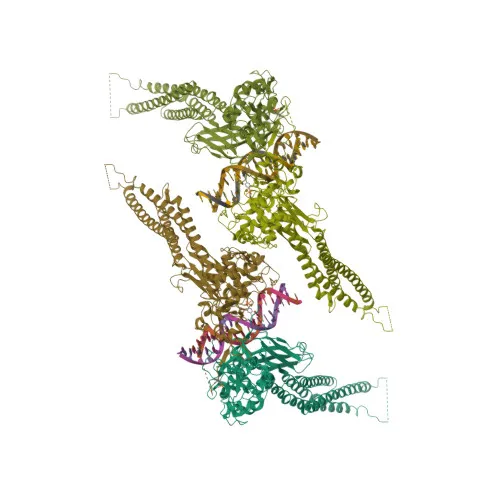
- STAT1 is a signal transducer and transcription activator that mediates cellular responses to interferons (IFNs), cytokines, and growth factors. Related references: PMID:12764129 PMID:12855578 PMID:15322115
- Upon type I IFN stimulation, STAT1 is tyrosine-phosphorylated and forms the ISGF3 complex with STAT2 and IRF9, which translocates to the nucleus and binds ISRE to activate interferon-stimulated genes. Related references: PMID:28753426 PMID:35568036
- In response to type II IFN (IFN-gamma), STAT1 is tyrosine- and serine-phosphorylated, homodimerizes to form GAF, and binds GAS elements to drive antiviral gene expression. Related references: PMID:8156998 PMID:26479788
- STAT1 also mediates signaling from KITLG/SCF, FGFRs, and TLR4 pathways, indicating broad involvement in immune and cellular responses. Related references: PMID:15526160 PMID:19088846 PMID:32209697
- Alternative splicing produces STAT1 alpha (p91) and STAT1 beta (p84) isoforms, which differ in their C-terminal transactivation domains.
- Subcellular localization is primarily cytoplasmic, with nuclear translocation upon activation.
- Post-translational modifications include tyrosine and serine phosphorylation, acetylation, ADP-ribosylation, methylation, and ubiquitination, regulating its activity.
- STAT1 plays a role in food tolerance in the small intestine by associating with Gasdermin-D p13 and promoting CIITA transcription for Tr1 cell induction.
Experimental Guidance and Technical Tips
- The immunogen (residues 513–712) lies in the C-terminal region of human STAT1, which includes the SH2 domain and activation site; this design may yield antibodies recognizing both alpha and beta isoforms.
- For WB, IHC-P, and ELISA, consider optimal antibody dilutions by testing in the relevant sample system, as reactivity and background can vary.
- Cross-reactivity with mouse and rat is reported; however, it is advisable to validate performance in each species and application experimentally.
CamelBio: Your One-Stop Sourcing Bridge
CamelBio provides diagnostic manufacturers, laboratories, and research institutes with one-stop access to IVD raw materials, technical services, and consulting—covering every stage from concept to clinic. This anti-STAT1 antibody supports research into interferon signaling and immune regulation, a critical area for infectious disease and oncology diagnostic development. Our comprehensive portfolio includes validated antibody pairs, optimized polyclonal and monoclonal antibodies, bulk ancillary reagents, and rare target raw-material sourcing to accelerate your assay development.
REQUEST A QUOTE
Our professional team will reply to you within one business day. Please feel free to contact us!