Polyclonal Antibodies
Anti-SSTR1 Rabbit Polyclonal Antibody for WB, ELISA - P30872
Item Number : CM0026124
Price varies based on specs and customizations
- Application
- WB, ELISA
- Cross Reactivity
- Human, Rat
- Protein Weight
- 43kDa

Shipping:
Contact us to get shipping details Enjoy On-time Dispatch Guarantee.
Why Choose Us
Easy ordering process, quality products, and dedicated support for your business success.
Core Product Specifications and Parameters
| Parameter | Value |
|---|---|
| Product Name | SSTR1 Rabbit pAb |
| Remarks/Alias | SS1R, SST1, SS1-R, SRIF-2, SS-1-R, SSTR1 |
| Species | Human |
| Gene ID | 6751 (human) |
| Immunogen | Recombinant fusion protein containing a sequence corresponding to amino acids 1-56 of human SSTR1 (NP_001040.1) |
| Source | Rabbit |
| Category | Polyclonal Antibodies |
| Application | WB, ELISA |
| Cross Reactivity | Human, Rat |
| SWISS | P30872 |
| Protein Weight | 43kDa |
| Shipping | Ice bag |
Biological Background: SSTR1 Function and Localization
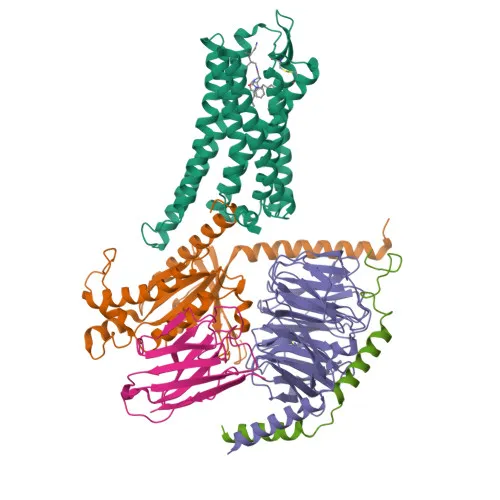
- SSTR1 is a high-affinity receptor for somatostatin-14 over somatostatin-28, belonging to the G protein-coupled receptor (GPCR) superfamily.
- It mediates signaling through pertussis toxin-sensitive G proteins to inhibit adenylyl cyclase activity, reducing intracellular cAMP levels.
- Additionally, SSTR1 stimulates phosphotyrosine phosphatase activity and activates the Na(+)/H(+) exchanger via pertussis toxin-insensitive G proteins.
- The receptor is localized to the cell membrane and features seven transmembrane domains, along with post-translational modifications such as glycosylation and palmitoylation.
- SSTR1 is expressed in fetal kidney and liver, as well as in adult pancreas, brain, lung, jejunum, and stomach.
- The protein has a predicted molecular weight of approximately 42.7 kDa (UniProt), with observed bands around 43 kDa in experimental settings.
- As a disulfide bond-containing glycoprotein and lipoprotein, SSTR1 participates in diverse signaling pathways relevant to neuroendocrine and gastrointestinal research.
Experimental Guidance and Technical Tips
- The immunogen corresponds to the N-terminal extracellular region (aa 1-56), which is a target for antibody binding in native and denaturing conditions, supporting use in WB.
- For WB, consider using a whole-cell or membrane fraction lysate from human or rat tissues known to express SSTR1 (e.g., pancreas, brain, or stomach) to validate specificity.
- In ELISA, the recombinant immunogen or full-length SSTR1 protein can serve as a coating antigen; cross-reactivity with rat SSTR1 suggests utility in rat model studies.
- Optimization of primary antibody dilution and blocking conditions is recommended, as non-specific binding may occur due to the polyclonal nature of the antibody.
- Confirm detection of the ~43 kDa band under reducing and non-reducing conditions to assess potential disulfide bond-dependent epitopes.
CamelBio: Your One-Stop Sourcing Bridge
CamelBio provides a comprehensive portfolio of IVD raw materials, including validated antibody pairs, optimized monoclonal and polyclonal antibodies, and ancillary reagents. For GPCR-focused projects like SSTR1 research, we offer one-stop sourcing from concept to clinic, streamlining your diagnostic development workflow. Our expertise covers rare targets and bulk supply, ensuring consistent quality for your assay needs.
REQUEST A QUOTE
Our professional team will reply to you within one business day. Please feel free to contact us!