Polyclonal Antibodies
Anti-SSRP1 Polyclonal Antibody for WB, IHC-P, IF/ICC, ELISA - Q08945
Item Number : CM0025291
Price varies based on specs and customizations
- Application
- WB, IHC-P, IF/ICC, ELISA
- Cross Reactivity
- Human, Mouse
- Protein Weight
- 81kDa

Shipping:
Contact us to get shipping details Enjoy On-time Dispatch Guarantee.
Why Choose Us
Easy ordering process, quality products, and dedicated support for your business success.
Core Product Specifications and Parameters
| Parameter | Specification |
|---|---|
| Product Name | SSRP1 Rabbit pAb |
| Remarks/Alias | FACT; T160; FACT80; SSRP1 |
| Species | Human |
| Gene ID (Human) | 6749 |
| Gene ID | 6749 |
| Immunogen | Recombinant fusion protein containing a sequence corresponding to amino acids 1-300 of human SSRP1 (NP_003137.1). |
| Source | Rabbit |
| Category | Polyclonal Antibodies |
| Application | WB, IHC-P, IF/ICC, ELISA |
| Cross Reactivity | Human, Mouse |
| SWISS | Q08945 |
| Protein Weight | 81kDa |
| Shipping | Ice bag |
Biological Background: SSRP1 Function and Localization
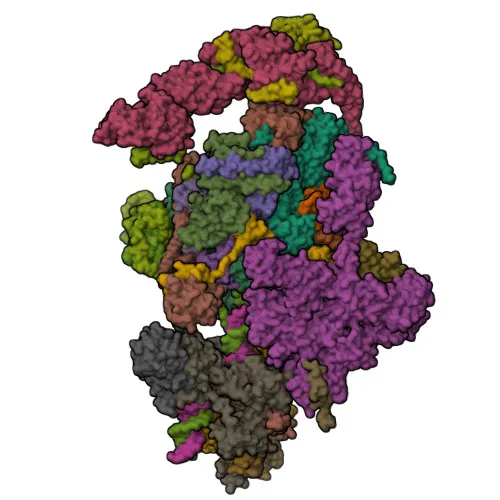
- SSRP1 (Structure Specific Recognition Protein 1) is the 80 kDa subunit of the Facilitates Chromatin Transcription (FACT) complex, also known as FACT80, T160, and chromatin-specific transcription elongation factor 80 kDa subunit.
- As a component of the FACT complex, SSRP1 acts as a histone chaperone that reorganizes nucleosomes during transcription elongation, DNA replication, and DNA repair.
- The FACT complex promotes RNA polymerase II passage by displacing one histone H2A-H2B dimer from nucleosomes, then facilitates nucleosome reassembly after polymerase transit.
- SSRP1 binds specifically to double-stranded DNA and, with lower affinity, to DNA modified by the antitumor agent cisplatin, and may enhance cisplatin-induced cytotoxicity by blocking repair of damaged DNA.
- Beyond its chromatin roles, SSRP1 functions as a transcriptional coactivator for p63/TP63 and may mediate phosphorylation of p53 via associated casein kinase II.
- Subcellularly, SSRP1 localizes predominantly to the nucleus, with enrichment in nucleoli and on chromosomes, consistent with its roles in DNA-templated processes.
- Post-translational modifications include acetylation, phosphorylation, and ubiquitin conjugation, which likely regulate its activity in chromatin dynamics and transcription.
Experimental Guidance and Technical Tips
- The immunogen sequence (amino acids 1–300) encompasses the N-terminal region of human SSRP1, which is highly conserved and may contribute to cross-reactivity with mouse. Validate reactivity in your specific sample system.
- For Western blotting, an approximately 81 kDa band corresponding to full-length SSRP1 is expected; consider using nuclear-enriched lysates to enhance signal.
- In immunohistochemistry (paraffin sections, IHC-P), standard antigen retrieval methods (e.g., citrate buffer) may be employed, and nuclear staining is anticipated.
- For immunofluorescence/immunocytochemistry (IF/ICC), permeabilization is necessary and co-staining with nuclear markers can confirm localization.
- This antibody is also applicable for ELISA-based assays; optimal dilution and coating conditions should be determined empirically.
- Species cross-reactivity is reported for human and mouse; for other species, sequence homology analysis of the immunogen region is recommended before use.
CamelBio: Your One-Stop Sourcing Bridge
CamelBio is your one-stop sourcing bridge for IVD raw materials, supporting diagnostic manufacturers with validated antibodies, bulk reagents, and rare-target procurement. The SSRP1 polyclonal antibody aids studies in chromatin dynamics, transcription, and DNA damage pathways. We supply optimized research tools and ancillary materials to accelerate your assay development from research to clinic.
REQUEST A QUOTE
Our professional team will reply to you within one business day. Please feel free to contact us!