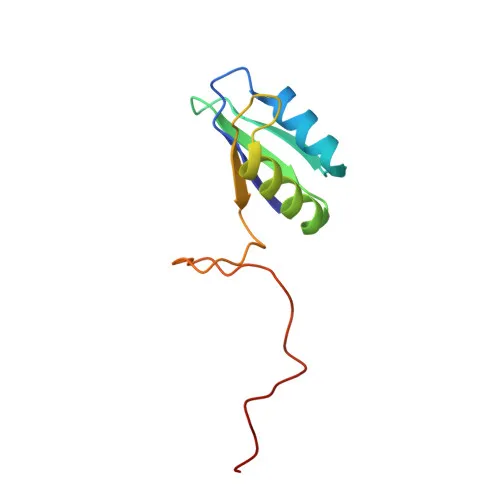
Polyclonal Antibodies
Anti-SRSF7 Rabbit Polyclonal Antibody for WB, IHC-P, IF/ICC, ELISA - Q16629
Item Number : CM0018804
Price varies based on specs and customizations
- Application
- WB, IHC-P, IF/ICC, ELISA
- Cross Reactivity
- Human, Mouse, Rat
- Protein Weight
- 27kDa

Shipping:
Contact us to get shipping details Enjoy On-time Dispatch Guarantee.
Why Choose Us
Easy ordering process, quality products, and dedicated support for your business success.
Core Product Specifications and Parameters
| Parameter | Value |
|---|---|
| Product Name | SRSF7 Rabbit pAb |
| Remarks/Alias | 9G8; AAG3; SFRS7; SRSF7 |
| Species | Human |
| GeneID (human) | 6432 |
| GeneID | 6432 |
| Immunogen | Recombinant fusion protein containing a sequence corresponding to amino acids 60-120 of human SRSF7 (NP_001026854). |
| Source | Rabbit |
| Category | Polyclonal Antibodies |
| Application | WB, IHC-P, IF/ICC, ELISA |
| Cross Reactivity | Human, Mouse, Rat |
| SWISS | Q16629 |
| Protein Weight | 27kDa |
| Shipping | Ice bag |
Biological Background: SRSF7 Function and Localization
- SRSF7, also known as 9G8 or SFRS7, is a serine/arginine-rich (SR) splicing factor that belongs to the SR protein family. It is involved in both constitutive and alternative pre-mRNA splicing.
- It functions as a core component of the spliceosome, participating in the recognition and selection of splice sites during pre-mRNA processing.
- SRSF7 also acts as a splicing repressor; for example, it represses the splicing of MAPT/Tau exon 10, influencing tau protein isoform expression.
- Beyond splicing, SRSF7 serves as an mRNA export adapter, mediating the nuclear export of specific mRNAs such as histone H2A via interaction with the NXF1-NXT1 heterodimer (TAP/NXF1 pathway).
- The protein exhibits semi-sequence specific RNA-binding activity and enhances the RNA-binding capacity of the NXF1-NXT1 complex.
- Subcellularly, SRSF7 localizes to both the nucleus and the cytoplasm, consistent with its dual roles in splicing and mRNA export.
- According to UniProt, SRSF7 is subject to post-translational modifications including phosphorylation, acetylation, and ubiquitin-like conjugation, which may regulate its activity.
- It contains a zinc-finger domain and is expressed in a variety of tissues, including brain, liver, kidney, and lung.
Experimental Guidance and Technical Tips
- The immunogen used for this antibody corresponds to amino acids 60–120 of human SRSF7, a region that may be conserved across species; consider verifying sequence homology for your target organism.
- For Western blot (WB), SRSF7 has a predicted molecular weight of ~27 kDa; ensure appropriate gel percentage and transfer conditions to detect this band.
- When performing immunohistochemistry (IHC-P), antigen retrieval protocols may influence staining; optimization for your specific tissue type is recommended.
- In immunofluorescence (IF/ICC), SRSF7 may localize to both nuclear and cytoplasmic compartments; include appropriate permeabilization and controls to distinguish subcellular distribution.
- For ELISA applications, titrate the antibody concentration against the recombinant protein or cell lysates to determine optimal working dilutions.
CamelBio: Your One-Stop Sourcing Bridge
SRSF7 is a key player in pre-mRNA splicing and mRNA export, making it a valuable target for RNA processing research and diagnostic development. CamelBio provides comprehensive access to IVD raw materials, including validated antibody pairs, optimized monoclonal and polyclonal antibodies like anti-SRSF7, bulk ancillary reagents, and sourcing for rare targets across the splicing pathway. Whether you are developing routine assays or exploring novel biomarkers, our one-stop supply platform bridges the gap from concept to clinic with reliable, research-grade materials and expert technical consultation.
Product Datasheet
Anti-SRSF7 Rabbit Polyclonal Antibody for WB, IHC-P, IF/ICC, ELISA - Q16629
REQUEST A QUOTE
Our professional team will reply to you within one business day. Please feel free to contact us!