Polyclonal Antibodies
Anti-SRF Rabbit Polyclonal Antibody for WB, IHC-P, ELISA - P11831
Item Number : CM0026216
Price varies based on specs and customizations
- Application
- WB, IHC-P, ELISA
- Cross Reactivity
- Human, Mouse, Rat
- Protein Weight
- 52kDa

Shipping:
Contact us to get shipping details Enjoy On-time Dispatch Guarantee.
Why Choose Us
Easy ordering process, quality products, and dedicated support for your business success.
Core Product Specifications and Parameters
| Parameter | Value |
|---|---|
| Product Name | SRF Rabbit pAb |
| Remarks/Alias | MCM1; SRF |
| Species | Human |
| Gene ID (Human) | 6722 |
| Gene ID | 6722 |
| Immunogen | Synthetic peptide; A synthetic peptide corresponding to a sequence within amino acids 321-420 of human SRF (NP_003122.1). |
| Source | Rabbit |
| Category | Polyclonal Antibodies |
| Application | WB, IHC-P, ELISA |
| Cross Reactivity | Human, Mouse, Rat |
| SWISS | P11831 |
| Protein Weight | 52kDa |
| Shipping | Ice bag |
Biological Background: SRF Function and Localization
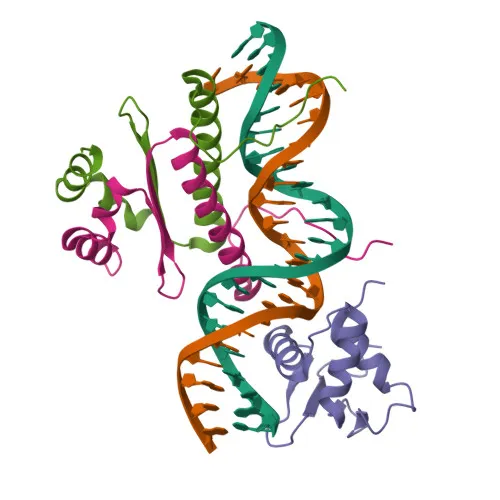
- SRF (Serum response factor), also known as MCM1, is a transcription factor that binds to the serum response element (SRE), a conserved dyad symmetry sequence found in the promoters of immediate-early genes such as FOS.
- In complex with the MRTFA coactivator, SRF regulates cytoskeletal gene expression in response to Rho GTPase signaling and changes in cellular globular actin (G-actin) concentration, linking cytoskeletal dynamics to transcriptional control.
- SRF is essential for cardiac differentiation and maturation, playing a pivotal role in heart development.
- The protein localizes exclusively to the nucleus, where it exerts its transcriptional regulatory functions.
- SRF undergoes post-translational modifications, including phosphorylation and glycosylation, which may modulate its activity and stability.
- Classified under keywords such as DNA-binding, transcription regulation, activator, and developmental protein, highlighting its central role in gene expression control.
- The molecular weight of SRF is approximately 52 kDa (UniProt: 51593 Da), consistent with the observed band in Western blotting.
Experimental Guidance and Technical Tips
- The immunogen corresponds to amino acids 321-420 of human SRF, which lies within a region rich in potential regulatory motifs; consider this for applications involving post-translational modification detection.
- For Western blotting, anticipate a band near 52 kDa; validate specificity using positive and negative control lysates from human, mouse, or rat cell lines.
- In immunohistochemistry (paraffin-embedded sections), appropriate antigen retrieval methods should be optimized for each tissue type, as nuclear localization may require permeabilization steps.
- This polyclonal antibody may be used for ELISA; titrate the concentration to achieve optimal signal-to-noise ratios in your assay system.
CamelBio: Your One-Stop Sourcing Bridge
CamelBio provides diagnostic manufacturers, laboratories, and research institutes with streamlined access to a comprehensive portfolio of IVD raw materials. For researchers focusing on transcription factors like SRF in cardiac development or cytoskeletal regulation, we offer validated antibody pairs, optimized polyclonal antibodies, bulk ancillary reagents, and customized sourcing for rare targets. Partner with us to accelerate your assay development from concept to clinic.
REQUEST A QUOTE
Our professional team will reply to you within one business day. Please feel free to contact us!