Monoclonal Antibodies
Anti-SPOP Rabbit Monoclonal Antibody for WB, ELISA - O43791
Item Number : CM0002452
Price varies based on specs and customizations
- Application
- WB, ELISA
- Cross Reactivity
- Human
- Protein Weight
- 42kDa

Shipping:
Contact us to get shipping details Enjoy On-time Dispatch Guarantee.
Why Choose Us
Easy ordering process, quality products, and dedicated support for your business success.
Core Product Specifications and Parameters
| Parameter | Value |
|---|---|
| Product Name | SPOP Rabbit mAb |
| Remarks/Alias | TEF2; BTBD32; NSDVS1; NSDVS2; NEDMACE; NEDMIDF; SPOP |
| Species | Human |
| Gene ID (Human) | 8405 |
| Gene ID | 8405 |
| Immunogen | Synthetic Peptide|A synthetic peptide corresponding to a sequence within amino acids 250-350 of human SPOP (O43791). |
| Source | Rabbit |
| Category | Monoclonal Antibodies |
| Application | WB, ELISA |
| Cross Reactivity | Human |
| SWISS | O43791 |
| Protein Weight | 42kDa |
| Shipping | Ice bag |
Biological Background: SPOP Function and Localization
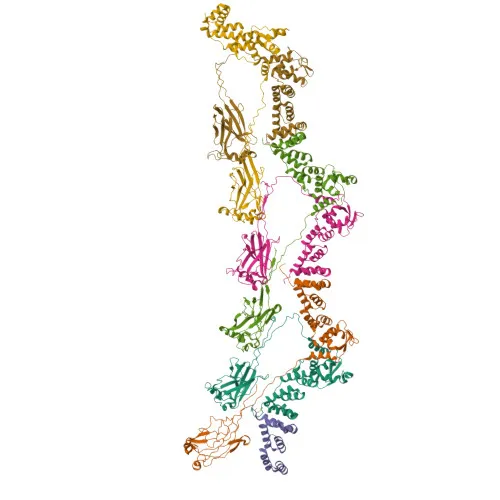
- Speckle-type POZ protein (SPOP), also known as HIB homolog 1 or Roadkill homolog 1, is the adaptor component of a cullin-RING-based BCR (BTB-CUL3-RBX1) E3 ubiquitin-protein ligase complex.
- The complex mediates ubiquitination and typically proteasomal degradation of substrates including BRMS1, DAXX, PDX1/IPF1, GLI2, and GLI3. Homodimeric SPOP exhibits higher ligase activity than heterodimers with SPOPL.
- SPOP localizes to the nucleus, nuclear speckles, and cytoplasm.
- Widely expressed across tissues.
- Functions as a host antiviral factor: induces lysosome-dependent degradation of enterovirus EV71 protease 2A via 'Lys-48'-linked polyubiquitination. Related references: PMID:37796126
- Promotes ubiquitination and degradation of HNF1A to inhibit hepatitis B virus transcription and replication. Related references: PMID:38018242
- Regulates BET proteins BRD2, BRD3, and BRD4 stability. Related references: PMID:32109420
- Essential for proper translation of DNA replication licensing factors CDT1 and CDC6, contributing to DNA synthesis and cell proliferation. Related references: PMID:36791496
- Regulates IRF1 proteasomal turnover by targeting S/T-rich degrons. Related references: PMID:37622993
- Keywords: Host-virus interaction, intellectual disability, Ubl conjugation pathway; identified by mass spectrometry.
Experimental Guidance and Technical Tips
- The immunogen is a synthetic peptide (aa 250–350 of human SPOP), ensuring epitope specificity. For WB, expect a band at ~42 kDa. Validate in human-derived samples; cross-reactivity with other species is not tested.
- For ELISA, consider using the synthetic peptide as a positive control or coating antigen. Titration may be required to optimize signal-to-noise ratio.
- This antibody has not been validated for other applications (e.g., IHC, IP); performance should be determined empirically.
- Due to SPOP’s role in ubiquitination, consider protease inhibitor cocktails during sample preparation to preserve target integrity.
CamelBio: Your One-Stop Sourcing Bridge
CamelBio provides a one-stop sourcing platform for IVD raw materials, serving diagnostic manufacturers and research labs from concept to clinic. This anti-SPOP monoclonal antibody supports studies in ubiquitin-proteasome pathways, antiviral mechanisms, and cancer biology. Beyond this product, CamelBio offers validated antibody pairs, bulk ancillary reagents, and customized sourcing for rare targets, streamlining your assay development pipeline.
REQUEST A QUOTE
Our professional team will reply to you within one business day. Please feel free to contact us!