Polyclonal Antibodies
Anti-SPATA5 Polyclonal Antibody for WB, ELISA - Q8NB90
Item Number : CM0022623
Price varies based on specs and customizations
- Application
- WB, ELISA
- Cross Reactivity
- Human, Mouse, Rat
- Protein Weight
- 98kDa

Shipping:
Contact us to get shipping details Enjoy On-time Dispatch Guarantee.
Why Choose Us
Easy ordering process, quality products, and dedicated support for your business success.
Core Product Specifications and Parameters
| Parameter | Value |
|---|---|
| Product Name | SPATA5 Rabbit pAb |
| Remarks/Alias | AFG2; SPAF; EHLMRS; NEDHSB; SPATA5 |
| Species | Human |
| GeneID (Human) | 166378 |
| GeneID | 166378 |
| Immunogen | Recombinant fusion protein containing a sequence corresponding to amino acids 228-304 of human SPATA5 (NP_001304728) |
| Source | Rabbit |
| Category | Polyclonal Antibodies |
| Application | WB, ELISA |
| Cross Reactivity | Human, Mouse, Rat |
| SWISS | Q8NB90 |
| Protein Weight | 98kDa |
| Shipping | Ice bag |
Biological Background: SPATA5 Function and Localization
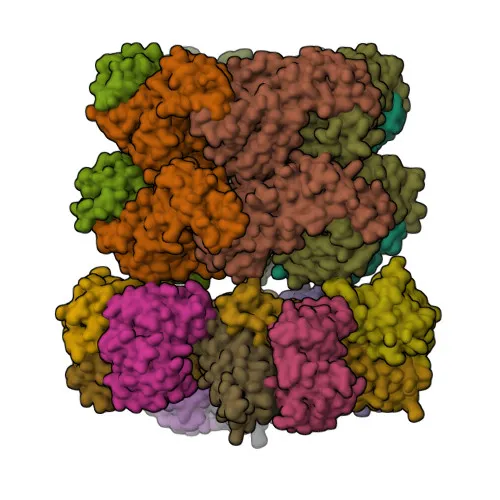
- SPATA5 (AFG2, SPAF) is an ATPase family gene 2 protein homolog A, also known as AFG2 AAA ATPase homolog A, which functions as an ATP-dependent chaperone. Related references: PMID:38554706
- It is a core component of the chromatin-associated 55LCC heterohexameric ATPase complex that promotes replisome proteostasis, ensuring replication fork progression, sister chromatid cohesion, and genome stability. Related references: PMID:38554706
- SPATA5 plays an essential role in the cytoplasmic maturation of pre-60S ribosomal particles by facilitating the release of shuttling protein RSL24D1/RLP24 from pre-ribosomes. Related references: PMID:35354024 PMID:38554706
- Subcellular localization includes the cytoplasm, mitochondrion, and cytoskeleton spindle, indicating diverse cellular roles.
- The protein features ATP-binding and nucleotide-binding domains, and undergoes phosphorylation, Ubl conjugation, and alternative splicing.
- SPATA5 is implicated in morphological and functional mitochondrial transformations during spermatogenesis (By similarity).
- Disease associations include deafness, epilepsy, and intellectual disability, consistent with its roles in ribosome biogenesis and genome maintenance.
Experimental Guidance and Technical Tips
- The immunogen sequence (aa 228–304) is conserved across human, mouse, and rat, consistent with reported cross-reactivity; validate detection in species-specific sample systems.
- For Western blotting, use whole-cell lysates from human, mouse, or rat lines. The predicted molecular weight is ~98 kDa, but migration may shift due to post-translational modifications.
- For ELISA, this polyclonal antibody can be used as capture or detection reagent; titrate to optimize coating and detection conditions.
- Due to SPATA5's involvement in chromatin and ribosome biogenesis, consider subcellular fractionation to enrich the target in cytoplasmic or nuclear extracts.
- Always include appropriate controls (e.g., knockdown or knockout lysates, isotype controls) to confirm antibody specificity.
CamelBio: Your One-Stop Sourcing Bridge
CamelBio offers diagnostic manufacturers and research labs integrated access to validated IVD raw materials, technical support, and custom sourcing from concept to clinic. For SPATA5-focused projects in chromatin biology, ribosome assembly, or spermatogenesis, CamelBio can provide this polyclonal antibody in bulk, along with optimized antibody pairs, recombinant proteins, and ancillary reagents to streamline your assay development and production workflows.
REQUEST A QUOTE
Our professional team will reply to you within one business day. Please feel free to contact us!