Polyclonal Antibodies
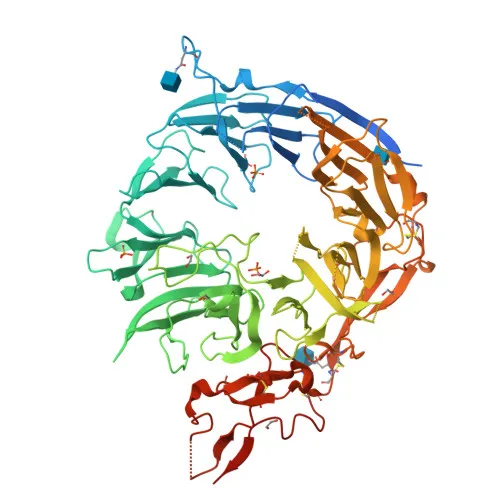
Anti-SORL1 Rabbit Polyclonal Antibody for WB, ELISA - Q92673
Item Number : CM0013835
Price varies based on specs and customizations
- Application
- WB, ELISA
- Cross Reactivity
- Human
- Protein Weight
- 248kDa

Shipping:
Contact us to get shipping details Enjoy On-time Dispatch Guarantee.
Why Choose Us
Easy ordering process, quality products, and dedicated support for your business success.
Core Product Specifications and Parameters
| Parameter | Value |
|---|---|
| Product Name | SORL1 Rabbit pAb |
| Remarks/Alias | LR11; LRP9; SORLA; gp250; SorLA-1; C11orf32; SORL1 |
| Species | Human |
| GeneID (Human) | 6653 |
| GeneID | 6653 |
| Immunogen | Recombinant fusion protein containing a sequence corresponding to amino acids 2065-2214 of human SORL1 (NP_003096.1) |
| Source | Rabbit |
| Category | Polyclonal Antibodies |
| Application | WB, ELISA |
| Cross Reactivity | Human |
| SWISS | Q92673 |
| Protein Weight | 248kDa |
| Shipping | Ice bag |
Biological Background: SORL1 Function and Localization
- SORL1 is a multi-ligand sorting receptor of the VPS10 domain family, structurally related to the low-density lipoprotein receptor (LDLR) family, and plays a central role in intracellular protein trafficking between the trans-Golgi network and endosomes.
- It critically regulates amyloid precursor protein (APP) trafficking, retaining APP in the trans-Golgi network to prevent its amyloidogenic processing into Aβ peptides, and facilitates lysosomal degradation of Aβ; reduced SORL1 expression is implicated in Alzheimer’s disease. Related references: PMID:16174740 PMID:16407538 PMID:17855360 PMID:24523320
- SORL1 modulates neurotrophic signaling by sorting the BDNF receptor NTRK2/TRKB and the GDNF-GFRA1 complex, thereby affecting neuronal survival, differentiation, and GDNF clearance. Related references: PMID:23977241 PMID:21994944 PMID:23333276
- It is predominantly localized to Golgi, trans-Golgi network, early/recycling/multivesicular endosomes, endoplasmic reticulum, cell membrane, and secretory vesicles; a soluble form can also be secreted.
- SORL1 undergoes post-translational modifications including glycosylation, phosphorylation, disulfide bond formation, and cleavage on basic residues, and contains LDLR class A repeats and EGF-like domains.
- Highly expressed in the brain, especially cerebellum and cerebral cortex, with significantly reduced expression in the frontal cortex of Alzheimer’s disease patients; also found in spinal cord, spleen, testis, and other tissues. Related references: PMID:16174740 PMID:21147781 PMID:9157966 PMID:8940146
- SORL1 regulates metabolic signaling by sorting the insulin receptor INSR, promoting its recycling and enhancing insulin sensitivity in adipose tissue, and also sorts ERBB2/HER2, promoting cancer cell proliferation. Related references: PMID:27322061 PMID:31138794
- Additionally, its N-terminal ectodomain promotes smooth muscle cell migration, monocyte adhesion, and hypoxia-enhanced hematopoietic stem cell adhesion, implicating SORL1 in vascular injury and atherosclerosis. Related references: PMID:14764453 PMID:23486467
Experimental Guidance and Technical Tips
- The immunogen corresponds to the C-terminal region (aa 2065-2214) of human SORL1, suggesting the antibody likely recognizes epitopes within this domain; it is a polyclonal antibody, so it may detect multiple isoforms or cleavage products.
- For Western blot (WB), use a low-percentage polyacrylamide gel (e.g., 6-8%) and extended transfer times due to the high molecular weight of SORL1 (~248 kDa). Include appropriate molecular weight markers to confirm the band size.
- For ELISA, the antibody can be used as a capture or detection reagent; consider pairing it with a matched antibody pair for sandwich ELISA formats after in-house validation.
- Since this antibody is validated for human reactivity only, cross-reactivity with other species should be determined experimentally if needed.
- Optimal working dilutions for WB and ELISA should be determined empirically using relevant positive and negative control samples.
CamelBio: Your One-Stop Sourcing Bridge
As a trusted one-stop IVD raw-material partner, CamelBio supports neuroscience and Alzheimer’s disease research by offering validated antibody pairs, optimized monoclonal and polyclonal antibodies like this anti-SORL1 reagent, along with bulk ancillary reagents. We also specialize in sourcing rare targets and providing custom development services to streamline your diagnostic assay pipeline.
REQUEST A QUOTE
Our professional team will reply to you within one business day. Please feel free to contact us!