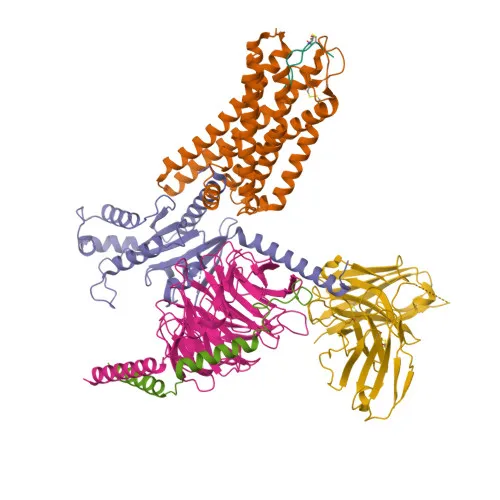
Monoclonal Antibodies
Anti-Somatostatin Receptor 2 (SSTR2) Rabbit Monoclonal Antibody for WB, ELISA - P30874
Item Number : CM0002714
Price varies based on specs and customizations
- Application
- WB, ELISA
- Cross Reactivity
- Human, Mouse, Rat
- Protein Weight
- 41kDa

Shipping:
Contact us to get shipping details Enjoy On-time Dispatch Guarantee.
Why Choose Us
Easy ordering process, quality products, and dedicated support for your business success.
Core Product Specifications and Parameters
| Parameter | Value |
|---|---|
| Product Name | Somatostatin Receptor 2 (SSTR2) Rabbit mAb |
| Remarks/Alias | SST2; Somatostatin Receptor 2 (SSTR2) |
| Species | Human |
| Gene ID (Human) | 6752 |
| Gene ID | 6752 |
| Immunogen | Recombinant fusion protein containing a sequence corresponding to amino acids 302-369 of human Somatostatin Receptor 2 (SSTR2) (NP_001041.1) |
| Source | Rabbit |
| Category | Monoclonal Antibodies |
| Application | WB, ELISA |
| Cross Reactivity | Human, Mouse, Rat |
| SWISS | P30874 |
| Protein Weight | 41kDa |
| Shipping | Ice bag |
Biological Background: Somatostatin Receptor 2 Function and Localization
- Somatostatin receptor type 2 (SSTR2, also known as SRIF-1) is a multi-pass membrane protein encoded by the SSTR2 gene, with alternative splicing generating multiple isoforms.
- It functions as a receptor for the neuropeptides somatostatin-14 and somatostatin-28, coupling to pertussis toxin-sensitive G proteins to inhibit adenylyl cyclase, reduce cAMP levels, and suppress voltage-dependent calcium channels, thereby regulating hormone secretion and neuronal activity.
- SSTR2 is the functionally dominant somatostatin receptor in pancreatic alpha- and beta-cells, mediating the inhibitory effect of somatostatin on glucagon and insulin secretion, and it negatively regulates insulin receptor signaling through PTPN6.
- The receptor inhibits cell growth by enhancing MAPK1/MAPK2 phosphorylation leading to upregulation of the cyclin-dependent kinase inhibitor CDKN1B, and it stimulates neuronal migration and axon outgrowth during brain development.
- Upon heterodimerization, SSTR2 inactivates SSTR3 receptor function, adding a layer of regulatory crosstalk within the somatostatin receptor family.
- Subcellularly, SSTR2 is primarily located at the cell membrane but can also be found in the cytoplasm.
- Tissue expression includes high levels in pancreas, cerebrum, kidney, and lower levels in jejunum, colon, and liver; in the developing nervous system, it is transiently expressed in the cortical preplate and cerebellar external granular layer.
- Post-translational modifications include N-linked glycosylation, disulfide bond formation, palmitoylation, and phosphorylation, which are characteristic of a mature G protein-coupled receptor.
Experimental Guidance and Technical Tips
- The immunogen corresponds to the C‑terminal cytoplasmic tail (amino acids 302–369), suggesting the antibody recognizes the intracellular domain; consider using whole‑cell lysates or membrane preparations for Western blotting.
- For WB, the predicted molecular weight of unmodified SSTR2 is ~41 kDa, but glycosylation and other modifications may cause the observed band to appear larger; validate in cell lines with known SSTR2 expression (e.g., pancreatic islet cells, neuroendocrine tumor lines).
- The antibody has documented cross‑reactivity with human, mouse, and rat; if working with other species, verify sequence homology of the immunogen region.
- For ELISA, the antibody may be used as a capture or detection reagent; optimize coating conditions and consider pairing with another SSTR2 antibody if developing a sandwich assay.
- Always include appropriate positive and negative controls, and titrate the antibody using the recommended starting dilutions for your specific assay format.
CamelBio: Your One-Stop Sourcing Bridge
As a dedicated IVD raw‑material partner, CamelBio offers one‑stop access to high‑quality antibodies, antigens, and ancillary reagents for diagnostic development. This anti‑SSTR2 rabbit monoclonal antibody exemplifies our portfolio for neuroscience and oncology biomarker research, and we can additionally supply validated antibody pairs, bulk‑scale monoclonal/polyclonal antibodies, and rare‑target sourcing services. Contact our team to streamline your procurement and accelerate your assay development from concept to clinic.
Product Datasheet
Anti-Somatostatin Receptor 2 (SSTR2) Rabbit Monoclonal Antibody for WB, ELISA - P30874
REQUEST A QUOTE
Our professional team will reply to you within one business day. Please feel free to contact us!