Polyclonal Antibodies
Anti-SNX1 Rabbit pAb for WB - Q13596
Item Number : CM0025990
Price varies based on specs and customizations
- Application
- WB, IF/ICC, ELISA
- Cross Reactivity
- Human, Mouse, Rat
- Protein Weight
- 59kDa

Shipping:
Contact us to get shipping details Enjoy On-time Dispatch Guarantee.
Why Choose Us
Easy ordering process, quality products, and dedicated support for your business success.
Core Product Specifications and Parameters
| Parameter | Description |
|---|---|
| Product Name | SNX1 Rabbit pAb |
| Remarks/Alias | VPS5; HsT17379; SNX1 |
| Species | Human |
| Gene ID (Human) | 6642 |
| Gene ID | 6642 |
| Immunogen | Recombinant fusion protein containing a sequence corresponding to amino acids 1-150 of human SNX1 (NP_003090.2) |
| Source | Rabbit |
| Category | Polyclonal Antibodies |
| Application | WB, IF/ICC, ELISA |
| Cross Reactivity | Human, Mouse, Rat |
| SWISS | Q13596 |
| Protein Weight | 59kDa |
| Shipping | Ice bag |
Biological Background: SNX1 Function and Localization
-
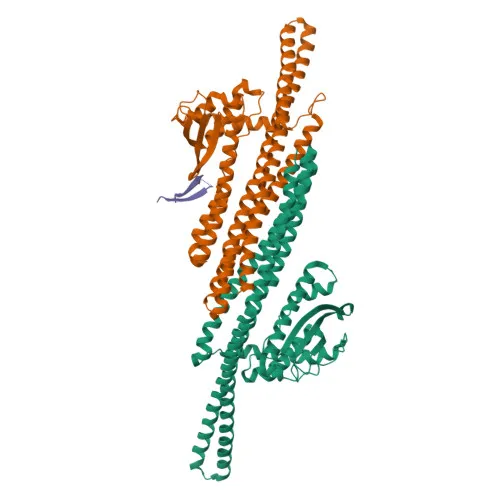
SNX1 is a core component of the retromer SNX-BAR subcomplex, which deforms endosomal membranes into tubules for retrograde transport of cargo proteins from endosomes to the trans-Golgi network. It directly interacts with phosphatidylinositol 3-phosphate (PtdIns(3P)) and PtdIns(3,5)P2 on membranes.
Related references: PMID:12198132, PMID:19816406, PMID:23085988 -
SNX1 targets ligand-activated epidermal growth factor receptor (EGFR) to lysosomes for degradation, ensuring proper signal attenuation after endocytosis.
Related references: PMID:12198132, PMID:15498486, PMID:17101778 -
Beyond retromer, SNX1 participates in retromer-independent endocytic trafficking and lysosomal degradation of receptors such as P2RY1 and protease-activated receptor-1 (PAR1/F2R).
Related references: PMID:16407403, PMID:20070609 -
SNX1 promotes KALRN- and RHOG-dependent membrane remodeling, including lamellipodium formation, independent of the retromer complex.
Related references: PMID:20604901 -
Agonist-induced endocytosis of dopamine receptor DRD5 requires SNX1, while basal receptor trafficking does not.
Related references: PMID:23152498 -
Subcellularly, SNX1 localizes to endosome membranes, the trans-Golgi network, early endosomes, and lamellipodia, consistent with its multifaceted trafficking roles.
-
Post-translational modifications include acetylation and phosphorylation, and the gene undergoes alternative splicing, generating multiple isoforms.
Experimental Guidance and Technical Tips
- For Western blot, expect a band near 59 kDa; consider using positive controls such as HeLa or HEK293 cell lysates known to express SNX1.
- In immunofluorescence, anticipate punctate cytoplasmic and perinuclear staining patterns corresponding to endosomes and the trans-Golgi network.
- The polyclonal nature may provide robust signal but validate the antibody in your specific sample system and optimize dilutions for your application.
- Since the immunogen covers the N-terminal 150 amino acids, the antibody may recognize multiple isoforms containing this region.
CamelBio: Your One-Stop Sourcing Bridge
CamelBio serves as a one-stop sourcing partner for IVD raw materials, offering high-quality antibodies like this anti-SNX1 polyclonal antibody to advance endosomal trafficking research. Our comprehensive portfolio includes validated antibody pairs, optimized monoclonal/polyclonal antibodies, bulk ancillary reagents, and rare target raw-material sourcing, supporting diagnostic manufacturers and laboratories from concept to clinic.
REQUEST A QUOTE
Our professional team will reply to you within one business day. Please feel free to contact us!