Polyclonal Antibodies
Anti-SNRPD3 Rabbit Polyclonal Antibody for WB, ELISA - P62318
Item Number : CM0018272
Price varies based on specs and customizations
- Application
- WB, ELISA
- Cross Reactivity
- Human, Mouse, Rat
- Protein Weight
- 14kDa

Shipping:
Contact us to get shipping details Enjoy On-time Dispatch Guarantee.
Why Choose Us
Easy ordering process, quality products, and dedicated support for your business success.
Core Product Specifications and Parameters
| Parameter | Value |
|---|---|
| Product Name | SNRPD3 Rabbit pAb |
| Remarks/Alias | SMD3; Sm-D3; SNRPD3 |
| Species | Human |
| GeneID (human) | 6634 |
| GeneID | 6634 |
| Immunogen | Recombinant fusion protein containing a sequence corresponding to amino acids 8-121 of human SNRPD3 (NP_001265585) |
| Source | Rabbit |
| Category | Polyclonal Antibodies |
| Application | WB, ELISA |
| Cross Reactivity | Human, Mouse, Rat |
| SWISS | P62318 |
| Protein Weight | 14kDa |
| Shipping | Ice bag |
Biological Background: SNRPD3 Function and Localization
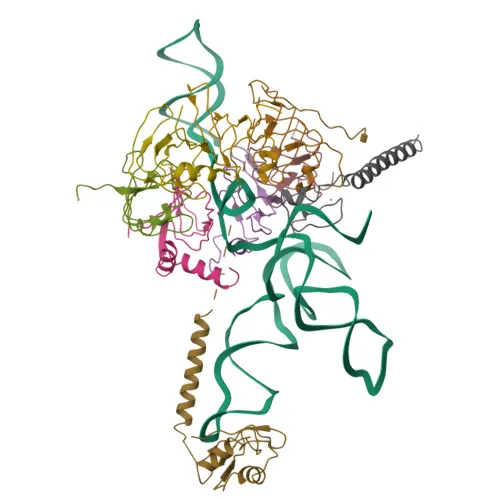
- SNRPD3 encodes Sm-D3, a core protein component of the U1, U2, U4, and U5 small nuclear ribonucleoproteins (snRNPs), which are essential building blocks of the major spliceosome.
Related references: PMID:11991638, PMID:18984161, PMID:19325628 - It is present in both the pre-catalytic spliceosome B complex and the activated C complex, participating directly in the catalytic steps of pre-mRNA splicing.
Related references: PMID:11991638, PMID:28076346, PMID:28502770 - Beyond the major spliceosome, SNRPD3 is also a component of the minor spliceosome, where it mediates the splicing of rare U12-type introns found in a subset of human pre-mRNAs.
Related references: PMID:15146077, PMID:33509932 - As part of the U7 snRNP, Sm-D3 participates in the 3′-end processing of histone pre-mRNAs, linking it to cell-cycle-dependent histone biosynthesis (by similarity).
- The protein localizes dynamically between the cytoplasm, cytosol, and nucleus, consistent with its assembly and recycling in snRNP biogenesis and splicing.
- Post-translational modifications include acetylation and methylation, and the gene undergoes alternative splicing, contributing to functional diversity and regulation.
- The antibody’s cross-reactivity with human, mouse, and rat reflects the high sequence conservation of SNRPD3 across mammalian species.
Experimental Guidance and Technical Tips
- For Western blot detection, a band at approximately 14 kDa is expected in lysates from human, mouse, or rat cells. Confirm specificity and absence of cross-reactivity in your particular sample matrix.
- Because the immunogen spans the N‑terminal region (aa 8–121) of SNRPD3, the antibody may recognize both full-length and truncated isoforms; validate in your model system if isoform discrimination is critical.
- In ELISA applications, use the recombinant immunogen as a positive control and titrate the antibody to optimize the signal-to-noise ratio.
- As a polyclonal antibody, lot‑to‑lot consistency should be verified; consider running a reference sample with each new lot when establishing long‑term protocols.
CamelBio: Your One-Stop Sourcing Bridge
CamelBio streamlines IVD raw material procurement for manufacturers and laboratories developing splicing-targeted diagnostics. This anti-SNRPD3 polyclonal antibody is part of a broader portfolio that includes validated antibody pairs, monoclonal antibodies, and bulk ancillary reagents covering spliceosome and mRNA processing targets. Our sourcing network ensures timely access to rare-target reagents, supporting your assay development from concept to clinical validation.
REQUEST A QUOTE
Our professional team will reply to you within one business day. Please feel free to contact us!