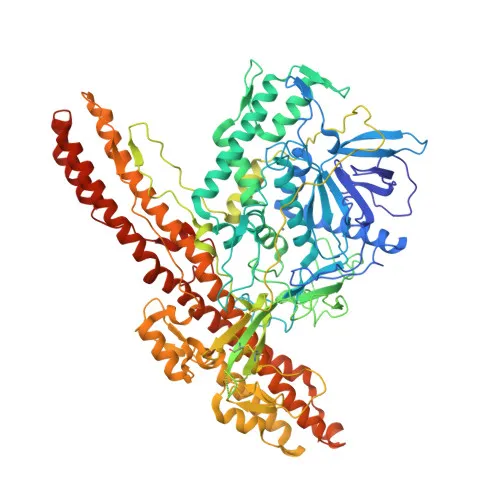
Polyclonal Antibodies
Anti-SNAP23 Polyclonal Antibody for WB, IHC-P, ELISA - O00161
Item Number : CM0018387
Price varies based on specs and customizations
- Application
- WB, IHC-P, ELISA
- Cross Reactivity
- Human, Mouse, Rat
- Protein Weight
- 23kDa

Shipping:
Contact us to get shipping details Enjoy On-time Dispatch Guarantee.
Why Choose Us
Easy ordering process, quality products, and dedicated support for your business success.
Core Product Specifications and Parameters
| Parameter | Value |
|---|---|
| Product Name | SNAP23 Rabbit pAb |
| Remarks/Alias | SNAP-23; SNAP23A; SNAP23B; HsT17016; SNAP23 |
| Species | Human |
| GeneID (Human) | 8773 |
| GeneID | 8773 |
| Immunogen | Recombinant protein; Recombinant fusion protein containing a sequence corresponding to amino acids 1-211 of human SNAP23 (NP_003816.2) |
| Source | Rabbit |
| Category | Polyclonal Antibodies |
| Application | WB, IHC-P, ELISA |
| Cross Reactivity | Human, Mouse, Rat |
| SWISS | O00161 |
| Protein Weight | 23kDa |
| Shipping | Ice bag |
Biological Background: SNAP23 Function and Localization
- SNAP23 (synaptosomal-associated protein 23) is a ubiquitously expressed t-SNARE protein, also known as vesicle-membrane fusion protein SNAP-23, and belongs to the SNARE superfamily essential for intracellular membrane fusion. Related references: PMID:10036234, PMID:11354632, PMID:8663154
- As a target-SNARE (t-SNARE) on the plasma membrane, SNAP23 functions in fusion of transport vesicles with the cell membrane, particularly in immune cells, by forming a trans-SNARE complex with other SNAREs such as STX11. Related references: PMID:30811271
- In macrophages, SNAP23 cooperates with STX11 to regulate the stimulus-dependent vesicular transport of TLR4 from recycling endosomes to the plasma membrane, playing a critical role in innate and adaptive immunity. Related references: PMID:30811271
- In skeletal muscle satellite cells, SNAP23, together with VAMP4 and STX11, facilitates CD36 vesicular transport to the plasma membrane, an essential step in muscle regeneration (By similarity).
- SNAP23 localizes to the cell membrane and is highly expressed in the placenta, though it is found in virtually all tissues.
- Post-translational modifications include acetylation, palmitoylation (a lipid modification anchoring it to the membrane), and phosphorylation, which may regulate its activity and interactions.
Experimental Guidance and Technical Tips
- The immunogen corresponds to nearly full-length SNAP23 (aa 1-211), which may provide broad epitope coverage. Consider using positive controls such as placenta lysates due to high expression.
- For WB, a band at approximately 23 kDa is expected; verify in the relevant sample system and adjust blocking/detection conditions as needed.
- Cross-reactivity with mouse and rat has been reported, but sequence alignment is recommended when extending to other species or specific isoforms.
- IHC-P may require antigen retrieval; test on known positive tissues (e.g., immune cell-rich samples) and include appropriate controls.
- ELISA performance should be validated using the recombinant immunogen or native protein, with careful optimization of coating and detection parameters.
CamelBio: Your One-Stop Sourcing Bridge
CamelBio provides diagnostic manufacturers, labs, and research institutes with one-stop access to IVD raw materials, technical services, and consulting—covering every stage from concept to clinic. For research into SNARE-mediated membrane trafficking and immune cell biology, we offer validated antibody pairs, optimized monoclonal/polyclonal antibodies, bulk ancillary reagents, and rare target raw-material sourcing. Let CamelBio bridge the gap between your project needs and global supply.
REQUEST A QUOTE
Our professional team will reply to you within one business day. Please feel free to contact us!