Polyclonal Antibodies
Anti-SMARCD1 Rabbit Polyclonal Antibody for WB and ELISA - Q96GM5
Item Number : CM0024887
Price varies based on specs and customizations
- Application
- WB, ELISA
- Cross Reactivity
- Human, Mouse, Rat
- Protein Weight
- 58kDa

Shipping:
Contact us to get shipping details Enjoy On-time Dispatch Guarantee.
Why Choose Us
Easy ordering process, quality products, and dedicated support for your business success.
Core Product Specifications and Parameters
| Parameter | Value |
|---|---|
| Product Name | SMARCD1 Rabbit pAb |
| Remarks/Alias | CSS11; Rsc6p; BAF60A; CRACD1; SMARCD1 |
| Species | Human |
| GeneID (Human) | 6602 |
| GeneID | 6602 |
| Immunogen | Recombinant fusion protein containing a sequence corresponding to amino acids 216-515 of human SMARCD1 (NP_003067.3) |
| Source | Rabbit |
| Category | Polyclonal Antibodies |
| Application | WB, ELISA |
| Cross Reactivity | Human, Mouse, Rat |
| SWISS | Q96GM5 |
| Protein Weight | 58kDa |
| Shipping | Ice bag |
Biological Background: SMARCD1 Function and Localization
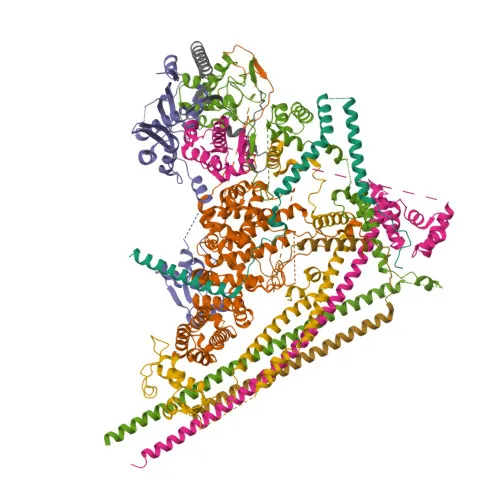
- SMARCD1 (also known as BAF60A) is a subunit of the SWI/SNF chromatin remodeling complexes that alter DNA-histone contacts within nucleosomes in an ATP-dependent manner, thereby regulating gene transcription. Related references: PMID:29374058 and PMID:8804307
- It is a component of both the neural progenitors-specific (npBAF) and neuron-specific (nBAF) chromatin remodeling complexes, with a subunit switch during neural differentiation; npBAF is essential for stem cell self-renewal, while nBAF regulates dendrite growth.
- SMARCD1 enhances vitamin D-mediated transcriptional activation via an enhancer vitamin D receptor element (VDRE) and may serve as a link between SWI/SNF complexes and the vitamin D receptor. Related references: PMID:14698202
- It mediates critical interactions between nuclear receptors and the BRG1/SMARCA4 ATPase for transcriptional transactivation. Related references: PMID:12917342
- SMARCD1 interacts with AKIRIN2.
- Localizes exclusively to the nucleus.
- Expressed broadly across tissues including brain, heart, kidney, liver, lung, muscle, pancreas, and placenta.
- Undergoes post‑translational modifications such as phosphorylation, acetylation, methylation, and ubiquitination.
Experimental Guidance and Technical Tips
- For Western blot, use whole‑cell lysates from human (e.g., HeLa), mouse, or rat cell lines; the expected molecular weight is approximately 58 kDa, though additional bands may appear due to post‑translational modifications.
- Optimize antibody dilution for each assay; a typical starting dilution for WB is 1:500–1:2000, and for ELISA consider coating at 1–5 µg/mL.
- Always include a positive control (e.g., HeLa nuclear extract) and a negative control (secondary antibody only) to confirm specificity.
- Cross‑reactivity with mouse and rat allows comparative studies, but validation in the specific sample system is recommended.
CamelBio: Your One‑Stop Sourcing Bridge
As a dedicated one‑stop IVD raw‑material partner, CamelBio supplies high‑quality research reagents like this SMARCD1 polyclonal antibody to power gene regulation and chromatin biology studies. Our portfolio encompasses validated antibody pairs, optimized monoclonal/polyclonal antibodies, bulk ancillary reagents, and rare‑target raw‑material sourcing, all designed to streamline your assay development from concept to clinic.
REQUEST A QUOTE
Our professional team will reply to you within one business day. Please feel free to contact us!