Polyclonal Antibodies
Anti-Smad5 Rabbit Polyclonal Antibody for WB, IHC-P, ELISA - Q99717
Item Number : CM0023165
Price varies based on specs and customizations
- Application
- WB, IHC-P, ELISA
- Cross Reactivity
- Human, Mouse, Rat
- Protein Weight
- 52kDa

Shipping:
Contact us to get shipping details Enjoy On-time Dispatch Guarantee.
Why Choose Us
Easy ordering process, quality products, and dedicated support for your business success.
Core Product Specifications and Parameters
| Parameter | Value |
|---|---|
| Product Name | Smad5 Rabbit pAb |
| Remarks/Alias | DWFC; JV5-1; MADH5; Smad5 |
| Species | Human |
| Gene ID (Human) | 4090 |
| Gene ID | 4090 |
| Immunogen | Synthetic peptide corresponding to a sequence within amino acids 186-465 of human Smad5 (NP_005894.3) |
| Source | Rabbit |
| Category | Polyclonal Antibodies |
| Application | WB, IHC-P, ELISA |
| Cross Reactivity | Human, Mouse, Rat |
| SWISS | Q99717 |
| Protein Weight | 52kDa |
| Shipping | Ice bag |
Biological Background: Smad5 Function and Localization
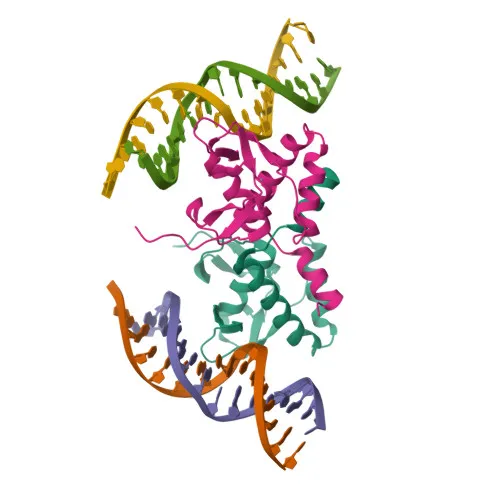
- SMAD5 is a member of the SMAD family, also known as JV5-1, Mothers against decapentaplegic homolog 5 (MAD homolog 5), encoded by the SMAD5 (MADH5) gene.
- Upon BMP ligand stimulation, SMAD5 is phosphorylated by activated type I BMP receptors (BMPRIs) and forms a complex with SMAD4. This complex translocates to the nucleus and regulates gene transcription by binding to Smad Binding Elements (SBEs) (PubMed:9442019, PubMed:33510867). Related references: PMID:9442019 PMID:33510867
- SMAD5 plays a role in various biological processes including embryonic development, cell differentiation, angiogenesis, and tissue homeostasis (PubMed:12064918, PubMed:16516194). Related references: PMID:12064918 PMID:16516194
- In its non-phosphorylated state, SMAD5 localizes to the cytoplasm and mitochondria, where it promotes mitochondrial respiration and glycolysis by interacting with hexokinase 1 (HK1) in response to cytoplasmic pH changes (PubMed:28675158). Related references: PMID:28675158
- Subcellular localization includes the cytoplasm, nucleus, and mitochondrion, reflecting its dual role in signaling transduction and energy metabolism.
- Ubiquitously expressed across various tissues.
- Post-translationally modified by phosphorylation and acetylation, and contains zinc-binding and DNA-binding domains essential for its function as a transcriptional regulator.
Experimental Guidance and Technical Tips
- For Western blotting, expect a band around 52 kDa; use appropriate loading controls and validate with known positive and negative cell lysates.
- In immunohistochemistry (IHC-P), antigen retrieval may be required due to nuclear/cytoplasmic localization; test on tissue sections with confirmed SMAD5 expression.
- The immunogen spans the C-terminal region (amino acids 186-465) including the MH2 domain, thus the antibody may recognize both phosphorylated and unphosphorylated forms; confirm activation states using phospho-specific antibodies or treatments.
- Cross-reactivity with mouse and rat indicates conserved epitopes; when applying to other species, check sequence homology and perform validation.
- For ELISA, optimize coating conditions and use recombinant SMAD5 or cell lysates as positive controls.
CamelBio: Your One-Stop Sourcing Bridge
CamelBio supports diagnostic manufacturers and research institutions with a comprehensive portfolio of IVD raw materials, including this high-quality anti-SMAD5 polyclonal antibody for BMP signaling research and assay development. Beyond antibodies, we offer validated antibody pairs, optimized monoclonal/polyclonal reagents, bulk ancillary materials, and expert assistance in sourcing rare-target raw materials to streamline your workflow from concept to clinic.
REQUEST A QUOTE
Our professional team will reply to you within one business day. Please feel free to contact us!