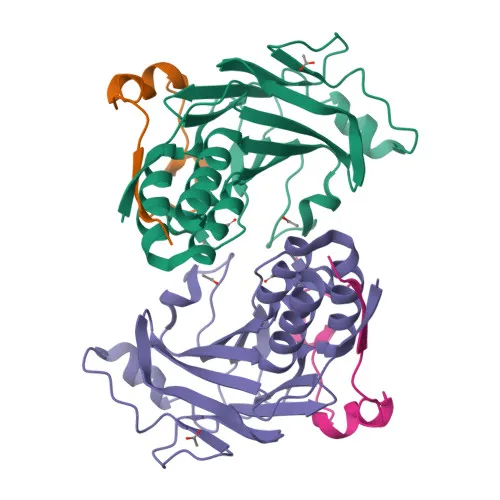
Polyclonal Antibodies
Anti-Smad3 Rabbit Polyclonal Antibody for WB, IF/ICC, ELISA - P84022
Item Number : CM0022715
Price varies based on specs and customizations
- Application
- WB, IF/ICC, ELISA
- Cross Reactivity
- Human, Mouse, Rat
- Protein Weight
- 48kDa

Shipping:
Contact us to get shipping details Enjoy On-time Dispatch Guarantee.
Why Choose Us
Easy ordering process, quality products, and dedicated support for your business success.
Core Product Specifications and Parameters
| Parameter | Specification |
|---|---|
| Product Name | Smad3 Rabbit pAb |
| Remarks/Alias | LDS3, mad3, LDS1C, MADH3, JV15-2, hMAD-3, hSMAD3, HSPC193, HsT17436, Smad3 |
| Species | Human |
| GeneID (Human) | 4088 |
| GeneID | 4088 |
| Immunogen | Recombinant fusion protein containing a sequence corresponding to amino acids 150-250 of human Smad3 (NP_005893.1) |
| Source | Rabbit |
| Category | Polyclonal Antibodies |
| Application | WB, IF/ICC, ELISA |
| Cross Reactivity | Human, Mouse, Rat |
| SWISS | P84022 |
| Protein Weight | 48kDa |
| Shipping | Ice bag |
Biological Background: Smad3 Function and Localization
- SMAD family member 3 (Smad3), also known as MAD homolog 3 or hMAD-3, is an intracellular signal transducer and transcriptional modulator encoded by the SMAD3 (MADH3) gene.
- As a receptor-regulated SMAD (R-SMAD), Smad3 mediates TGF-beta and activin signaling by binding to type 1 receptor kinases.
- Upon phosphorylation, Smad3 forms a complex with SMAD4, translocates to the nucleus, and binds the TRE element in promoter regions to regulate transcription of target genes.
- It can also interact with the AP-1 transcription factors JUN/FOS to form a complex at AP-1/SMAD sites, thereby modulating transcription.
- Smad3 shuttles between the cytoplasm and nucleus, with its subcellular localization dynamically influenced by signaling activity.
- The protein undergoes multiple post-translational modifications, including phosphorylation, acetylation, ADP-ribosylation, and ubiquitination, and contains a zinc-binding domain.
- Alternative splicing generates multiple isoforms, and Smad3 is implicated in processes such as wound healing, chondrogenesis, osteogenesis, and aortic aneurysm.
Experimental Guidance and Technical Tips
- The immunogen spans amino acids 150–250 of human Smad3, a region expected to be exposed and conserved across human, mouse, and rat, supporting cross-reactivity.
- For Western blot, expect a band around 48 kDa; validate detection in relevant cell lysates and consider appropriate controls to confirm specificity.
- In immunofluorescence/ICC, optimize fixation and permeabilization conditions, and use nuclear counterstaining to monitor Smad3 translocation upon TGF-beta stimulation.
- For ELISA, pair with a matched detection antibody and test serial dilutions of recombinant Smad3 or native samples to establish linear range and sensitivity.
CamelBio: Your One-Stop Sourcing Bridge
CamelBio provides diagnostic manufacturers and research laboratories with a streamlined, one-stop sourcing solution for IVD raw materials. This Smad3 antibody supports investigations into TGF-beta signaling and transcriptional regulation, and we offer validated antibody pairs, optimized monoclonal/polyclonal antibodies, bulk ancillary reagents, and rare target raw-material sourcing to accelerate your development from concept to clinic.
REQUEST A QUOTE
Our professional team will reply to you within one business day. Please feel free to contact us!