Polyclonal Antibodies
Anti-SLFN12 Rabbit Polyclonal Antibody for WB and ELISA - Q8IYM2
Item Number : CM0019689
Price varies based on specs and customizations
- Application
- WB, ELISA
- Cross Reactivity
- Human
- Protein Weight
- 67kDa

Shipping:
Contact us to get shipping details Enjoy On-time Dispatch Guarantee.
Why Choose Us
Easy ordering process, quality products, and dedicated support for your business success.
Core Product Specifications and Parameters
| Parameter | Value |
|---|---|
| Product Name | SLFN12 Rabbit pAb |
| Remarks/Alias | SLFN3; SLFN12 |
| Species | Human |
| Gene ID (Human) | 55106 |
| Gene ID | 55106 |
| Immunogen | Recombinant fusion protein containing a sequence corresponding to amino acids 320-390 of human SLFN12 (NP_001275938.1) |
| Source | Rabbit |
| Category | Polyclonal Antibodies |
| Application | WB, ELISA |
| Cross Reactivity | Human |
| SWISS | Q8IYM2 |
| Protein Weight | 67kDa |
| Shipping | Ice bag |
Biological Background: SLFN12 Function and Localization
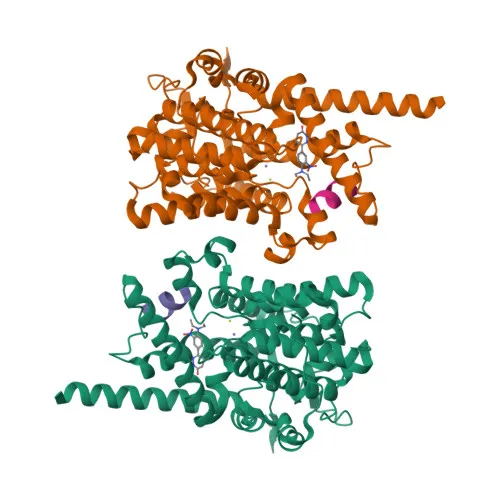
- Ribonuclease SLFN12, also known as Schlafen family member 12, is encoded by the SLFN12 gene and belongs to the Schlafen family, which plays roles in cell cycle control and innate immunity.
- It functions as a pro-apoptotic rRNA ribonuclease: E2/17β-estradiol stabilizes the PDE3A/SLFN12 complex in the cytosol, promoting SLFN12 dephosphorylation, activating its ribonuclease activity, and triggering apoptosis. This pathway is particularly relevant in tissues with high estrogen levels, such as the placenta (PubMed:31420216, PubMed:34272366, PubMed:34707099). Related references: PMID:31420216 PMID:34272366 PMID:34707099
- SLFN12 may also be involved in cell differentiation, expanding its functional repertoire beyond apoptosis (PubMed:30045019). Related references: PMID:30045019
- Subcellularly, SLFN12 localizes to both the nucleus and the cytoplasm, with key interactions and activation occurring in the cytosol.
- Post-translational modifications, particularly phosphorylation, regulate SLFN12 activity; it is annotated as a phosphoprotein in UniProt.
- Additional UniProt keywords include 3D-structure, hydrolase, reference proteome, and proteomics identification, supporting its structural characterization and broad detection.
Experimental Guidance and Technical Tips
- The immunogen spans amino acids 320–390 of human SLFN12, targeting an internal region; consider this when designing orthogonal detection strategies.
- For Western blot, the predicted band is ~67 kDa. Use positive control lysates from human cells or tissues with high SLFN12 expression (e.g., placenta, estrogen-treated cultures). Optimize blocking conditions and antibody dilution to minimize potential polyclonal background.
- For ELISA, validate the antibody against the recombinant immunogen and in complex biological samples; be aware of possible cross-reactivity with other Schlafen family members.
- Because SLFN12 activity depends on phosphorylation and complex formation with PDE3A, maintain consistent sample handling to preserve native post-translational modifications.
CamelBio: Your One-Stop Sourcing Bridge
CamelBio serves as a comprehensive one-stop partner for IVD raw material sourcing, providing a wide range of validated antibodies and recombinant proteins. The SLFN12 rabbit polyclonal antibody aids research into estrogen-regulated apoptosis and rRNA metabolism. Beyond this product, we supply matched antibody pairs, bulk ancillary reagents, and custom sourcing services for rare targets across the Schlafen pathways—ensuring seamless support for your assay development and diagnostic manufacturing needs.
REQUEST A QUOTE
Our professional team will reply to you within one business day. Please feel free to contact us!