Polyclonal Antibodies
Anti-SLC7A11/xCT Rabbit Polyclonal Antibody for WB and ELISA - Q9UPY5
Item Number : CM0012833
Price varies based on specs and customizations
- Application
- WB, ELISA
- Cross Reactivity
- Human, Mouse, Rat
- Protein Weight
- 55 kDa

Shipping:
Contact us to get shipping details Enjoy On-time Dispatch Guarantee.
Why Choose Us
Easy ordering process, quality products, and dedicated support for your business success.
Core Product Specifications and Parameters
| Parameter | Value |
|---|---|
| Product Name | SLC7A11/xCT Rabbit pAb |
| Remarks/Alias | xCT; CCBR1; SLC7A11/xCT |
| Species | Human |
| GeneID (Human) | 23657 |
| GeneID | 23657 |
| Immunogen | Synthetic peptide|A synthetic peptide corresponding to a sequence within amino acids 1-100 of human SLC7A11/xCT (NP_055146.1). |
| Source | Rabbit |
| Category | Polyclonal Antibodies |
| Application | WB, ELISA |
| Cross Reactivity | Human, Mouse, Rat |
| SWISS | Q9UPY5 |
| Protein Weight | 55 kDa |
| Shipping | Ice bag |
Biological Background: SLC7A11/xCT Function and Localization
-
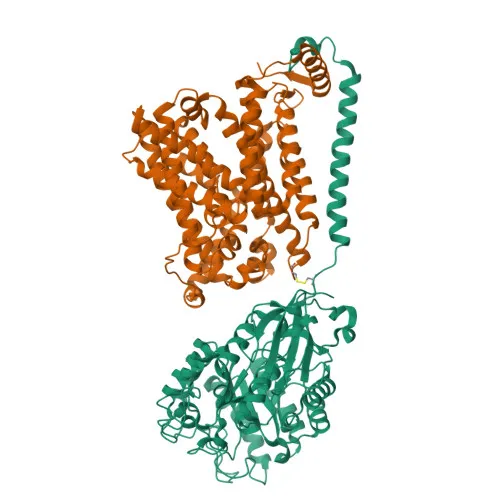
SLC7A11, also known as xCT, is the light chain subunit that forms a heterodimer with the heavy chain SLC3A2 (4F2hc) to function as a cystine/glutamate antiporter (system xc-). Related references: PMID:11133847, PMID:11417227, PMID:14722095
-
The antiporter mediates the sodium-independent, electroneutral exchange of extracellular L-cystine for intracellular L-glutamate, providing cystine for glutathione synthesis and maintaining redox balance.
-
Acts as an inhibitor of ferroptosis by importing L-kynurenine, leading to anti-ferroptotic signaling that sustains L-cystine and glutathione homeostasis. Related references: PMID:35245456, PMID:40246981
-
Additionally, SLC7A11 inhibits ferroptosis through a substrate-as-proton mechanism, mediating a slow proton efflux from lysosomes via cystine and glutamate flux, acting as an atypical proton transporter. Related references: PMID:40280132
-
In the placenta, SLC7A11 mediates N-acetyl-L-cysteine uptake, down-regulating pathways linked to oxidative stress, inflammation, and apoptosis. Related references: PMID:34120018
-
Expressed predominantly in the brain and pancreas, and also in term placenta and primary cytotrophoblast. Related references: PMID:11417227, PMID:34120018
-
Subcellularly localized to the plasma membrane, lysosome membrane, and microvillus membrane of cell projections. Post-translational modifications include glycosylation, disulfide bonds, and phosphorylation.
Experimental Guidance and Technical Tips
- The immunogen consists of a synthetic peptide mapping to the N-terminal region (aa 1-100) of human SLC7A11. This region is conserved across human, mouse, and rat, consistent with the reported cross-reactivity.
- For Western blotting (WB), consider a starting dilution of 1:500-1:2000, and for ELISA, 1:1000-1:5000. Optimize dilutions for your specific experimental conditions.
- The predicted molecular weight is 55 kDa. Confirm band specificity using appropriate positive and negative controls.
- Given its role in cystine transport and ferroptosis, this antibody is suitable for studies in oxidative stress, cell death, and amino acid metabolism. Validate in your model system.
CamelBio: Your One-Stop Sourcing Bridge
CamelBio serves as a comprehensive sourcing partner for IVD raw materials, connecting diagnostic manufacturers and research laboratories with high-quality reagents. This anti-SLC7A11/xCT antibody supports investigations into amino acid transport, redox biology, and ferroptosis pathways. Beyond this product, CamelBio offers validated antibody pairs, optimized monoclonal and polyclonal antibodies, bulk ancillary reagents, and specialized sourcing assistance for rare targets to streamline your assay development and manufacturing workflows.
Product Datasheet
Anti-SLC7A11/xCT Rabbit Polyclonal Antibody for WB and ELISA - Q9UPY5
REQUEST A QUOTE
Our professional team will reply to you within one business day. Please feel free to contact us!