Polyclonal Antibodies
Anti-SLC6A9 Polyclonal Antibody for WB and ELISA - P48067
Item Number : CM0019464
Price varies based on specs and customizations
- Application
- WB, ELISA
- Cross Reactivity
- Human, Mouse, Rat
- Protein Weight
- 78kDa

Shipping:
Contact us to get shipping details Enjoy On-time Dispatch Guarantee.
Why Choose Us
Easy ordering process, quality products, and dedicated support for your business success.
Core Product Specifications and Parameters
| Parameter | Value |
|---|---|
| Product Name | SLC6A9 Rabbit pAb |
| Remarks/Alias | GLYT1; GCENSG; SLC6A9 |
| Species | Human |
| Gene ID (Human) | 6536 |
| Gene ID | 6536 |
| Immunogen | Recombinant fusion protein containing a sequence corresponding to amino acids 1-110 of human SLC6A9 (NP_964012.2) |
| Source | Rabbit |
| Category | Polyclonal Antibodies |
| Application | WB, ELISA |
| Cross Reactivity | Human, Mouse, Rat |
| SWISS | P48067 |
| Protein Weight | 78kDa |
| Shipping | Ice bag |
Biological Background: SLC6A9 Function and Localization
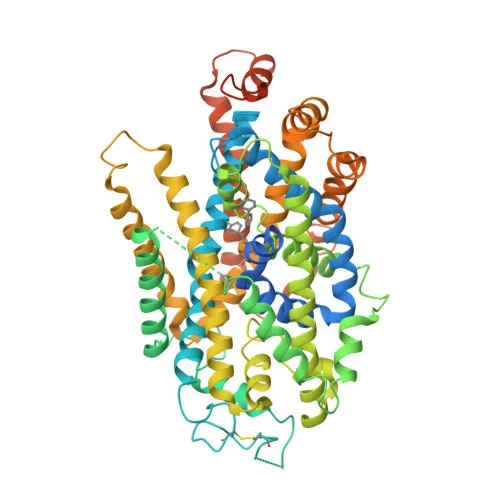
- SLC6A9 encodes the sodium- and chloride-dependent glycine transporter 1 (GLYT1), which belongs to the solute carrier family 6 (neurotransmitter transporters).
- Functions as a high-affinity glycine transporter that mediates the reuptake of glycine from the synaptic cleft, thereby terminating glycinergic neurotransmission and regulating glycine concentrations at inhibitory synapses.
Related references:
PMID:37962965 PMID:8183239 - The transporter is localized to the cell membrane, consistent with its role in neurotransmitter uptake.
- Alternative splicing produces multiple transcript variants, contributing to isoform diversity; some isoforms may exhibit distinct expression patterns or functional properties.
- Widely expressed with high levels in the brain, and also detected in kidney, pancreas, lung, placenta, and liver; certain isoforms may be restricted to specific tissues.
- Post-translational modifications include phosphorylation (as indicated by the Phosphoprotein keyword), which may regulate transporter activity or trafficking.
- Associated with diseases as a potential target or variant, though specific disease implications are still under investigation (keyword: Disease variant).
- The protein is approximately 78 kDa in molecular weight, consistent with its predicted size and transmembrane helix topology.
Experimental Guidance and Technical Tips
- The immunogen corresponds to the N-terminal region (amino acids 1-110) of human SLC6A9. Consider this when designing epitope-mapping experiments or when using antibodies targeting other regions.
- This polyclonal antibody may recognize multiple SLC6A9 isoforms due to the highly conserved N-terminus. Validate isoform specificity in your sample system, especially if alternative splicing is expected.
- For Western blotting, use tissue lysates known to express SLC6A9 (e.g., brain, kidney). Optimize protein loading and antibody dilution to detect the ~78 kDa band.
- For ELISA, consider using recombinant SLC6A9 protein as a positive control. Confirm cross-reactivity with mouse or rat homologs if working with rodent models.
- Avoid repeated freeze-thaw cycles; store as recommended (shipped on ice bags) to maintain antibody integrity.
CamelBio: Your One-Stop Sourcing Bridge
CamelBio offers comprehensive access to IVD raw materials, serving as a reliable partner for diagnostic manufacturers, research laboratories, and institutes. This anti-SLC6A9 polyclonal antibody supports investigations into glycine transporter biology and neurotransmitter regulation. Beyond single reagents, CamelBio provides validated antibody pairs, optimized monoclonal and polyclonal antibodies, bulk ancillary reagents, and custom sourcing of rare targets—streamlining your procurement from concept to clinic.
REQUEST A QUOTE
Our professional team will reply to you within one business day. Please feel free to contact us!