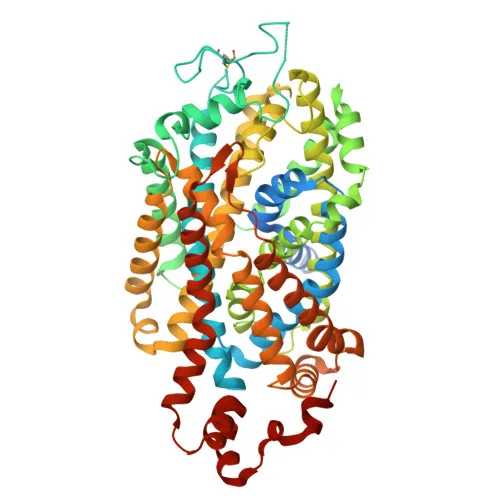
Polyclonal Antibodies
Anti-SLC6A2 (Norepinephrine Transporter) Rabbit Polyclonal Antibody for WB and ELISA - P23975
Item Number : CM0012951
Price varies based on specs and customizations
- Application
- WB, ELISA
- Cross Reactivity
- Human, Mouse, Rat
- Protein Weight
- 69kDa

Shipping:
Contact us to get shipping details Enjoy On-time Dispatch Guarantee.
Why Choose Us
Easy ordering process, quality products, and dedicated support for your business success.
Core Product Specifications and Parameters
| Parameter | Value |
|---|---|
| Product Name | SLC6A2 Rabbit pAb |
| Remarks/Alias | NET; NAT1; NET1; SLC6A5; SLC6A2 |
| Species | Human |
| Gene ID (Human) | 6530 |
| Gene ID | 6530 |
| Immunogen | Recombinant fusion protein containing a sequence corresponding to amino acids 30-235 of human SLC6A2 (NP_478066.3) |
| Source | Rabbit |
| Category | Polyclonal Antibodies |
| Application | WB, ELISA |
| Cross Reactivity | Human, Mouse, Rat |
| SWISS | P23975 |
| Protein Weight | 69kDa |
| Shipping | Ice bag |
Biological Background: SLC6A2 Function and Localization
- Encoded by the SLC6A2 gene, the sodium-dependent noradrenaline transporter (NET) is a member of the solute carrier family 6 and mediates the reuptake of norepinephrine at sympathetic synapses (PubMed:2008212, PubMed:8125921, PubMed:38750358). Related references: PMID:2008212 PMID:8125921 PMID:38750358
- The transporter clears norepinephrine from the synaptic cleft, terminating its signaling and recycling the neurotransmitter for future release (By similarity).
- NET also transports dopamine with high affinity, contributing to catecholamine homeostasis in the brain and periphery (PubMed:11093780, PubMed:8125921, PubMed:39395208). Related references: PMID:11093780 PMID:8125921 PMID:39395208
- Subcellularly, NET localizes to the plasma membrane, particularly at axonal varicosities and presynaptic terminals, where it cycles between the membrane and intracellular compartments.
- The protein contains 12 transmembrane domains, extracellular N-glycosylation sites, and intracellular phosphorylation and palmitoylation sites that regulate its trafficking and activity (UniProt keywords: Glycoprotein, Lipoprotein, Palmitate, Transmembrane helix).
- Alternative splicing yields multiple isoforms, and polymorphisms in SLC6A2 have been linked to orthostatic intolerance, depression, and attention deficit hyperactivity disorder (ADHD) (UniProt keywords: Alternative splicing, Disease variant).
Experimental Guidance and Technical Tips
- The immunogen is a recombinant fragment covering the N-terminal extracellular/intracellular loop region (aa 30-235); this design favors recognition of native, non-denatured epitopes in applications like ELISA. For WB, consider using whole-cell lysates from tissues rich in sympathetic innervation (e.g., heart, adrenal gland, vas deferens) or transfected cell lines.
- As a polyclonal antibody, batch-to-batch consistency should be monitored; we recommend titrating the antibody for each new lot in your assay system. Endogenous NET is often detected as a glycosylated band around 69–80 kDa; deglycosylation enzymes can shift the band to confirm specificity.
- NET internalization can be influenced by experimental conditions (e.g., temperature, phorbol esters); to detect total protein, include membrane fraction enrichment and protease inhibitors during sample preparation.
CamelBio: Your One-Stop Sourcing Bridge
CamelBio empowers diagnostic manufacturers and research institutions with integrated access to IVD raw materials and technical support. For neuroscience and transporter biology, we offer validated antibody pairs, optimized polyclonal preparations like this anti-SLC6A2 antibody, and bulk ancillary reagents to streamline your assay development. Tell us your target, and we'll handle the rest—from concept to clinic.
Product Datasheet
Anti-SLC6A2 (Norepinephrine Transporter) Rabbit Polyclonal Antibody for WB and ELISA - P23975
REQUEST A QUOTE
Our professional team will reply to you within one business day. Please feel free to contact us!