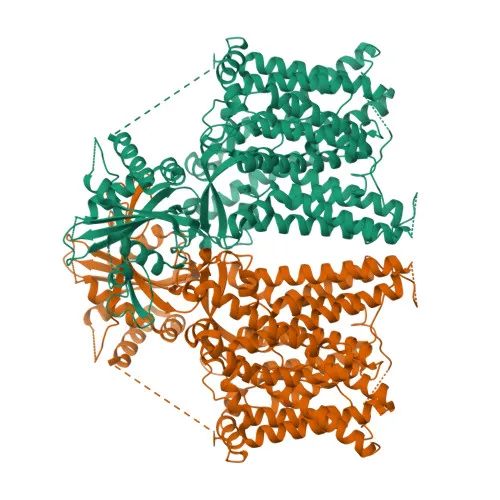
Polyclonal Antibodies
Anti-SLC4A11 Polyclonal Antibody for WB, ELISA - Q8NBS3
Item Number : CM0019644
Price varies based on specs and customizations
- Application
- WB, ELISA
- Cross Reactivity
- Human, Mouse
- Protein Weight
- 98kDa

Shipping:
Contact us to get shipping details Enjoy On-time Dispatch Guarantee.
Why Choose Us
Easy ordering process, quality products, and dedicated support for your business success.
Core Product Specifications and Parameters
| Parameter | Value |
|---|---|
| Product Name | SLC4A11 Rabbit pAb |
| Remarks/Alias | BTR1; CHED; CDPD1; CHED2; NABC1; dJ794I6.2; SLC4A11 |
| Species | Human |
| GeneID (Human) | 83959 |
| GeneID | 83959 |
| Immunogen | Recombinant fusion protein containing a sequence corresponding to amino acids 1-180 of human SLC4A11 (NP_001167560.1) |
| Source | Rabbit |
| Category | Polyclonal Antibodies |
| Application | WB, ELISA |
| Cross Reactivity | Human, Mouse |
| SWISS | Q8NBS3 |
| Protein Weight | 98kDa |
| Shipping | Ice bag |
Biological Background: SLC4A11 Function and Localization
- SLC4A11 encodes a multifunctional transmembrane transporter belonging to the solute carrier 4 family, also known as sodium borate cotransporter 1 (NaBC1).
- In borate-containing environments, SLC4A11 functions as an electrogenic Na+-coupled B(OH)4- cotransporter, mediating boron influx and regulating boron homeostasis. Related references: PMID:15525507
- Without borate, the protein operates as a Na+-coupled OH- or H+ permeable channel, modulating cellular redox balance and protecting corneal endothelial cells from reactive oxygen species. Related references: PMID:15525507 PMID:28642546
- In response to hypo-osmotic stress, SLC4A11 facilitates water transport across the basolateral membrane of corneal endothelium, contributing to fluid reabsorption in the eye. Related references: PMID:23813972 PMID:25007886 PMID:31273259
- SLC4A11 also mediates electrogenic NH3/H+ cotransport, suggesting a role in renal ammonia reabsorption. Related references: PMID:27581649
- The protein is predominantly localized to the basolateral cell membrane and is expressed in various tissues, with high levels in kidney, testis, salivary gland, thyroid, trachea, and corneal endothelium.
- Pathogenic variants in SLC4A11 are associated with congenital hereditary endothelial dystrophy (CHED) and sensorineural hearing loss, reflecting its essential functions in ocular and auditory physiology.
Experimental Guidance and Technical Tips
- The immunogen covers the N-terminal region (residues 1–180), which may detect multiple SLC4A11 isoforms; band patterns should be validated in SLC4A11-expressing cells or tissues such as corneal endothelium and kidney.
- For Western blot, a major band near 98 kDa is expected; however, post‑translational modifications and alternative splicing may yield additional bands.
- For ELISA applications, coating the plate with the immunogen fragment or a peptide based on the same sequence can improve assay specificity.
- As a polyclonal antibody, lot‑to‑lot consistency should be confirmed for critical quantitative assays; consider using recombinant antibody alternatives if long‑term reproducibility is a priority.
CamelBio: Your One-Stop Sourcing Bridge
CamelBio provides diagnostic developers with streamlined access to specialty IVD raw materials, including this SLC4A11 polyclonal antibody for ion transporter research and corneal dystrophy studies. Beyond standard catalog antibodies, we support your project with validated antibody pairs, optimized monoclonal reagents, bulk ancillary supplies, and custom sourcing for hard‑to‑find targets. Let CamelBio bridge your workflow from discovery to diagnostic deployment.
REQUEST A QUOTE
Our professional team will reply to you within one business day. Please feel free to contact us!