Polyclonal Antibodies
Anti-SLC26A6 Polyclonal Antibody for WB and ELISA - Q9BXS9
Item Number : CM0018726
Price varies based on specs and customizations
- Application
- WB, ELISA
- Cross Reactivity
- Human
- Protein Weight
- 83kDa

Shipping:
Contact us to get shipping details Enjoy On-time Dispatch Guarantee.
Why Choose Us
Easy ordering process, quality products, and dedicated support for your business success.
Core Product Specifications and Parameters
| Parameter | Value |
|---|---|
| Product Name | SLC26A6 Rabbit pAb |
| Remarks/Alias | SLC26A6 |
| Species | Human |
| Gene ID (Human) | 65010 |
| Gene ID | 65010 |
| Immunogen | Recombinant fusion protein containing a sequence corresponding to amino acids 509-758 of human SLC26A6 (NP_599025.2) |
| Source | Rabbit |
| Category | Polyclonal Antibodies |
| Application | WB, ELISA |
| Cross Reactivity | Human |
| SWISS | Q9BXS9 |
| Protein Weight | 83kDa |
| Shipping | Ice bag |
Biological Background: SLC26A6 Function and Localization
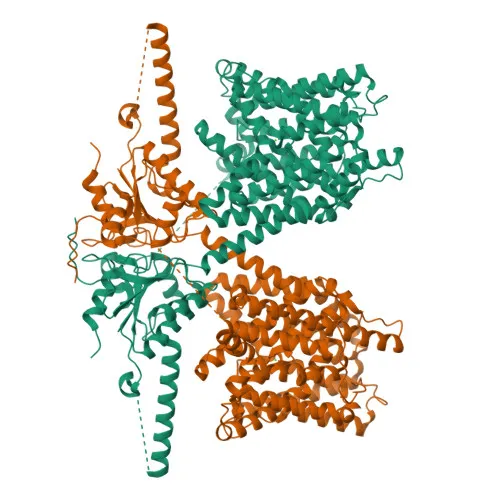
- SLC26A6 encodes the solute carrier family 26 member 6, also known as pendrin-like protein 1 (Pendrin-L1), an anion exchange transporter with 12 transmembrane helices.
- Functions as a versatile DIDS-sensitive inorganic and organic anion exchanger, mediating uptake of monovalent (chloride, bicarbonate, formate) and divalent ions (sulfate, oxalate), with exchange modes including chloride‑bicarbonate and oxalate‑formate.
- Localizes primarily to the apical cell membrane, but can also be found in cytoplasmic vesicle membranes, microsomes, basolateral membranes, and the endoplasmic reticulum.
- Plays a critical role in acid‑base homeostasis as the apical chloride‑bicarbonate exchanger, contributing to luminal chloride absorption and bicarbonate secretion in the intestinal brush border, kidney proximal tubules, and pancreatic ducts; associates with carbonic anhydrase CA2 to form a bicarbonate transport metabolon.
- Exhibits broad tissue expression, with highest levels in kidney and pancreas; also present in heart, skeletal muscle, liver, placenta, lung, brain, and reproductive tissues.
- Undergoes alternative splicing, N‑glycosylation, and phosphorylation, which may regulate its activity and trafficking (keywords: Alternative splicing, Glycoprotein, Phosphoprotein).
Experimental Guidance and Technical Tips
- The immunogen corresponds to the C‑terminal region (aa 509‑758) of human SLC26A6, which contains intracellular and transmembrane segments; this region may be conserved among isoforms, but cross‑reactivity with other SLC26 family members should be assessed.
- For Western blotting, a band around 83‑100 kDa (observed molecular weight may vary due to glycosylation) is expected; recommended to optimize reducing and non‑reducing conditions.
- In ELISA, the antibody may be used to capture or detect SLC26A6 from human cell or tissue lysates; titration and blocking conditions must be empirically determined.
- For functional studies (e.g., transport assays), this antibody can potentially be used for immunoprecipitation or immunofluorescence, but these applications have not been validated in the current lot; pilot experiments are advised.
- Note that PKC activation inhibits the exchanger activity in a calcium‑independent manner; consider this when designing phosphorylation‑related experiments.
CamelBio: Your One-Stop Sourcing Bridge
CamelBio streamlines your IVD development by providing validated raw materials like antibodies, antigens, and ancillary reagents. For SLC26A6 anion exchange transporter studies, we offer this polyclonal antibody along with monoclonal alternatives, optimized antibody pairs, and bulk supply to support your research and diagnostic pipeline. From concept to clinic, CamelBio is your single source for rare‑target sourcing and reliable immunoreagents.
REQUEST A QUOTE
Our professional team will reply to you within one business day. Please feel free to contact us!