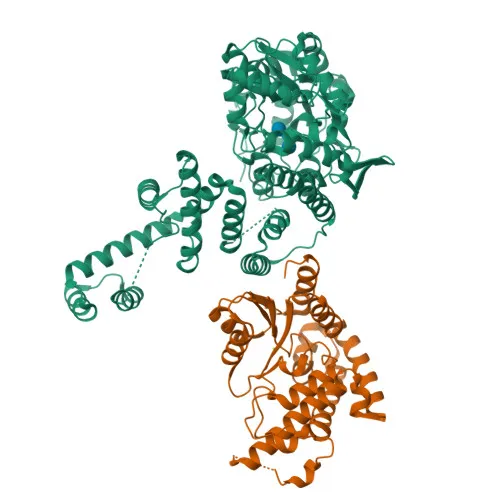
Polyclonal Antibodies
Anti-SIX1 Rabbit Polyclonal Antibody for WB and ELISA - Q15475
Item Number : CM0016591
Price varies based on specs and customizations
- Application
- WB, ELISA
- Cross Reactivity
- Human, Mouse
- Protein Weight
- 32kDa

Shipping:
Contact us to get shipping details Enjoy On-time Dispatch Guarantee.
Why Choose Us
Easy ordering process, quality products, and dedicated support for your business success.
Core Product Specifications and Parameters
| Parameter | Value |
|---|---|
| Product Name | SIX1 Rabbit pAb |
| Remarks/Alias | BOS3, TIP39, DFNA23, SIX1 |
| Species | Human |
| GeneID (Human) | 6495 |
| GeneID | 6495 |
| Immunogen | Recombinant fusion protein containing a sequence corresponding to amino acids 130-270 of human SIX1 (NP_005973.1) |
| Source | Rabbit |
| Category | Polyclonal Antibodies |
| Application | WB, ELISA |
| Cross Reactivity | Human, Mouse |
| SWISS | Q15475 |
| Protein Weight | 32kDa |
| Shipping | Ice bag |
Biological Background: SIX1 Function and Localization
- SIX1 is a homeodomain‑containing transcription factor involved in the regulation of cell proliferation, apoptosis, and embryonic development. It plays essential roles in kidney, muscle, and inner ear organogenesis, and can function as either a repressor or activator depending on context.
- SIX1 lacks an intrinsic activation domain and requires interaction with EYA family cofactors (e.g., EYA1, EYA2) for transcriptional activation. Related references: PMID:15141091
- SIX1 mediates nuclear translocation of EYA1 and EYA2. Related references: PMID:19497856
- It binds the MEF3 consensus sequence (5'-TCA[AG][AG]TTNC-3') present in the regulatory regions of target genes such as MYOG and CIDEA. Related references: PMID:15141091 PMID:19497856 PMID:23435380
- SIX1 directly regulates CCNA1 expression. Related references: PMID:15123840
- The protein is predominantly nuclear but can also localize to the cytoplasm. It is specifically expressed in skeletal muscle. Post‑translational modifications include phosphorylation and ubiquitination. Mutations in SIX1 are linked to non‑syndromic deafness DFNA23.
Experimental Guidance and Technical Tips
- The immunogen corresponds to amino acids 130‑270, which includes part of the homeobox domain; the antibody likely recognizes the native protein. For Western blot, the expected band is around 32 kDa; consider using a positive control such as skeletal muscle lysate or a SIX1‑overexpressing cell line. Validation with siRNA knockdown or knockout cells is recommended to confirm specificity.
- For ELISA, perform a checkerboard titration to determine optimal antibody and antigen concentrations.
- Given its dual nuclear/cytoplasmic localization, fractionation assays may be helpful to study subcellular dynamics.
- The antibody has been validated for human and mouse samples; reactivity with other species should be tested empirically.
CamelBio: Your One‑Stop Sourcing Bridge
CamelBio is your trusted one‑stop sourcing partner for high‑quality IVD raw materials, from validated antibodies to bulk ancillary reagents. This anti‑SIX1 polyclonal antibody supports researchers and diagnostic developers working on transcriptional regulation, developmental biology, and cancer. We also offer complementary products such as recombinant SIX1 protein, matched antibody pairs, and custom bulk production to accelerate your assay development.
REQUEST A QUOTE
Our professional team will reply to you within one business day. Please feel free to contact us!