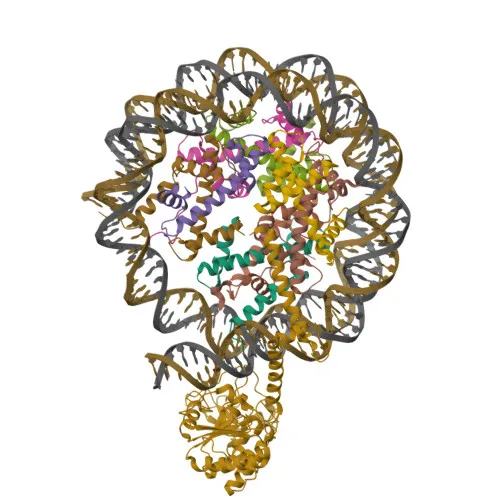
Monoclonal Antibodies
Anti-SIRT7 Rabbit Monoclonal Antibody for WB, ELISA - Q9NRC8
Item Number : CM0006815
Price varies based on specs and customizations
- Application
- WB, ELISA
- Cross Reactivity
- Mouse
- Protein Weight
- 45 kDa

Shipping:
Contact us to get shipping details Enjoy On-time Dispatch Guarantee.
Why Choose Us
Easy ordering process, quality products, and dedicated support for your business success.
Core Product Specifications and Parameters
| Parameter | Value |
|---|---|
| Product Name | SIRT7 Rabbit mAb |
| Remarks/Alias | SIR2L7; SIRT7 |
| Species | Human |
| Gene ID (Human) | 51547 |
| Gene ID | 51547 |
| Immunogen | Synthetic peptide corresponding to amino acids 301-400 of human SIRT7 (NP_057622.1) |
| Source | Rabbit |
| Category | Monoclonal Antibodies |
| Application | WB, ELISA |
| Cross Reactivity | Mouse |
| SWISS | Q9NRC8 |
| Protein Weight | 45 kDa |
| Shipping | Ice bag |
Biological Background: SIRT7 Function and Localization
- SIRT7 (NAD-dependent protein deacetylase sirtuin-7) is a multifunctional enzyme that acts as a protein-lysine deacetylase and deacylase, catalyzing removal of acetyl, succinyl, propionyl, glutaryl, and decanoyl groups. Related references: PMID:22722849 PMID:26907567 PMID:30653310
- Demonstrates high specificity for deacetylation of histone H3 at lysine 18 (H3K18Ac), a mark associated with transcriptional activation of nuclear hormone receptors; SIRT7-mediated deacetylation represses gene expression and H3K18 hypoacetylation correlates with malignancy in various cancers. Related references: PMID:22722849 PMID:30420520 PMID:35939806
- Enriched in the nucleolus, SIRT7 promotes RNA polymerase I transcription by deacetylating the POLR1E/PAF53 subunit, facilitating rRNA synthesis; under metabolic stress, its nucleolar release leads to increased POLR1E acetylation and decreased rDNA transcription. Related references: PMID:16618798 PMID:19174463 PMID:24207024
- Deacetylates multiple non-histone substrates including ATM (DNA damage signaling), CDK9 (RNA polymerase II activation), DDX21 (R-loop resolution), and Ran (nuclear export), underscoring its broad regulatory roles. Related references: PMID:30944854 PMID:28426094 PMID:28790157 PMID:31075303
- Exhibits histone desuccinylase and deglutarylase activities: desuccinylation of H3K122 promotes chromatin condensation and DNA double-strand break repair, while deglutarylation of H4K91 affects nucleosome stability. Related references: PMID:27436229 PMID:31542297
- Subcellular localization spans the nucleolus, nucleoplasm, chromosomes, and cytoplasm, reflecting its diverse functional compartments.
- Post-translational modifications include phosphorylation and ubiquitination; also annotated as a zinc-binding and methylation-regulated protein, consistent with its intricate regulatory mechanisms.
- Involved in transcriptional repression of LINE-1 retrotransposons via H3K18Ac deacetylation, promoting their tethering to the nuclear lamina, and stabilizes rDNA heterochromatin to prevent senescence. Related references: PMID:31226208 PMID:29728458
Experimental Guidance and Technical Tips
- The immunogen (a synthetic peptide corresponding to amino acids 301-400 of human SIRT7) lies in a C-terminal region; consequently, the antibody may selectively recognize full-length SIRT7 or specific isoforms. Validate reactivity in your target sample system.
- For Western blot, note the expected molecular weight of ~45 kDa; consider using positive control lysates and optimizing antibody dilution and incubation conditions.
- Confirmed applications include WB and ELISA; additionally, cross-reactivity with mouse SIRT7 allows for interspecies studies, but endogenous expression levels may vary between cell lines and tissues.
- For ELISA, pair with high-quality secondary antibodies and use appropriate blocking buffers to minimize nonspecific binding; quantitative performance should be empirically established.
CamelBio: Your One-Stop Sourcing Bridge
CamelBio is a comprehensive B2B platform supplying IVD manufacturers, research laboratories, and diagnostic developers with high-quality raw materials and technical support. This anti-SIRT7 monoclonal antibody supports epigenetic and chromatin research applications, aligning with our specialization in validated antibody pairs, monoclonal and polyclonal antibodies, bulk ancillary reagents, and custom sourcing for rare targets. From concept to clinic, CamelBio bridges your raw-material needs with reliable, one-stop access.
REQUEST A QUOTE
Our professional team will reply to you within one business day. Please feel free to contact us!