Polyclonal Antibodies
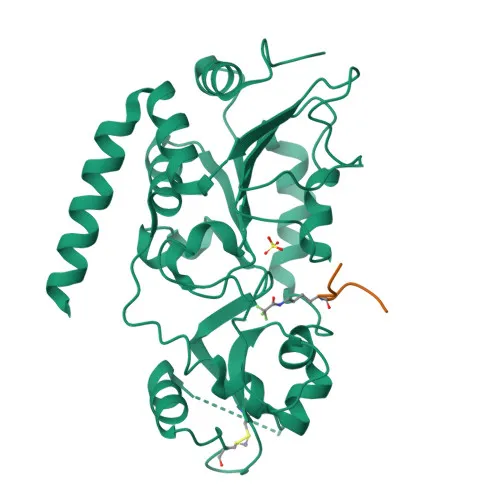
Anti-SIRT2 Polyclonal Antibody for WB, IHC-P, IF/ICC, ELISA - Q8IXJ6
Item Number : CM0017625
Price varies based on specs and customizations
- Application
- WB, IHC-P, IF/ICC, ELISA
- Cross Reactivity
- Human, Mouse, Rat
- Protein Weight
- 43kDa

Shipping:
Contact us to get shipping details Enjoy On-time Dispatch Guarantee.
Why Choose Us
Easy ordering process, quality products, and dedicated support for your business success.
Core Product Specifications and Parameters
| Parameter | Value |
|---|---|
| Product Name | SIRT2 Rabbit pAb |
| Remarks/Alias | SIR2; SIR2L; SIR2L2; SIRT2 |
| Species | Human |
| GeneID (Human) | 22933 |
| GeneID | 22933 |
| Immunogen | Synthetic peptide corresponding to a sequence within amino acids 300-350 of human SIRT2 (NP_036369.2) |
| Source | Rabbit |
| Category | Polyclonal Antibodies |
| Application | WB, IHC-P, IF/ICC, ELISA |
| Cross Reactivity | Human, Mouse, Rat |
| SWISS | Q8IXJ6 |
| Protein Weight | 43kDa |
| Shipping | Ice bag |
Biological Background: SIRT2 Function and Localization
- SIRT2 (NAD-dependent protein deacetylase sirtuin-2) is a member of the sirtuin family, also known as SIR2-like protein 2, encoded by the SIRT2 gene. It functions as an NAD-dependent deacetylase, removing acetyl groups from internal lysines on histones (e.g., H4K16, H3K56) and non-histone proteins such as alpha-tubulin, transcription factors, and cell cycle regulators. Related references: PMID:12620231, PMID:16648462, PMID:18249187
- SIRT2 plays a critical role in cell cycle control and genomic stability, functioning at the antephase checkpoint to prevent premature mitotic entry under microtubule stress, and regulating APC/C activity by deacetylating CDC20 and FZR1. Related references: PMID:12697818, PMID:16909107, PMID:17488717, PMID:22014574
- In chromatin, SIRT2 associates with transcriptional start sites and enhancers, and modulates histone H4 methylation by deacetylating H4K16ac, enabling H4K20me1 deposition and subsequent chromatin compaction during mitosis. Related references: PMID:23468428
- SIRT2 deacetylates alpha-tubulin at Lys-40, influencing microtubule dynamics, neuronal motility, oligodendrocyte arborization, and cell adhesion; its activity is regulated by cyclin E-CDK2 phosphorylation at Ser-368. Related references: PMID:18332217, PMID:18995842, PMID:17488717
- Beyond deacetylation, SIRT2 also exhibits protein-lysine deacylase activity, removing benzoyl, methacryl, and long-chain fatty acyl groups (demyristoylation and depalmitoylation) from target proteins such as KRAS and ARF6, thereby regulating their membrane association. Related references: PMID:30154464, PMID:34961760, PMID:25704306, PMID:29239724, PMID:32103017
- Subcellularly, SIRT2 localizes to the nucleus, cytoplasm, centrosome, mitotic spindle, midbody, and growth cones, consistent with its roles in cell division, cytoskeletal organization, and neuronal development.
- Tissue expression: Isoform 1 is mainly expressed in heart, liver, and skeletal muscle; isoform 2 is strongly expressed in the cortex. SIRT2 is widely expressed but often down-regulated in various cancers, supporting a tumor suppressor function.
- Additional keywords: SIRT2 is involved in autophagy, metabolic regulation, oxidative stress response, and innate immunity. Related references: PMID:20543840, PMID:21726808, PMID:24769394, PMID:23908241
Experimental Guidance and Technical Tips
- The immunogen is a synthetic peptide corresponding to amino acids 300-350 of human SIRT2; verify sequence homology for your species of interest, as cross-reactivity is reported for human, mouse, and rat.
- Recommended applications include WB, IHC-P, IF/ICC, and ELISA. For WB, the predicted protein weight is 43 kDa; use appropriate positive controls (e.g., HeLa or HEK293 lysates) to confirm band specificity.
- For IHC and IF, optimize antigen retrieval and permeabilization conditions, given SIRT2's dynamic localization to nucleus, cytoplasm, and cytoskeleton.
- As a polyclonal antibody, it may recognize multiple isoforms or post-translational modifications; note that isoform 2 is predominantly expressed in neural tissues.
- For functional studies, SIRT2 activity is NAD-dependent; consider including NAD+ or inhibitors (e.g., AGK2) when assessing enzymatic function.
CamelBio: Your One-Stop Sourcing Bridge
As a trusted one-stop IVD raw material provider, CamelBio offers comprehensive access to high-quality antibodies, antigens, and ancillary reagents tailored for diagnostic development. This anti-SIRT2 polyclonal antibody supports research in epigenetics, cell cycle regulation, and oncology, and can be sourced alongside validated antibody pairs, bulk monoclonal/polyclonal antibodies, and rare target raw materials to streamline your assay development from concept to clinic.
REQUEST A QUOTE
Our professional team will reply to you within one business day. Please feel free to contact us!