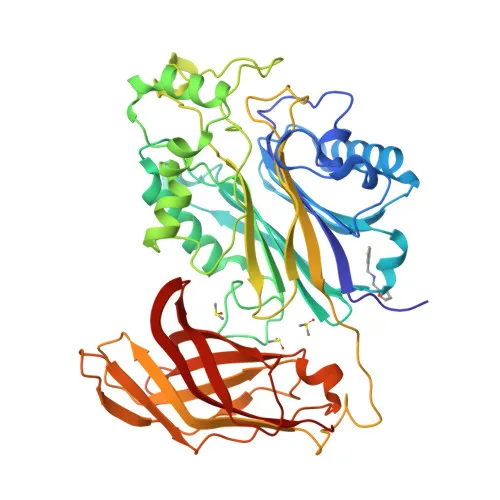
Monoclonal Antibodies
Anti-SHIP1 Rabbit Monoclonal Antibody for WB, IF-P, IHC-P, ELISA - Q92835
Item Number : CM0007921
Price varies based on specs and customizations
- Application
- WB, IF-P, IHC-P, ELISA
- Cross Reactivity
- Human, Mouse, Rat
- Protein Weight
- 133kDa

Shipping:
Contact us to get shipping details Enjoy On-time Dispatch Guarantee.
Why Choose Us
Easy ordering process, quality products, and dedicated support for your business success.
Core Product Specifications and Parameters
| Parameter | Value |
|---|---|
| Product Name | SHIP1 Rabbit mAb |
| Remarks/Alias | SHIP; SHIP1; SHIP-1; hp51CN; SIP-145; p150Ship |
| Species | Human |
| GeneID (Human) | 3635 |
| GeneID | 3635 |
| Immunogen | Recombinant fusion protein containing a sequence corresponding to amino acids 1084-1178 of human SHIP1 (Q92835) |
| Source | Rabbit |
| Category | Monoclonal Antibodies |
| Application | WB, IF-P, IHC-P, ELISA |
| Cross Reactivity | Human, Mouse, Rat |
| SWISS | Q92835 |
| Protein Weight | 133kDa |
| Shipping | Ice bag |
Biological Background: SHIP1 Function and Localization
- SHIP1 (Phosphatidylinositol 3,4,5-trisphosphate 5-phosphatase 1), encoded by INPP5D, is a lipid phosphatase also known as SHIP, SHIP-1, SIP-145, p150Ship, and hp51CN. It primarily acts by hydrolyzing the 5-phosphate of PtdIns(3,4,5)P3 to generate PtdIns(3,4)P2, thereby suppressing the PI3K signaling cascade.
Related references: PMID:10764818 PMID:8723348 PMID:8769125 - Beyond its canonical substrate, SHIP1 can also dephosphorylate other inositol phosphates including PtdIns(4,5)P2, Ins(1,4,5)P3, and Ins(1,3,4,5)P4.
Related references: PMID:10764818 PMID:40969890 PMID:8769125 - It functions as a key negative regulator in immune cell signaling, terminating activation cascades from receptors such as the B-cell antigen receptor, FCGR2B, and cytokine receptors, thereby controlling processes like myeloid cell proliferation, mast cell degranulation, and neutrophil chemotaxis.
- The protein is predominantly localized in the cytoplasm, but also associates with the cell membrane, membrane rafts, and the cytoskeleton, consistent with its role in dynamic signaling complexes.
- SHIP1 expression is restricted mainly to immune and hematopoietic cells. It is present in a majority of T-cells and immature CD34+ cells, but in only a minority of B-cells and mature CD33+ cells.
- Post‑translational modifications include phosphorylation, and the protein features an SH2 domain and SH3-binding motifs. UniProt annotations also list alternative splicing, suggesting possible isoform diversity.
Experimental Guidance and Technical Tips
- The immunogen was designed from amino acids 1084–1178 at the C‑terminus of human SHIP1; this linear sequence may be conserved in mouse and rat, supporting observed cross‑reactivity.
- For western blotting, expect a major band near 133 kDa; use appropriate protein extraction and loading controls, especially in hematopoietic cell lysates.
- For immunohistochemistry (IHC‑P) and immunofluorescence (IF‑P), validate antigen retrieval conditions and test on positive controls such as spleen or bone marrow sections rich in immune cells.
- ELISA setups may require optimization of coating conditions; consider paired antibody strategies for sandwich formats.
CamelBio: Your One-Stop Sourcing Bridge
CamelBio supports diagnostic manufacturers and research laboratories with a comprehensive range of IVD raw materials, including validated monoclonal antibodies like this SHIP1 clone. With expertise in immune‑oncology and signaling targets, we facilitate bulk procurement, custom reagent development, and supply-chain solutions from early R&D through clinical application. Contact us to explore how CamelBio can accelerate your next diagnostic project.
Product Datasheet
Anti-SHIP1 Rabbit Monoclonal Antibody for WB, IF-P, IHC-P, ELISA - Q92835
REQUEST A QUOTE
Our professional team will reply to you within one business day. Please feel free to contact us!