Polyclonal Antibodies
Anti-SETD3 Polyclonal Antibody for WB, IP, ELISA - Q86TU7
Item Number : CM0018943
Price varies based on specs and customizations
- Application
- WB, IP, ELISA
- Cross Reactivity
- Human
- Protein Weight
- 67kDa

Shipping:
Contact us to get shipping details Enjoy On-time Dispatch Guarantee.
Why Choose Us
Easy ordering process, quality products, and dedicated support for your business success.
Core Product Specifications and Parameters
| Parameter | Value |
|---|---|
| Product Name | SETD3 Rabbit pAb |
| Remarks/Alias | hSETD3; C14orf154; SETD3 |
| Species | Human |
| GeneID (Human) | 84193 |
| GeneID | 84193 |
| Immunogen | Synthetic peptide corresponding to a sequence within amino acids 72-329 of human SETD3 (NP_115609.2) |
| Source | Rabbit |
| Category | Polyclonal Antibodies |
| Application | WB, IP, ELISA |
| Cross Reactivity | Human |
| SWISS | Q86TU7 |
| Protein Weight | 67kDa |
| Shipping | Ice bag |
Biological Background: SETD3 Function and Localization
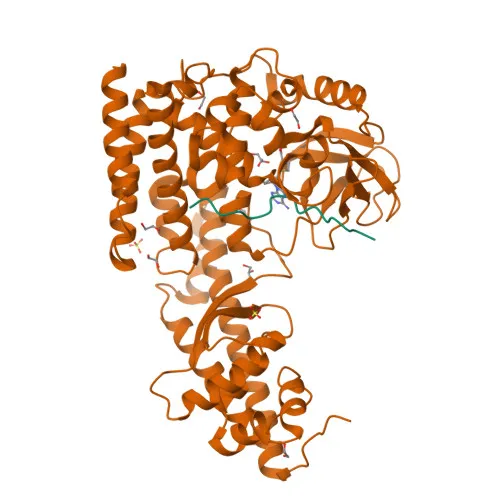
- SETD3, also known as hSETD3 or C14orf154, is a SET domain-containing protein 3 encoded by the SETD3 gene.
- SETD3 is an actin-histidine N-methyltransferase that specifically methylates actin at histidine-73 (His-73) to form 3-methylhistidine (tele-methylhistidine). This activity is critical for proper actin dynamics. Related references: PMID:30526847, PMID:30626964, PMID:30785395
- Histidine methylation of actin by SETD3 is required for smooth muscle contraction, particularly in the laboring uterus during delivery, highlighting its role in physiological processes. Related references: PMID:30626964
- The enzyme exhibits strict substrate specificity; it does not possess protein-lysine N-methyltransferase activity and likely only methylates actin at His-73, underscoring its unique functional niche. Related references: PMID:30626964, PMID:30785395, PMID:31388018
- SETD3 localizes to both the cytoplasm and nucleus, suggesting possible compartment-specific functions beyond actin methylation.
- The protein is subject to alternative splicing, phosphorylation, and ubiquitin conjugation, and contains a SET domain that binds S-adenosyl-L-methionine, the methyl donor for its transferase activity.
Experimental Guidance and Technical Tips
- The immunogen used for this antibody is a synthetic peptide spanning amino acids 72–329 of human SETD3. This region covers the N-terminal portion and part of the SET domain; thus, the antibody is expected to recognize full-length SETD3 (predicted molecular weight ~67 kDa).
- For Western blotting (WB), it is advisable to run appropriate positive and negative control lysates (e.g., SETD3-expressing vs. knockdown cell lines) to confirm specificity. Detection of a band at ~67 kDa in human samples is expected.
- In immunoprecipitation (IP) assays, antibody concentration and incubation time may need optimization; a standard starting point is 1–2 µg per 500 µg of lysate.
- When performing ELISA, consider using recombinant SETD3 protein or peptide fragments as coating antigens and titrate the antibody for optimal signal-to-noise ratio.
- Since cross-reactivity is indicated for human, validation in other species should be carried out independently if needed.
CamelBio: Your One-Stop Sourcing Bridge
CamelBio is a leading IVD raw-material partner, offering comprehensive sourcing solutions from early-stage R&D to clinical application. With this anti-SETD3 polyclonal antibody, researchers can accelerate investigations into actin methylation and smooth muscle biology. Beyond single reagents, we provide validated antibody pairs, bulk monoclonals/polyclonals, and customized sourcing for rare targets—ensuring reliable supply chains for diagnostic and life science projects.
REQUEST A QUOTE
Our professional team will reply to you within one business day. Please feel free to contact us!