Monoclonal Antibodies
Anti-Serine racemase Rabbit Monoclonal Antibody for WB and ELISA - Q9GZT4
Item Number : CM0003854
Price varies based on specs and customizations
- Application
- WB, ELISA
- Cross Reactivity
- Human
- Protein Weight
- 37kDa

Shipping:
Contact us to get shipping details Enjoy On-time Dispatch Guarantee.
Why Choose Us
Easy ordering process, quality products, and dedicated support for your business success.
Core Product Specifications and Parameters
| Parameter | Value |
|---|---|
| Product Name | Serine racemase Rabbit mAb |
| Alias | ILV1, ISO1, Serine racemase |
| Species | Human |
| GeneID (Human) | 63826 |
| Immunogen | Recombinant fusion protein containing a sequence corresponding to amino acids 1-100 of human Serine racemase (NP_068766.1) |
| Source | Rabbit |
| Category | Monoclonal Antibodies |
| Application | WB, ELISA |
| Cross Reactivity | Human |
| SWISS | Q9GZT4 |
| Protein Weight | 37kDa |
| Shipping | Ice bag |
Biological Background: Serine racemase Function and Localization
- Serine racemase (SRR), also known as D-serine ammonia-lyase, is a PLP-dependent enzyme that converts L-serine to D-serine. D-serine serves as a co-agonist with glutamate at NMDA receptors, playing a critical role in neurotransmission and synaptic plasticity. Related references: PMID:20106978 PMID:23391306 PMID:29277459
- Beyond racemization, SRR exhibits dehydratase activity towards both L- and D-serine, generating pyruvate through an aminoacrylate intermediate (By similarity).
- Tissue expression studies show SRR is abundant in brain regions such as hippocampus, corpus callosum, and dorsolateral prefrontal cortex, as well as in motor neurons and glial cells of the spinal cord. It is also expressed in heart, skeletal muscle, kidney, and liver. Related references: PMID:15193426 PMID:17880399 PMID:24138986
- In schizophrenia, SRR protein levels are elevated in the dorsolateral prefrontal cortex, suggesting a link between D-serine dysregulation and psychiatric pathophysiology. Related references: PMID:17880399
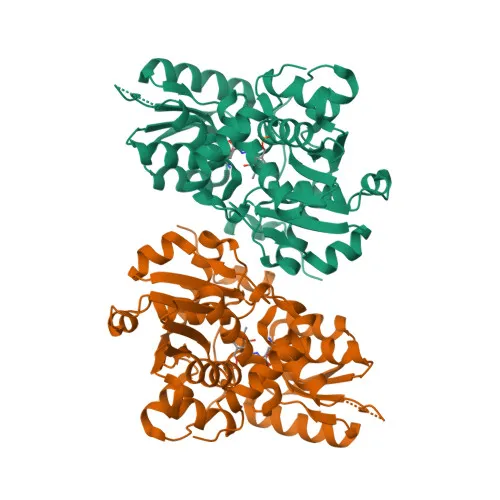
- Structural and regulatory features include pyridoxal phosphate cofactor binding, ATP and magnesium dependence, and post-translational S-nitrosylation. The enzyme functions as a homodimer and belongs to the isomerase/lyase family.
- The predicted molecular weight of serine racemase is approximately 36.6 kDa, with an observed band at 37 kDa on SDS-PAGE.
Experimental Guidance and Technical Tips
- This rabbit monoclonal antibody, raised against the N-terminal region (aa 1-100) of human serine racemase, may be suitable for detecting the target protein in Western blotting of human brain tissue lysates or cell lines endogenously expressing SRR.
- For ELISA applications, consider testing as both capture and detection antibody; antibody pairing experiments are recommended to maximize sensitivity.
- Given the PLP cofactor dependence, confirm that sample preparation conditions preserve antigen conformation if native detection is required.
- Serum and tissue samples from schizophrenia models may exhibit altered SRR levels; include appropriate controls to ensure specificity.
CamelBio: Your One-Stop Sourcing Bridge
CamelBio provides diagnostic manufacturers and research labs with one-stop access to IVD raw materials, including validated monoclonal and polyclonal antibodies like this anti-serine racemase antibody. For neuroscience and psychiatric disorder research projects, we can source antibody pairs, ancillary reagents, and custom rare-target materials to streamline your assay development from concept to clinic.
Product Datasheet
Anti-Serine racemase Rabbit Monoclonal Antibody for WB and ELISA - Q9GZT4
REQUEST A QUOTE
Our professional team will reply to you within one business day. Please feel free to contact us!