Polyclonal Antibodies
Anti-Septin 7 Polyclonal Antibody for WB, IHC-P, ELISA - Q16181
Item Number : CM0026276
Price varies based on specs and customizations
- Application
- WB, IHC-P, ELISA
- Cross Reactivity
- Human, Mouse, Rat
- Protein Weight
- 51kDa

Shipping:
Contact us to get shipping details Enjoy On-time Dispatch Guarantee.
Why Choose Us
Easy ordering process, quality products, and dedicated support for your business success.
Core Product Specifications and Parameters
| Parameter | Value |
|---|---|
| Product Name | Septin 7 Rabbit pAb |
| Remarks/Alias | CDC3, CDC10, SEPT7, SEPT7A, NBLA02942, Septin 7 |
| Species | Human |
| GeneID (Human) | 989 |
| GeneID | 989 |
| Immunogen | Recombinant fusion protein containing a sequence corresponding to amino acids 307-436 of human Septin 7 (NP_001011553.2) |
| Source | Rabbit |
| Category | Polyclonal Antibodies |
| Application | WB, IHC-P, ELISA |
| Cross Reactivity | Human, Mouse, Rat |
| SWISS | Q16181 |
| Protein Weight | 51kDa |
| Shipping | Ice bag |
Biological Background: Septin-7 Function and Localization
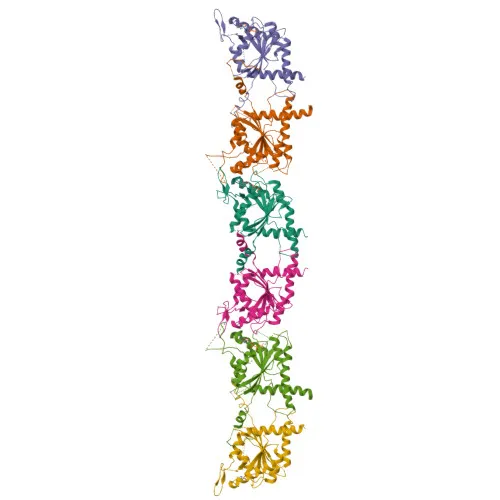
- Septin-7 (CDC10 protein homolog) is a member of the septin family of filament-forming cytoskeletal GTPases, involved in actin cytoskeleton organization.
- It is required for normal mitosis progression, including cytokinesis and proper association of CENPE with the kinetochore.
- Subcellularly, Septin-7 localizes to the cytoplasm, centromere/kinetochore, spindle, cleavage furrow, and midbody during cell division; it is also present in cilium axoneme and flagellum.
- Forms a filamentous structure with SEPTIN12, SEPTIN6, SEPTIN2, and likely SEPTIN4 at the sperm annulus, essential for sperm tail integrity and motility during postmeiotic differentiation. Related references: PMID:25588830
- The protein undergoes post-translational acetylation and phosphorylation, and is widely expressed across human tissues.
- Key functional keywords: GTP-binding, nucleotide-binding, coiled coil, mitosis, cell cycle, cell division, cilium, flagellum, spermatogenesis, differentiation.
Experimental Guidance and Technical Tips
- The immunogen targets the C-terminal domain (aa 307-436) of human Septin-7, which shares high sequence homology with mouse and rat; this likely accounts for the observed cross-reactivity. Consider using this antibody for endogenous Septin-7 detection across these species.
- For Western blotting, validate with appropriate positive control lysates (e.g., HeLa, HEK293) and confirm the expected band at ~51 kDa. Due to widespread expression, many cell lines may be suitable.
- For immunohistochemistry (paraffin), antigen retrieval optimization is recommended. Validate staining specificity by comparing with negative controls (e.g., knockout tissues or blocking peptides if available).
- In ELISA, confirm specificity through recombinant protein titration and ensure proper assay conditions. Cross-reactivity with other septin family members should be experimentally excluded.
CamelBio: Your One-Stop Sourcing Bridge
CamelBio provides diagnostic manufacturers, laboratories, and research institutes with one-stop access to IVD raw materials, technical services, and consulting. This anti-Septin-7 polyclonal antibody supports research into cytoskeletal dynamics, mitosis, and ciliogenesis. As a comprehensive sourcing partner, we offer validated antibody pairs, bulk ancillary reagents, and rare target raw-material procurement to accelerate your assay development from concept to clinic.
REQUEST A QUOTE
Our professional team will reply to you within one business day. Please feel free to contact us!