Polyclonal Antibodies
Anti-SELE Polyclonal Antibody for WB and ELISA - P16581
Item Number : CM0018918
Price varies based on specs and customizations
- Application
- WB, ELISA
- Cross Reactivity
- Human, Mouse, Rat
- Protein Weight
- 67kDa

Shipping:
Contact us to get shipping details Enjoy On-time Dispatch Guarantee.
Why Choose Us
Easy ordering process, quality products, and dedicated support for your business success.
Core Product Specifications and Parameters
| Parameter | Value |
|---|---|
| Product Name | SELE Rabbit pAb |
| Remarks/Alias | ELAM; ESEL; CD62E; ELAM1; LECAM2; selectin-e; SELE |
| Species | Human |
| Gene ID | 6401 |
| Immunogen | Recombinant fusion protein containing a sequence corresponding to amino acids 22-230 of human SELE (NP_000441.2). |
| Source | Rabbit |
| Category | Polyclonal Antibodies |
| Application | WB, ELISA |
| Cross Reactivity | Human, Mouse, Rat |
| SWISS | P16581 |
| Protein Weight | 67kDa |
| Shipping | Ice bag |
Biological Background: E-selectin Function and Localization
- E-selectin (SELE), also known as CD62E, ELAM-1, and LECAM2, is a cell-surface glycoprotein belonging to the selectin family of adhesion molecules.
- It mediates the adhesion of blood neutrophils to cytokine-activated endothelium through interaction with SELPLG/PSGL1, playing a central role in immunoadhesion and leukocyte recruitment during inflammation.
- SELE may also contribute to capillary morphogenesis, suggesting a role in angiogenesis and vascular remodeling.
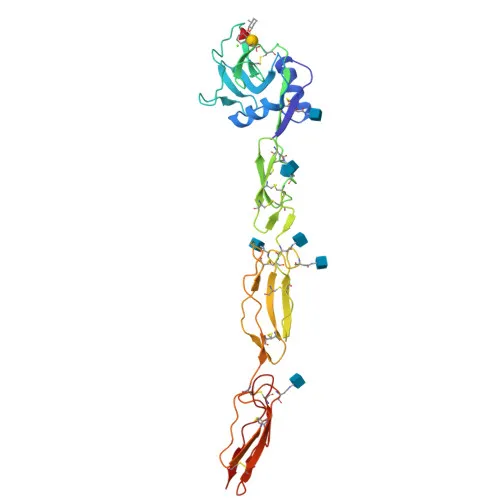
- The protein is localized to the cell membrane and is characterized by an extracellular region containing a C-type lectin domain, an EGF-like domain, and multiple sushi (SCR) repeats, followed by a transmembrane helix and a short cytoplasmic tail.
- Key structural features include calcium-dependent carbohydrate recognition via the lectin domain, consensus repeats stabilized by disulfide bonds, and metal-binding sites.
- Post-translational modifications include disulfide bond formation and glycosylation, consistent with its function as a glycoprotein adhesion receptor.
Experimental Guidance and Technical Tips
- The immunogen corresponds to the N-terminal extracellular region (aa 22-230), which includes the lectin and EGF-like domains; this region is critical for ligand binding and may ensure detection of functional epitopes.
- For WB, the predicted molecular weight is 67kDa, but note that glycosylation may cause a shift; consider using appropriate positive controls (e.g., cytokine-activated endothelial cell lysates).
- In ELISA, the antibody may be used for capture or detection; validate in the relevant sample system with recombinant SELE or activated endothelial cells.
- As a polyclonal antibody, it recognizes multiple epitopes, offering robust signal but potential for cross-reactivity; always include proper controls.
- Cross-reactivity with mouse and rat has been reported, making it suitable for comparative studies across species; confirm reactivity in your experimental model.
CamelBio: Your One-Stop Sourcing Bridge
CamelBio provides diagnostic manufacturers, labs, and research institutes with one-stop access to high-quality IVD raw materials, technical services, and consulting—covering every stage from concept to clinic. Our anti-SELE polyclonal antibody exemplifies our commitment to supplying validated reagents for immunoadhesion and inflammation research. Beyond this product, we offer extensively validated antibody pairs, optimized monoclonal/polyclonal antibodies, bulk ancillary reagents, and rare target raw-material sourcing to accelerate your IVD development pipeline.
REQUEST A QUOTE
Our professional team will reply to you within one business day. Please feel free to contact us!