Monoclonal Antibodies
Anti-SDHC Rabbit Monoclonal Antibody for WB, IF/ICC, IHC-P, ELISA - Q99643
Item Number : CM0007368
Price varies based on specs and customizations
- Application
- WB, IF/ICC, IF-P, IHC-P, ELISA
- Cross Reactivity
- Human, Mouse, Rat
- Protein Weight
- 19 kDa

Shipping:
Contact us to get shipping details Enjoy On-time Dispatch Guarantee.
Why Choose Us
Easy ordering process, quality products, and dedicated support for your business success.
Core Product Specifications and Parameters
| Parameter | Value |
|---|---|
| Product Name | SDHC Rabbit mAb |
| Remarks/Alias | CYBL; PGL3; QPS1; SDH3; CYB560; SDHC |
| Species | Human |
| GeneID | 6391 |
| Immunogen | Synthetic peptide corresponding to a sequence within amino acids 1-100 of human SDHC (NP_002992.1) |
| Source | Rabbit |
| Category | Monoclonal Antibodies |
| Application | WB, IF/ICC, IF-P, IHC-P, ELISA |
| Cross Reactivity | Human, Mouse, Rat |
| SWISS | Q99643 |
| Protein Weight | 19 kDa |
| Shipping | Ice bag |
Biological Background: SDHC Function and Localization
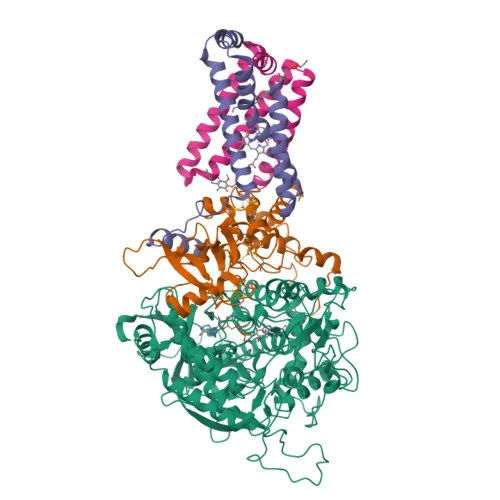
- SDHC (also known as CYBL, QPs-1, SDH3) is a membrane-anchoring subunit of succinate dehydrogenase (Complex II) of the mitochondrial electron transport chain, responsible for transferring electrons from succinate to ubiquinone. Related references: PMID:9533030
- The SDH complex also catalyzes the oxidation of malate to the enol form of oxaloacetate, a potent inhibitor of succinate dehydrogenase activity, which is further isomerized into keto-oxaloacetate.
- Localized to the mitochondrial inner membrane, SDHC is an integral membrane protein containing transmembrane helices and heme cofactors for electron transfer.
- SDHC is a key component of the tricarboxylic acid (TCA) cycle and oxidative phosphorylation, linking succinate oxidation to the ubiquinone pool.
- The protein undergoes alternative splicing and contains transit peptide, heme-binding, and iron-sulfur cluster motifs critical for its function.
- Human SDHC has a calculated molecular weight of approximately 18.6 kDa, with the mature form often migrating at ~19 kDa on SDS-PAGE.
Experimental Guidance and Technical Tips
- The immunogen is a synthetic peptide corresponding to the N-terminal region (aa 1-100) of human SDHC; it is expected to detect both the precursor and mature forms.
- For Western blotting, consider using mitochondrial-enriched lysates from human, mouse, or rat tissues (e.g., heart, skeletal muscle) as positive controls; the expected band is ~19 kDa.
- For IHC-P and IF/ICC, validate the antibody in tissues or cell lines with high mitochondrial content; co-staining with a mitochondrial marker is recommended.
- Since the antibody is suitable for ELISA, it can be used for quantitative studies, but appropriate assay optimization and controls are needed.
CamelBio: Your One-Stop Sourcing Bridge
CamelBio is your one-stop partner for IVD raw materials, offering validated antibody pairs, optimized monoclonal/polyclonal antibodies, bulk ancillary reagents, and rare target sourcing—all supported by technical and consulting services from concept to clinic. For complex II and mitochondrial research, our SDHC Rabbit mAb provides a reliable reagent for diagnostic and laboratory applications. Contact us to explore custom sourcing or bulk supply options tailored to your development needs.
Product Datasheet
Anti-SDHC Rabbit Monoclonal Antibody for WB, IF/ICC, IHC-P, ELISA - Q99643
REQUEST A QUOTE
Our professional team will reply to you within one business day. Please feel free to contact us!