Monoclonal Antibodies
Anti-SCD1 Rabbit Monoclonal Antibody for WB, IF/ICC, ELISA - O00767
Item Number : CM0008006
Price varies based on specs and customizations
- Application
- WB, IF/ICC, ELISA
- Cross Reactivity
- Human
- Protein Weight
- 42kDa

Shipping:
Contact us to get shipping details Enjoy On-time Dispatch Guarantee.
Why Choose Us
Easy ordering process, quality products, and dedicated support for your business success.
Core Product Specifications and Parameters
| Parameter | Value |
|---|---|
| Product Name | SCD1 Rabbit mAb |
| Remarks/Alias | SCD1; FADS5; SCDOS; hSCD1; MSTP008 |
| Species | Human |
| Gene ID (Human) | 6319 |
| Gene ID | 6319 |
| Immunogen | A synthetic peptide corresponding to a sequence within amino acids 260-359 of human SCD1 (NP_005054.3) |
| Source | Rabbit |
| Category | Monoclonal Antibodies |
| Application | WB, IF/ICC, ELISA |
| Cross Reactivity | Human |
| SWISS | O00767 |
| Protein Weight | 42kDa |
| Shipping | Ice bag |
Biological Background: SCD1 Function and Localization
-
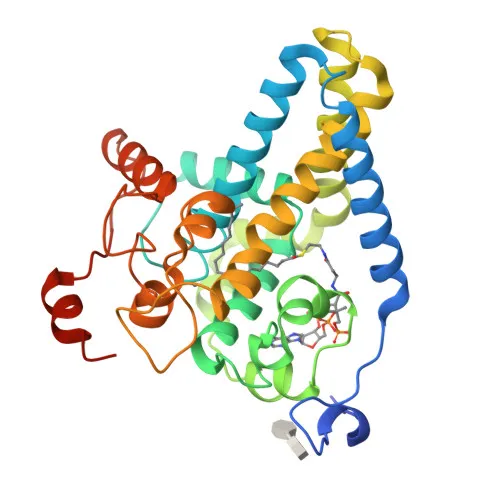
Stearoyl-CoA desaturase (SCD1), also known as acyl-CoA desaturase, delta-9 desaturase, and fatty acid desaturase, is encoded by the SCD gene (aliases: FADS5, SCD1, SCDOS). It is an iron-containing oxidoreductase that introduces a cis double bond at the delta-9 position of saturated fatty acyl-CoA substrates, primarily palmitoyl-CoA and stearoyl-CoA, converting them to palmitoleoyl-CoA and oleoyl-CoA, respectively. Related references: PMID:15907797, PMID:18765284
-
The enzyme plays a central role in lipid biosynthesis, contributing to the production of monounsaturated fatty acids that are incorporated into membrane phospholipids, cholesterol esters, and triglycerides.
-
SCD1 is critical for maintaining body energy homeostasis and participates in regulating lipogenic gene expression and mitochondrial fatty acid oxidation.
-
Subcellularly, SCD1 is an integral membrane protein anchored in the endoplasmic reticulum membrane, consistent with its role in lipid metabolism.
-
Tissue-specific expression: highly expressed in adult adipose tissue, with lower levels in adult brain and lung; also detected in fetal liver, lung, and brain.
-
Post-translational modifications include phosphorylation (phosphoprotein), and the enzyme binds iron as a cofactor.
Experimental Guidance and Technical Tips
- For Western blot (WB), a band of approximately 42 kDa is anticipated. Endogenous SCD1 is highly expressed in human adipose tissue; consider using suitable human cell lines or tissue lysates as positive controls.
- Due to its membrane localization, efficient solubilization with detergents during lysis may improve detection. Reducing conditions are typically compatible with this monoclonal antibody.
- For immunofluorescence (IF/ICC), permeabilization steps are essential to access the ER membrane-localized target. Validate fixation and permeabilization conditions in your experimental system.
- ELISA performance may depend on plate coating, antibody titration, and detection format. Titrate the antibody and include appropriate positive and negative controls.
- The immunogen corresponds to an intracellular sequence (aa 260–359); thus, the antibody is expected to recognize an epitope within this region. It is suitable for applications detecting total SCD1 protein.
CamelBio: Your One-Stop Sourcing Bridge
CamelBio is a dedicated provider of IVD raw materials, technical services, and consulting, supporting diagnostic manufacturers and researchers from concept to clinic. This SCD1 rabbit monoclonal antibody enhances your portfolio for lipid metabolism and metabolic disorder research. Beyond this product, we offer validated antibody pairs, optimized monoclonal and polyclonal antibodies, bulk ancillary reagents, and rare-target raw-material sourcing to streamline your assay development and production.
REQUEST A QUOTE
Our professional team will reply to you within one business day. Please feel free to contact us!