Monoclonal Antibodies
Anti-SBDS Rabbit Monoclonal Antibody for WB, ELISA - Q9Y3A5
Item Number : CM0003422
Price varies based on specs and customizations
- Application
- WB, ELISA
- Cross Reactivity
- Human, Mouse, Rat
- Protein Weight
- 29kDa

Shipping:
Contact us to get shipping details Enjoy On-time Dispatch Guarantee.
Why Choose Us
Easy ordering process, quality products, and dedicated support for your business success.
Core Product Specifications and Parameters
| Parameter | Value |
|---|---|
| Product Name | SBDS Rabbit mAb |
| Remarks/Alias | SDS; SDO1; SWDS; CGI-97; SBDS |
| Species | Human |
| GeneID (Human) | 51119 |
| GeneID | 51119 |
| Immunogen | Synthetic Peptide | A synthetic peptide corresponding to a sequence within amino acids 151-250 of human SBDS (NP_057122.2). |
| Source | Rabbit |
| Category | Monoclonal Antibodies |
| Application | WB, ELISA |
| Cross Reactivity | Human, Mouse, Rat |
| SWISS | Q9Y3A5 |
| Protein Weight | 29kDa |
| Shipping | Ice bag |
Biological Background: SBDS Function and Localization
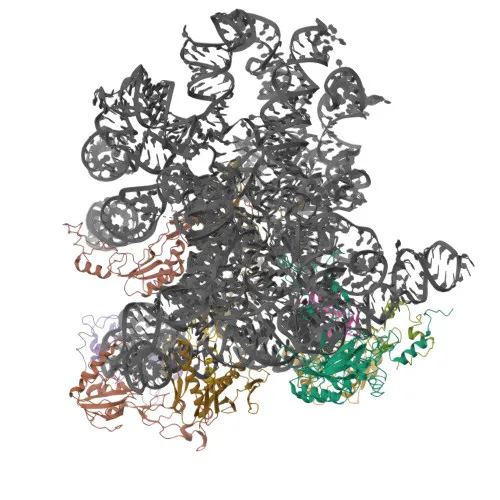
- SBDS (Shwachman-Bodian-Diamond syndrome protein) is a ribosome maturation factor encoded by the SBDS gene (GeneID: 51119), with a molecular weight of ~29 kDa (calculated 28.8 kDa).
- It is essential for 60S ribosomal subunit maturation: together with the GTPase EFL1, SBDS triggers the release of the anti-association factor EIF6 from pre-60S particles, enabling 80S ribosome assembly and translation.
- SBDS localizes to multiple cellular compartments including the cytoplasm, nucleolus, nucleoplasm, and mitotic spindle, consistent with its roles in ribosome biogenesis and cell division.
- The protein is widely expressed across tissues, reflecting its fundamental function in protein synthesis.
- Post-translational modifications such as acetylation have been identified, suggesting regulatory mechanisms that may influence SBDS activity or stability.
- Mutations in SBDS cause Shwachman-Diamond syndrome, an inherited disorder characterized by bone marrow failure and exocrine pancreatic insufficiency (keyword: Disease variant).
Experimental Guidance and Technical Tips
- The immunogen corresponds to a central region (aa 151–250) of human SBDS, which is highly conserved across human, mouse, and rat, supporting the observed cross-reactivity.
- For Western blot, a band at approximately 29 kDa is expected; consider using whole-cell lysates from human, mouse, or rat cell lines.
- For ELISA applications, the antibody can be considered for use as a capture or detection reagent, paired with an appropriate SBDS antibody; validate optimal dilutions in your specific assay system.
- As a rabbit monoclonal antibody, it offers high specificity and lot-to-lot consistency, but performance should be validated in the relevant sample matrix.
CamelBio: Your One-Stop Sourcing Bridge
CamelBio specializes in supplying high-quality IVD raw materials, including recombinant monoclonal antibodies like this anti-SBDS antibody, suitable for developing ribosome assembly and Shwachman-Diamond syndrome diagnostic assays. Our portfolio covers validated antibody pairs, bulk ancillary reagents, and rare target sourcing to streamline your kit development. Whether you need optimized monoclonals or tailored raw-material solutions, CamelBio is your partner from concept to clinic.
REQUEST A QUOTE
Our professional team will reply to you within one business day. Please feel free to contact us!