Monoclonal Antibodies
Anti-SARS-CoV Spike RBD Rabbit Monoclonal Antibody for WB and ELISA - P59594
Item Number : CM0002734
Price varies based on specs and customizations
- Application
- WB, ELISA
- Cross Reactivity
- SARS-CoV
- Protein Weight
- 139kDa

Shipping:
Contact us to get shipping details Enjoy On-time Dispatch Guarantee.
Why Choose Us
Easy ordering process, quality products, and dedicated support for your business success.
Core Product Specifications and Parameters
| Parameter | Value |
|---|---|
| Product Name | SARS-CoV Spike RBD Rabbit mAb |
| Remarks/Alias | E2; SARS-CoV Spike RBD |
| Gene ID | 1489668 |
| Immunogen | Synthetic peptide corresponding to a sequence within amino acids 350-450 of coronavirus Spike RBD (NP_828851.1) |
| Source | Rabbit |
| Category | Monoclonal Antibodies |
| Application | WB, ELISA |
| Cross Reactivity | SARS-CoV |
| SWISS | P59594 |
| Protein Weight | 139kDa |
| Shipping | Ice bag |
Biological Background: Spike Glycoprotein Function and Localization
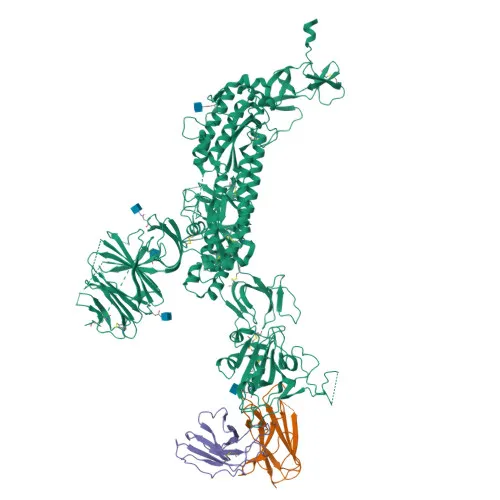
- The Spike glycoprotein (S) of SARS-CoV, also known as E2 or peplomer protein, is a class I viral fusion protein that mediates viral entry into host cells.
- It attaches the virion to the host cell membrane by interacting with host receptors, primarily angiotensin-converting enzyme 2 (ACE2) and CLEC4M/DC-SIGNR, initiating infection.
- Following receptor binding and virus internalization into endosomes, the S protein undergoes conformational changes. Proteolytic cleavage by host cathepsin L (CTSL) unmasks the fusion peptide, enabling fusion of the viral and endosomal membranes.
- The S protein also functions as a viral immunoevasin by down-regulating host tetherin (BST2) through lysosomal degradation, counteracting the host innate immune response.
- Subcellularly, the Spike protein is located at the virion membrane, host cell membrane, and host endoplasmic reticulum-Golgi intermediate compartment membrane.
- Key structural features include a signal peptide, a large ectodomain containing the receptor-binding domain (RBD), heptad repeat regions that form a coiled-coil trimer-of-hairpins structure, a transmembrane domain, and a cytoplasmic tail. It is N-linked glycosylated, contains disulfide bonds, and is palmitoylated.
- The Spike glycoprotein is essential for virus entry, virulence, and immunoevasion, making it a major target for diagnostic reagents and vaccine development.
Experimental Guidance and Technical Tips
- The immunogen corresponds to amino acids 350-450 within the RBD of the Spike protein, so this antibody may detect the full-length Spike protein (~139 kDa) or the cleaved S1 subunit in WB under reducing or non-reducing conditions.
- For WB, consider using SDS-PAGE with appropriate controls such as recombinant Spike protein or lysates from SARS-CoV-infected cells. Validate the antibody in the relevant sample system to confirm specificity.
- For ELISA, capture or detection assays can be designed using recombinant RBD or Spike protein. Optimal coating buffers and antibody dilutions should be determined experimentally.
- Due to the specificity for the RBD, this antibody may be useful in neutralization or competition assays, but such applications require individual validation.
CamelBio: Your One-Stop Sourcing Bridge
CamelBio partners with diagnostic manufacturers, laboratories, and research institutes to supply validated IVD raw materials, including monoclonal and polyclonal antibodies, antibody pairs, antigens, and ancillary reagents. This SARS-CoV Spike RBD antibody supports the development of serological tests and research tools for SARS-CoV detection and study. Leverage CamelBio’s streamlined procurement for rare target raw materials and one-stop technical support to accelerate your project from concept to clinic.
REQUEST A QUOTE
Our professional team will reply to you within one business day. Please feel free to contact us!