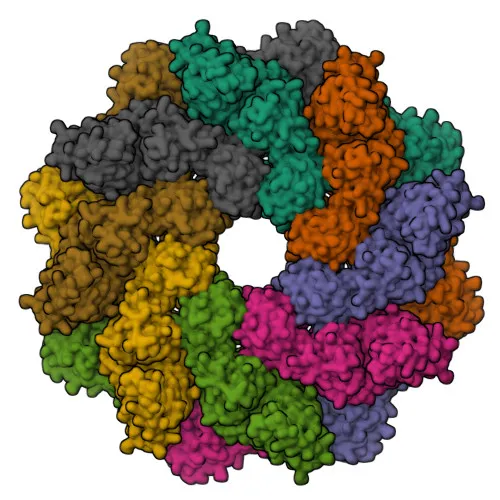
Polyclonal Antibodies
Anti-SARM1 Polyclonal Antibody for WB, IP, ELISA - Q6SZW1
Item Number : CM0022419
Price varies based on specs and customizations
- Application
- WB, IP, ELISA
- Cross Reactivity
- Human
- Protein Weight
- 79kDa

Shipping:
Contact us to get shipping details Enjoy On-time Dispatch Guarantee.
Why Choose Us
Easy ordering process, quality products, and dedicated support for your business success.
Core Product Specifications and Parameters
| Parameter | Value |
|---|---|
| Product Name | SARM1 Rabbit pAb |
| Remarks/Alias | SARM; HsTIR; SAMD2; hSARM1; MyD88-5; SARM1 |
| Species | Human |
| Gene ID (Human) | 23098 |
| Gene ID | 23098 |
| Immunogen | A synthetic peptide corresponding to a sequence within amino acids 625-724 of human SARM1 (NP_055892.2) |
| Source | Rabbit |
| Category | Polyclonal Antibodies |
| Application | WB, IP, ELISA |
| Cross Reactivity | Human |
| SWISS | Q6SZW1 |
| Protein Weight | 79kDa |
| Shipping | Ice bag |
Biological Background: SARM1 Function and Localization
- SARM1 is an NAD(+) hydrolase (also active on NADP(+)) that plays a critical role in axonal degeneration by promoting Wallerian degeneration, an injury-induced programmed subcellular death pathway. It triggers axon destruction through NAD(+) depletion.
Related references: PMID:25908823, PMID:27671644, PMID:28334607 - Upon activation, it cleaves NAD(+) into ADP-D-ribose (ADPR), cyclic ADPR (cADPR), and nicotinamide, leading to cytoskeletal degradation and axon destruction.
Related references: PMID:30333228, PMID:29395922 - Also functions as a non-self dsDNA sensor in a sequence-independent manner, eliciting NAD(+) degradation to promote programmed cell death.
Related references: PMID:41138726 - Acts as a negative regulator of toll-like receptor (TLR) signaling, inhibiting both TICAM1/TRIF- and MYD88-dependent pathways, including NF-kappa-B and IRF3 activation.
Related references: PMID:16964262, PMID:15123841 - Regulates dendritic arborization through the MAPK4-JNK pathway (By similarity).
- Localizes to the cytoplasm, axons, dendrites, synapses, and mitochondria.
- Predominantly expressed in brain, kidney, and liver; lower expression in placenta.
- Contains sterile alpha (SAM) and armadillo (ARM) repeat domains along with a TIR domain; undergoes alternative splicing and phosphorylation.
Experimental Guidance and Technical Tips
- The immunogen is a synthetic peptide spanning residues 625–724 of human SARM1; consider verifying target specificity by sequence alignment with orthologs in your sample species.
- For Western blot, a band around 79 kDa is expected; include appropriate positive and negative controls to confirm specificity.
- IP and ELISA applications are listed; optimize antibody concentration and buffer conditions for your specific experimental setup.
- Given the role of SARM1 in injury-induced responses, consider using axotomy or stress models to study activation and signaling events.
CamelBio: Your One-Stop Sourcing Bridge
CamelBio provides one-stop access to IVD raw materials, technical services, and consulting, supporting every stage from concept to clinic. This SARM1 polyclonal antibody is suitable for research into axonal degeneration, innate immunity, and programmed cell death. In addition to this product, we offer validated antibody pairs, optimized monoclonal/polyclonal antibodies, bulk ancillary reagents, and rare target raw-material sourcing to accelerate your diagnostic development.
REQUEST A QUOTE
Our professional team will reply to you within one business day. Please feel free to contact us!