Polyclonal Antibodies
Anti-S1PR5 Rabbit Polyclonal Antibody for WB, ELISA - Q9H228
Item Number : CM0018987
Price varies based on specs and customizations
- Application
- WB, ELISA
- Cross Reactivity
- Human
- Protein Weight
- 42kDa

Shipping:
Contact us to get shipping details Enjoy On-time Dispatch Guarantee.
Why Choose Us
Easy ordering process, quality products, and dedicated support for your business success.
Core Product Specifications and Parameters
| Parameter | Value |
|---|---|
| Product Name | S1PR5 Rabbit pAb |
| Remarks/Alias | EDG8; S1P5; Edg-8; SPPR-1; SPPR-2; S1PR5 |
| Species | Human |
| Gene ID | 53637 |
| Immunogen | Recombinant fusion protein containing a sequence corresponding to amino acids 307-398 of human S1PR5 (NP_110387.1) |
| Source | Rabbit |
| Category | Polyclonal Antibodies |
| Application | WB, ELISA |
| Cross Reactivity | Human |
| SWISS | Q9H228 |
| Protein Weight | 42kDa |
| Shipping | Ice bag |
Biological Background: S1PR5 Function and Localization
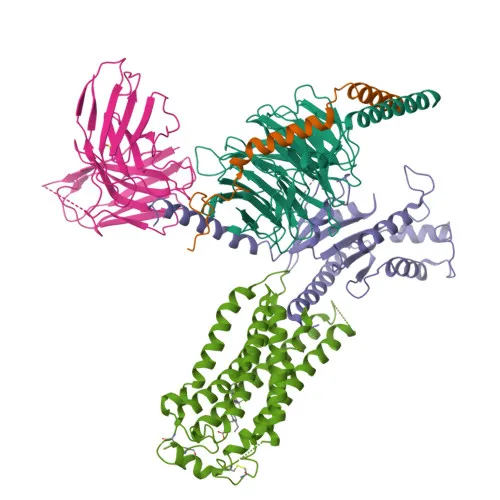
- S1PR5, also known as endothelial differentiation G protein-coupled receptor 8 (EDG8) or S1P receptor Edg-8, is a member of the G protein-coupled receptor family.
- It serves as a high-affinity receptor for the bioactive lysophospholipid sphingosine 1-phosphate (S1P), coupling to both Gi/o and G12 subclasses of heterotrimeric G proteins.
- S1PR5 is implicated in the regulation of radial glial cell transformation into astrocytes and may influence cellular proliferation in the central nervous system.
- The receptor localizes to the cell membrane, consistent with its role as a transmembrane signaling transducer.
- Expression is widespread but highest in the brain, particularly in white matter regions like the corpus callosum; it is also detected in spleen, peripheral blood leukocytes, placenta, lung, and aorta.
- Alternative splicing yields two isoforms: isoform 1 predominates in peripheral tissues, while isoform 2 is enriched in the brain, spleen, and peripheral blood leukocytes.
- S1PR5 is overexpressed in leukemic large granular lymphocytes, suggesting a potential role in hematologic malignancies.
- Post-translational modifications include glycosylation, palmitoylation, and phosphorylation, as indicated by UniProt keywords.
Experimental Guidance and Technical Tips
- For Western blot, the expected band size is approximately 42 kDa; consider using a positive control lysate from S1PR5-expressing cells, such as brain or leukocyte samples, and optimize antibody dilution.
- For ELISA, the antibody may be used as a capture or detection reagent; pairing with a matched detection antibody is recommended for sandwich ELISA development.
- Given the polyclonal nature, lot-to-lot consistency should be confirmed for critical quantitative assays.
- Cross-reactivity with other S1P receptor family members is not tested; validation in the specific experimental context is advised.
CamelBio: Your One-Stop Sourcing Bridge
CamelBio is your dedicated partner for IVD raw material sourcing, bridging the gap from concept to clinic. For S1PR5-related studies in neuroscience and immunology, we offer validated antibody pairs, optimized polyclonal and monoclonal antibodies, and bulk ancillary reagents. Whether you require rare target reagents or large-scale production support, CamelBio simplifies your procurement process.
REQUEST A QUOTE
Our professional team will reply to you within one business day. Please feel free to contact us!