Monoclonal Antibodies
Anti-RXRα Rabbit Monoclonal Antibody for WB, IP, IF/ICC, ChIP, ChIP-seq, ELISA - P19793
Item Number : CM0003365
Price varies based on specs and customizations
- Application
- WB, IP, IF/ICC, ChIP, ChIP-seq, ELISA
- Cross Reactivity
- Human, Mouse, Rat
- Protein Weight
- 51 kDa

Shipping:
Contact us to get shipping details Enjoy On-time Dispatch Guarantee.
Why Choose Us
Easy ordering process, quality products, and dedicated support for your business success.
Core Product Specifications and Parameters
| Parameter | Value |
|---|---|
| Product Name | RXRα Rabbit mAb |
| Remarks/Alias | NR2B1; RXRalpha; RXR-alpha; RXRα |
| Species | Human |
| GeneID (Human) | 6256 |
| Immunogen | Synthetic peptide corresponding to a sequence within amino acids 1-100 of human RXRα (P19793) |
| Source | Rabbit |
| Category | Monoclonal Antibodies |
| Application | WB, IP, IF/ICC, ChIP, ChIP-seq, ELISA |
| Cross Reactivity | Human, Mouse, Rat |
| SWISS | P19793 |
| Protein Weight | 51 kDa |
| Shipping | Ice bag |
Biological Background: RXRα Function and Localization
-
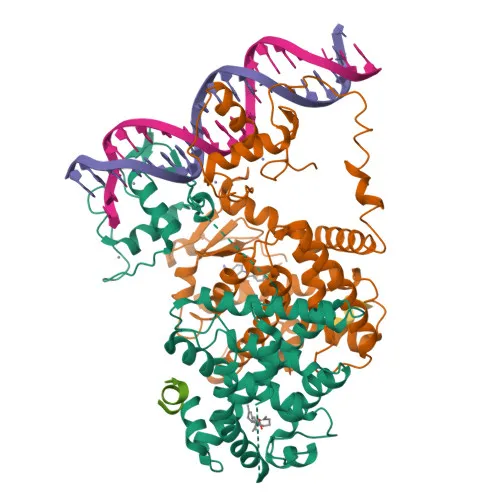
RXRα (retinoic acid receptor RXR-alpha) is a nuclear receptor encoded by the RXRA gene, also designated NR2B1. It belongs to the nuclear receptor superfamily and functions as a ligand-dependent transcription factor that binds 9-cis retinoic acid with high affinity. PubMed:1310260 Related references: PMID:1310260
-
In the nucleus, RXRα forms heterodimers with retinoic acid receptors (RARs) and binds to retinoic acid response elements (RAREs) composed of tandem 5'-AGGTCA-3' sites (DR1-DR5). In the absence of ligand, RXR-RAR heterodimers recruit corepressor complexes that promote histone deacetylation and chromatin condensation, repressing transcription. Ligand binding triggers corepressor dissociation and coactivator recruitment, leading to transcriptional activation. PubMed:10195690, PubMed:11162439, PubMed:11915042, PubMed:20215566, PubMed:37478846, PubMed:9267036 Related references: PMID:10195690 PMID:11162439 PMID:11915042 PMID:20215566 PMID:37478846 PMID:9267036
-
RXRα serves as a common heterodimeric partner for numerous other nuclear receptors, including PPARα. The RXRA/PPARA heterodimer is essential for PPARα transcriptional activity on fatty acid oxidation genes such as ACOX1 and cytochrome P450 system genes. PubMed:10195690, PubMed:11915042, PubMed:28167758 Related references: PMID:10195690 PMID:11915042 PMID:28167758
-
Subcellular localization includes the nucleus, where it exerts transcriptional regulatory functions, as well as the cytoplasm and mitochondria. Its shuttling may facilitate nuclear import of heterodimerization partners such as VDR and NR4A1. PubMed:12145331, PubMed:15509776 Related references: PMID:12145331 PMID:15509776
-
RXRα undergoes multiple post-translational modifications including acetylation, phosphorylation, and ubiquitination (isopeptide bond formation). These modifications regulate its stability, DNA-binding affinity, and transcriptional activity. Keywords: Acetylation, Phosphoprotein, Ubl conjugation, Isopeptide bond.
-
In addition to metabolic regulation, RXRα plays a role in innate immunity by negatively regulating antiviral genes such as type I IFN, thereby attenuating immune responses during viral infection. It also promotes myelin debris phagocytosis and remyelination in macrophages. PubMed:25417649, PubMed:26463675 Related references: PMID:25417649 PMID:26463675
-
Tissue expression is broad: highly expressed in liver, kidney, and brain; also detected in lung fibroblasts and monocytes. Its role in cellular senescence is linked to repression of ITPR2 and regulation of calcium signaling. PubMed:30216632, PubMed:26463675, PubMed:14702039, PubMed:2159111, PubMed:24275569 Related references: PMID:30216632 PMID:26463675 PMID:14702039 PMID:2159111 PMID:24275569
-
The RXRα/RARB heterodimer can act as either a transcriptional repressor or activator depending on the RARE DNA element context, highlighting its versatile role in gene regulation. PubMed:29021580 Related references: PMID:29021580
Experimental Guidance and Technical Tips
-
The immunogen corresponds to the N-terminal region (aa 1-100) of human RXRα, a domain involved in ligand-dependent transactivation and possibly in interactions with coregulators. This design strategy may confer high specificity and affinity for both unmodified and post-translationally modified forms of the receptor.
-
The antibody is validated for Western blotting (WB) to detect a band at 51 kDa. Given the ubiquitous expression of RXRα in liver, kidney, and brain, these tissues serve as suitable positive controls. For immunoprecipitation (IP), consider using nuclear extracts from cultured cells or tissue samples.
-
In chromatin immunoprecipitation (ChIP) and ChIP-seq, RXRα is recruited to RAREs genome-wide. A well-characterized positive control locus is the retinoic acid receptor beta (RARB) gene, which contains a canonical DR5 RARE. For best results, treat cells with 9-cis retinoic acid or all-trans retinoic acid prior to crosslinking.
-
For immunofluorescence/immunocytochemistry (IF/ICC), the antibody can be used to monitor nuclear translocation of RXRα following ligand stimulation. Co-staining with a nuclear marker or organelle markers (e.g., mitochondrial dye) may provide additional localization context.
-
When performing sandwich ELISA, pairing this monoclonal antibody with a polyclonal detection antibody targeting a distinct epitope can enhance sensitivity. Validate the assay using recombinant RXRα protein standards and check for cross-reactivity with other RXR isoforms (RXRβ, RXRγ) as needed.
CamelBio: Your One-Stop Sourcing Bridge
CamelBio connects diagnostic manufacturers, research laboratories, and academic institutes with a comprehensive portfolio of IVD raw materials, including validated antibody pairs, antigen-grade recombinant proteins, and ancillary reagents. This anti-RXRα monoclonal antibody serves as a reliable core component for developing ligand-binding assays, epigenetic detection kits, and multiplexed protein profiling panels. Beyond these catalog solutions, our team provides customized monoclonal/polyclonal antibody production, rare-target raw-material sourcing, and bulk supply programs to streamline your IVD development pipeline from concept to clinic.
REQUEST A QUOTE
Our professional team will reply to you within one business day. Please feel free to contact us!
Related Articles
ROX, Optical Architecture, and the Hidden Ceiling of Multiplex qPCR
How instrument optics determine ROX requirements, consume detection channels, and shape multiplex qPCR design, reagent logistics, and kit strategy.
The Silent Correction Behind Reliable qPCR: Passive Reference Dyes, Rn, and Assay Design
Learn how passive reference dyes normalize qPCR noise, how Rn is calculated, and when ROX affects compatibility, accuracy, and multiplexing.