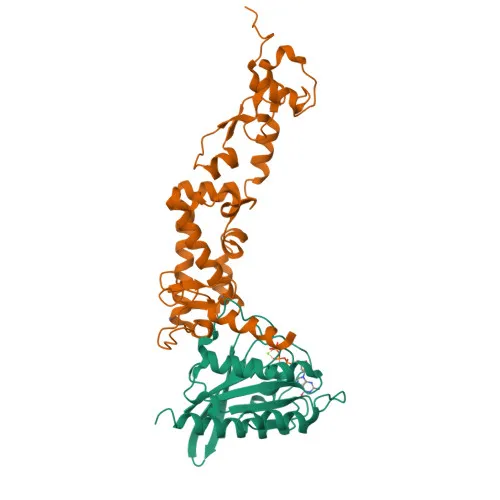
Polyclonal Antibodies
Anti-Rubicon Rabbit Polyclonal Antibody for WB, ELISA - Q92622
Item Number : CM0015640
Price varies based on specs and customizations
- Application
- WB, ELISA
- Cross Reactivity
- Mouse, Rat
- Protein Weight
- 109kDa

Shipping:
Contact us to get shipping details Enjoy On-time Dispatch Guarantee.
Why Choose Us
Easy ordering process, quality products, and dedicated support for your business success.
Core Product Specifications and Parameters
| Parameter | Value |
|---|---|
| Product Name | Rubicon Rabbit pAb |
| Remarks/Alias | SCAR15; RUBICON; KIAA0226; Rubicon |
| Species | Human |
| GeneID (human) | 9711 |
| GeneID | 9711 |
| Immunogen | Recombinant fusion protein containing a sequence corresponding to amino acids 1-200 of human Rubicon (NP_055502.1). |
| Source | Rabbit |
| Category | Polyclonal Antibodies |
| Application | WB, ELISA |
| Cross Reactivity | Mouse, Rat |
| SWISS | Q92622 |
| Protein Weight | 109kDa |
| Shipping | Ice bag |
Biological Background: Rubicon Function and Localization
- Rubicon (Run domain Beclin-1-interacting and cysteine-rich domain-containing protein), also known as Baron, is encoded by the RUBCN gene (KIAA0226). Alternative splicing produces multiple isoforms.
- Rubicon functions as a central inhibitor of autophagy and endosomal trafficking: it suppresses PIK3C3 activity, impairs PI3KC3-C2 complex function, blocks autophagosome maturation, and prevents UVRAG-dependent Rab7 activation on endosomes. Related references: PMID:20974968 PMID:21062745
- In activated macrophages, Rubicon promotes antibacterial responses by stabilizing the CYBA:CYBB NADPH oxidase complex, enhancing TLR2-dependent ROS production and phagocytic killing. Related references: PMID:22423966
- Following fungal or viral infection, Rubicon negatively regulates pro-inflammatory cytokine production by binding CARD9 and sequestering it from signaling complexes. Related references: PMID:22423967
- Subcellularly, Rubicon localizes to late endosomes, lysosomes, and early endosomes, consistent with its roles in endocytic trafficking and autophagosome regulation.
- The protein contains phosphosites and is subject to post-translational modification; it is implicated in neurodegeneration pathways and identified in proteomics studies.
- Predicted molecular weight of 108.6 kDa; experimentally migrates at approximately 109 kDa on SDS-PAGE.
Experimental Guidance and Technical Tips
- The immunogen corresponds to the N-terminal domain (amino acids 1-200), which may detect all known isoforms. Verify specificity in relevant cell and tissue lysates.
- For Western blotting, consider using a reducing SDS-PAGE and nitrocellulose membrane; the expected band is ~109 kDa.
- Optimal working concentrations should be determined experimentally; typical starting dilutions for polyclonal antibodies in WB range from 1:500 to 1:2000.
- The antibody cross-reacts with mouse and rat Rubicon, making it suitable for comparative studies in rodent models.
- For ELISA, consider using the recombinant immunogen as a positive control and titrate the antibody accordingly.
- Validate the antibody in your specific experimental system using positive and negative controls (e.g., RUBCN knockdown or knockout lysates).
CamelBio: Your One-Stop Sourcing Bridge
CamelBio provides diagnostic manufacturers, labs, and research institutes with one-stop access to IVD raw materials, technical services, and consulting—covering every stage from concept to clinic. For autophagy and innate immunity research, we offer validated antibody pairs, optimized polyclonal antibodies like this anti-Rubicon, bulk ancillary reagents, and sourcing of rare targets to accelerate your assay development.
REQUEST A QUOTE
Our professional team will reply to you within one business day. Please feel free to contact us!