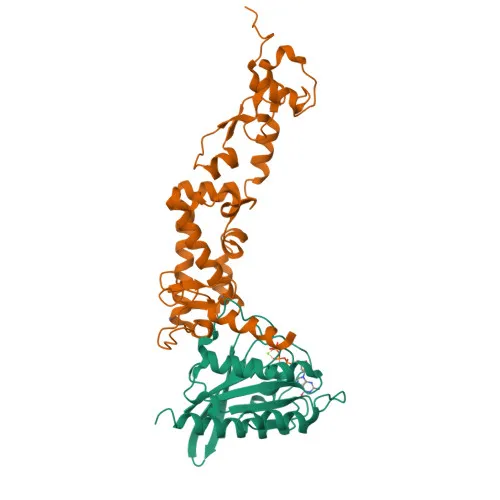
Polyclonal Antibodies
Anti-Rubicon Rabbit Polyclonal Antibody for WB and ELISA - Q92622
Item Number : CM0024531
Price varies based on specs and customizations
- Application
- WB, ELISA
- Cross Reactivity
- Human
- Protein Weight
- 109kDa

Shipping:
Contact us to get shipping details Enjoy On-time Dispatch Guarantee.
Why Choose Us
Easy ordering process, quality products, and dedicated support for your business success.
Core Product Specifications and Parameters
| Parameter | Value |
|---|---|
| Product Name | Rubicon Rabbit pAb |
| Remarks/Alias | SCAR15; RUBICON; KIAA0226; Rubicon |
| Species | Human |
| GeneID | 9711 |
| Immunogen | Recombinant fusion protein containing a sequence corresponding to amino acids 1-200 of human Rubicon (NP_055502.1) |
| Source | Rabbit |
| Category | Polyclonal Antibodies |
| Application | WB, ELISA |
| Cross Reactivity | Human |
| SWISS | Q92622 |
| Protein Weight | 109kDa |
| Shipping | Ice bag |
Biological Background: Rubicon Function and Localization
- Protein identity: Run domain Beclin-1-interacting and cysteine-rich domain-containing protein (RUBCN), also known as Baron or KIAA0226, encoded by the RUBCN gene.
- Core function: Inhibits PIK3C3 activity and negatively regulates the PI3K complex II (PI3KC3-C2) in autophagy, impairing autophagosome maturation and endosome trafficking. Additionally, it sequesters UVRAG from the class C Vps complex, negatively regulating Rab7 activation. Related references: PMID:20974968 PMID:21062745
- Role in innate immunity: In macrophages, promotes NADH oxidase activity by associating with CYBA, stabilizing the CYBA:CYBB heterodimer, increasing TLR2 association, and inducing antimicrobial ROS and inflammatory cytokine production upon bacterial infection. Related references: PMID:22423966
- Negative regulation of cytokine production: Following fungal or viral infection, negatively regulates pro-inflammatory cytokine production by associating with CARD9 and sequestering it from signaling complexes. Related references: PMID:22423967
- Subcellular localization: Localizes to late endosomes, lysosomes, and early endosomes, consistent with its role in endocytic trafficking.
- Post-translational modifications: Classified as a phosphoprotein (UniProt keyword), suggesting regulation by phosphorylation.
- Additional features: Subject to alternative splicing; implicated in neurodegeneration and phagocytosis according to UniProt keywords.
Experimental Guidance and Technical Tips
- Given the immunogen design (aa 1-200 of human Rubicon), this antibody may detect full-length and N-terminal isoforms. For WB, expect a band near 109 kDa; use reducing conditions and validate specificity with knockdown/knockout controls.
- For ELISA, titrate the antibody to determine optimal coating and detection conditions, including appropriate negative controls to rule out non-specific binding.
- Reported for human reactivity; cross-reactivity with other species is not tested. Validate sequence alignment and experimental conditions if used for other species.
- As a polyclonal antibody, lot-to-lot variability may occur; re-optimize dilutions for each new lot.
CamelBio: Your One-Stop Sourcing Bridge
CamelBio offers a comprehensive portfolio of IVD raw materials, including this anti-Rubicon antibody, which is relevant for researchers studying autophagy, endocytosis, and innate immunity. Our supply capabilities encompass validated antibody pairs, recombinant proteins, and ancillary reagents, supporting assay development from concept to clinic. For rare or custom targets, our sourcing platform can connect you with specialized materials to accelerate your diagnostic projects.
REQUEST A QUOTE
Our professional team will reply to you within one business day. Please feel free to contact us!