Polyclonal Antibodies
Anti-RTF1 Rabbit Polyclonal Antibody for WB, ELISA - Q92541
Item Number : CM0019282
Price varies based on specs and customizations
- Application
- WB, ELISA
- Cross Reactivity
- Human, Mouse
- Protein Weight
- 80kDa

Shipping:
Contact us to get shipping details Enjoy On-time Dispatch Guarantee.
Why Choose Us
Easy ordering process, quality products, and dedicated support for your business success.
Core Product Specifications and Parameters
| Parameter | Value |
|---|---|
| Product Name | RTF1 Rabbit pAb |
| Remarks/Alias | GTL7, KIAA0252, RTF1 |
| Species | Human |
| GeneID (Human) | 23168 |
| GeneID | 23168 |
| Immunogen | Synthetic peptide corresponding to amino acids 300-400 of human RTF1 (NP_055953.3) |
| Source | Rabbit |
| Category | Polyclonal Antibodies |
| Application | WB, ELISA |
| Cross Reactivity | Human, Mouse |
| SWISS | Q92541 |
| Protein Weight | 80kDa |
| Shipping | Ice bag |
Biological Background: RTF1 Function and Localization
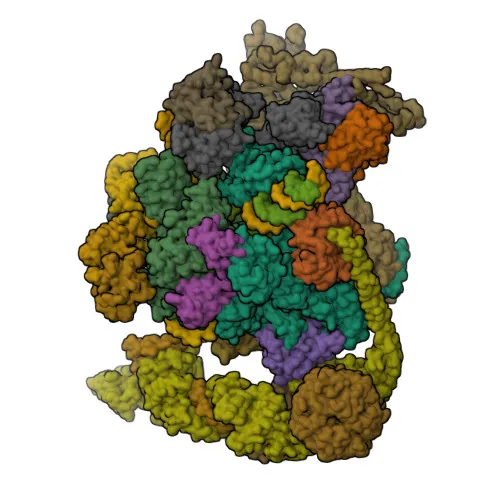
- RTF1 (RNA polymerase-associated protein RTF1 homolog), also known as GTL7 and KIAA0252, is a core component of the PAF1 complex (PAF1C) that regulates RNA polymerase II transcription elongation and chromatin modification.
- PAF1C associates with RNA polymerase II through interaction with the C-terminal domain (CTD) of POLR2A in both non-phosphorylated and phosphorylated forms (Ser-2 and Ser-5), acting independently and synergistically with elongation factors such as TCEA1.
- The complex is essential for transcription of developmental genes, including Hox and Wnt target genes, and plays a role in hematopoiesis and leukemogenesis through association with KMT2A/MLL1-rearranged oncoproteins.
- RTF1 is localized to the nucleoplasm within the nucleus, consistent with its role in transcription regulation.
- PAF1C is involved in histone modifications: it recruits the RNF20/40 E3 ubiquitin ligase and UBE2A/B E2 enzymes to catalyze monoubiquitination of histone H2B at Lys-120 (H2BK120ub1), and is required for trimethylation of histone H3 at Lys-4 (H3K4me3) on stem cell pluripotency genes.
- The protein contains a coiled-coil domain, binds single-stranded DNA, and is regulated by phosphorylation.
- During influenza A H3N2 infection, PAF1C interacts with viral NS1 protein to modulate host gene transcription.
- RTF1 is required for maximal induction of heat-shock genes.
Experimental Guidance and Technical Tips
- The immunogen was a synthetic peptide spanning amino acids 300-400 of human RTF1; consider using this region to verify antibody specificity through peptide blocking experiments.
- For Western blot, human RTF1 has a predicted molecular weight of ~80 kDa; validate with appropriate positive and negative controls (e.g., human and mouse cell lysates) as cross-reactivity with mouse is reported.
- The antibody is suitable for ELISA; optimize coating and detection conditions based on the target's nucleoplasmic localization.
- RTF1 is a phosphoprotein; be mindful that post-translational modifications might affect detection in certain sample preparations; consider phosphatase inhibitors in lysis buffers if needed.
- For enriched signal, nuclear extracts may be beneficial due to the nuclear localization of RTF1.
CamelBio: Your One-Stop Sourcing Bridge
CamelBio partners with leading manufacturers to provide high-quality IVD raw materials, including validated polyclonal antibodies like this anti-RTF1 antibody, for diagnostic and research applications. We offer comprehensive sourcing solutions from antibody pairs and ancillary reagents to rare target materials, supporting your workflow from concept to clinic. For bulk or customized RTF1 reagents, contact our team for tailored supply options.
REQUEST A QUOTE
Our professional team will reply to you within one business day. Please feel free to contact us!