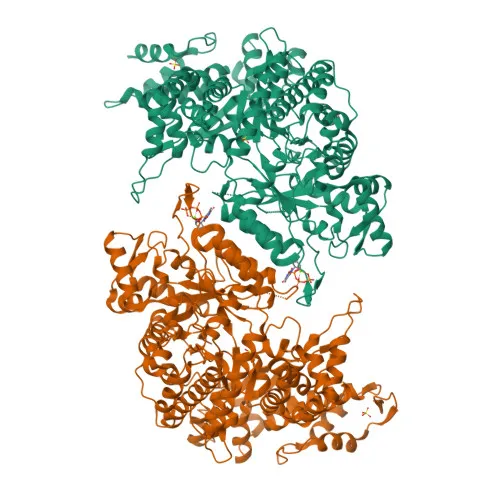
Polyclonal Antibodies
Anti-RRM1 Rabbit Polyclonal Antibody for WB, IF/ICC, IP, ELISA - P23921
Item Number : CM0015499
Price varies based on specs and customizations
- Application
- WB, IF/ICC, IP, ELISA
- Cross Reactivity
- Human, Mouse
- Protein Weight
- 90kDa

Shipping:
Contact us to get shipping details Enjoy On-time Dispatch Guarantee.
Why Choose Us
Easy ordering process, quality products, and dedicated support for your business success.
Core Product Specifications and Parameters
| Parameter | Value |
|---|---|
| Product Name | RRM1 Rabbit pAb |
| Remarks/Alias | R1; RR1; RIR1; RRM1 |
| Species | Human |
| GeneID (human) | 6240 |
| GeneID | 6240 |
| Immunogen | Recombinant protein |
| Source | Rabbit |
| Category | Polyclonal Antibodies |
| Application | WB, IF/ICC, IP, ELISA |
| Cross Reactivity | Human, Mouse |
| SWISS | P23921 |
| Protein Weight | 90kDa |
| Shipping | Ice bag |
Biological Background: RRM1 Function and Localization
- RRM1 is the large subunit of ribonucleotide reductase (RNR), a heterodimeric enzyme critical for de novo synthesis of deoxyribonucleoside diphosphates (dNDPs) from ribonucleoside diphosphates (rNDPs), providing the monomeric precursors required for DNA replication and repair.
- It functions as an allosteric enzyme, with activity regulated by ATP binding and nucleotide substrate specificity controlled by dATP, dGTP, or dTTP binding to the specificity site.
- RRM1 must complex with a small subunit (RRM2 or p53R2) to form the active holoenzyme; the large subunit contributes the catalytic and allosteric regulatory sites.
- Subcellularly, RRM1 is primarily cytoplasmic, where nucleotide metabolism and DNA precursor synthesis occur.
- Post-translational modifications include acetylation and phosphorylation, which may modulate enzyme activity, stability, or protein-protein interactions.
- Mutations in RRM1 are associated with autosomal recessive mitochondrial DNA depletion syndromes, including progressive external ophthalmoplegia, highlighting its essential role in maintaining balanced dNTP pools for mitochondrial DNA synthesis.
- The protein belongs to the ribonucleotide reductase class I family and shares structural homology with bacterial and eukaryotic RNR large subunits.
Experimental Guidance and Technical Tips
- Based on the immunogen (C-terminal region aa 593-792), the antibody is expected to recognize the full-length RRM1 protein (~90kDa) and may detect isoforms or cleavage products; include appropriate molecular weight markers and controls.
- For Western blotting, use optimized loading and transfer conditions for high-molecular-weight targets; consider enhanced chemiluminescence and extended exposure times.
- In immunofluorescence/ICC, expect cytoplasmic localization; fix and permeabilize cells appropriately (e.g., 4% PFA followed by Triton X-100 permeabilization) to ensure antibody access.
- For immunoprecipitation, confirm compatibility with your lysis buffer and elution conditions; run a positive control lysate (e.g., HeLa or HEK293) to verify capture efficiency.
- The antibody shows reactivity with human and mouse; if testing other species, validate cross-reactivity due to potential sequence divergence in the targeted epitope.
CamelBio: Your One-Stop Sourcing Bridge
CamelBio is your one-stop partner for IVD raw-material sourcing, offering a comprehensive portfolio of validated antibodies, recombinant proteins, and ancillary reagents to streamline your diagnostic development from concept to clinic. This anti-RRM1 rabbit polyclonal antibody supports research in nucleotide metabolism, DNA replication fidelity, and mitochondrial disorders. Contact us for custom antibody development, bulk supply, and technical consulting to accelerate your project.
Product Datasheet
Anti-RRM1 Rabbit Polyclonal Antibody for WB, IF/ICC, IP, ELISA - P23921
REQUEST A QUOTE
Our professional team will reply to you within one business day. Please feel free to contact us!