Polyclonal Antibodies
Anti-RRAGA Rabbit Polyclonal Antibody for WB, IF/ICC, ELISA - Q7L523
Item Number : CM0030629
Price varies based on specs and customizations
- Application
- WB, IF/ICC, ELISA
- Cross Reactivity
- Human, Mouse, Rat
- Protein Weight
- 37kDa

Shipping:
Contact us to get shipping details Enjoy On-time Dispatch Guarantee.
Why Choose Us
Easy ordering process, quality products, and dedicated support for your business success.
Core Product Specifications and Parameters
| Parameter | Value |
|---|---|
| Product Name | RRAGA Rabbit pAb |
| Remarks/Alias | FIP1; RAGA; FIP-1; RRAGA |
| Species | Human |
| GeneID (Human) | 10670 |
| GeneID | 10670 |
| Immunogen | A synthetic peptide corresponding to a sequence within amino acids 213-313 of human RRAGA (NP_006561.1) |
| Source | Rabbit |
| Category | Polyclonal Antibodies |
| Application | WB, IF/ICC, ELISA |
| Cross Reactivity | Human, Mouse, Rat |
| SWISS | Q7L523 |
| Protein Weight | 37kDa |
| Shipping | Ice bag |
Biological Background: Ras-related GTP-binding protein A (RRAGA) Function and Localization
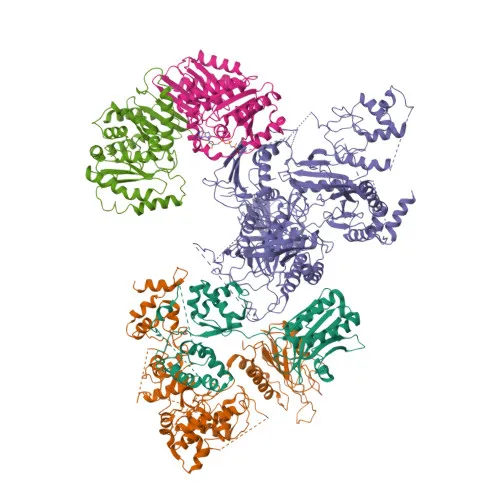
- RRAGA (Ras-related GTP-binding protein A), also known as FIP-1, is a member of the Ras superfamily of small GTPases.
- It plays a central role in amino acid sensing by regulating the mTORC1 signaling pathway, acting as a heterodimer with RagC or RagD, and cycling between active GTP-bound and inactive GDP-bound forms. Related references: PMID:20381137 PMID:24095279 PMID:25936802
- In its GTP-bound active form, RRAGA recruits mTORC1 to the lysosomal membrane, where it is activated by RHEB, thereby coupling nutrient availability to cell growth. Related references: PMID:20381137 PMID:25936802 PMID:31601708
- RRAGA is also involved in the RCC1/Ran-GTPase pathway and may mediate TNF-induced cell death. Related references: PMID:9394008 PMID:8995684
- The protein contains a GTP-binding domain and is annotated as a phosphoprotein and a target for ubiquitin-like conjugation, suggesting regulation by post-translational modifications.
- Subcellularly, RRAGA localizes to the cytoplasm and nucleus, and associates with the lysosome membrane upon activation.
- It is ubiquitously expressed, with highest levels in skeletal muscle, heart, and brain, consistent with its role in nutrient sensing in metabolically active tissues.
- Additionally, RRAGA is implicated in host-virus interactions, serving as a cellular target for adenovirus E3-14.7K, which may affect cell death pathways.
Experimental Guidance and Technical Tips
- For Western blotting, a specific band at approximately 37 kDa is anticipated; consider optimizing blocking conditions and primary antibody dilution to minimize background.
- In immunofluorescence, fixation and permeabilization protocols may need adjustment to preserve lysosomal membrane association and improve detection of the endogenous protein.
- The immunogen corresponds to a C-terminal peptide (aa 213–313), suggesting the antibody may recognize both GDP- and GTP-bound conformations; this can be leveraged in assays monitoring activation state.
- For ELISA, pair with a suitable capture/detection antibody and validate linearity and sensitivity in the relevant sample matrix.
CamelBio: Your One-Stop Sourcing Bridge
CamelBio provides diagnostic manufacturers, labs, and research institutes with one-stop access to IVD raw materials, technical services, and consulting—covering every stage from concept to clinic. For mTOR signaling and amino acid sensing research, we offer validated antibody pairs, optimized monoclonal/polyclonal antibodies, bulk ancillary reagents, and rare target raw-material sourcing. Explore our portfolio to accelerate your assay development.
REQUEST A QUOTE
Our professional team will reply to you within one business day. Please feel free to contact us!