Polyclonal Antibodies
Anti-RPS3 Polyclonal Antibody for WB, IF/ICC, ELISA - P23396
Item Number : CM0017578
Price varies based on specs and customizations
- Application
- WB, IF/ICC, ELISA
- Cross Reactivity
- Human, Mouse, Rat
- Protein Weight
- 27kDa

Shipping:
Contact us to get shipping details Enjoy On-time Dispatch Guarantee.
Why Choose Us
Easy ordering process, quality products, and dedicated support for your business success.
Core Product Specifications and Parameters
| Parameter | Value |
|---|---|
| Product Name | RPS3 Rabbit pAb |
| Remarks/Alias | S3, uS3, RPS3 |
| Species | Human |
| Gene ID (Human) | 6188 |
| Immunogen | Recombinant fusion protein containing a sequence corresponding to amino acids 1-243 of human RPS3 (NP_000996.2) |
| Source | Rabbit |
| Category | Polyclonal Antibodies |
| Application | WB, IF/ICC, ELISA |
| Cross Reactivity | Human, Mouse, Rat |
| SWISS | P23396 |
| Protein Weight | 27kDa |
| Shipping | Ice bag |
Biological Background: RPS3 Function and Localization
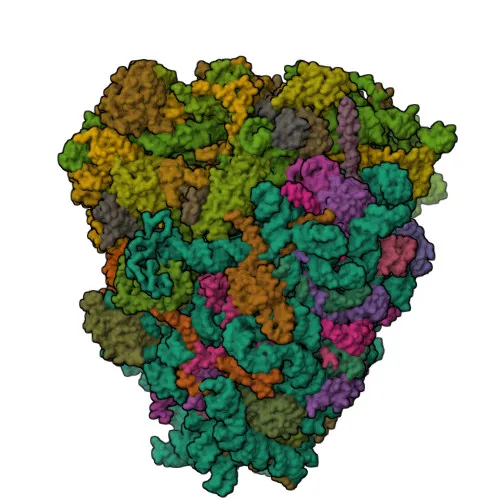
- Component of the small ribosomal subunit, essential for protein synthesis. Related references: PMID:23636399, PMID:8706699
- Possesses endonuclease activity and plays a role in DNA repair, cleaving damaged DNA and showing high affinity for 8-oxoG lesions. Related references: PMID:7775413, PMID:15707971, PMID:14706345, PMID:18610840
- Stimulates base excision repair enzymes OGG1, UNG1, and APEX1, enhancing DNA damage removal. Related references: PMID:15518571, PMID:18973764
- Modulates transcription by binding to RELA/p65 subunit of NF-kappa-B, enhancing DNA binding and target gene expression. Related references: PMID:18045535
- In mitochondria, reduces ROS levels and mitochondrial DNA damage; also negatively regulates DNA repair under oxidative stress. Related references: PMID:23911537, PMID:17049931
- Regulates apoptosis: activates CASP8, induces neuronal apoptosis via E2F1/BIM/HRK, and interacts with TRADD for JNK activation. Related references: PMID:14988002, PMID:20605787, PMID:22510408
- Involved in mitosis and spindle formation by regulating microtubule polymerization. Related references: PMID:23131551
- Subcellular localization includes cytoplasm, nucleus (nucleolus), mitochondrion inner membrane, and the mitotic spindle. Subject to post-translational modifications such as acetylation, methylation, and ubiquitination.
Experimental Guidance and Technical Tips
- The immunogen covers the N-terminal region (aa 1–243) of human RPS3; this sequence is conserved across human, mouse, and rat, supporting the reported cross-reactivity.
- For Western blotting, expect a band around 27 kDa. Be aware that alternative splicing or post-translational modifications may produce additional bands.
- For immunofluorescence/ICC, consider the protein’s multiple subcellular localizations (cytoplasm, nucleus, mitochondria, spindle) and validate staining patterns in your model system.
- As a polyclonal antibody, lot-to-lot consistency should be monitored; it is advisable to include positive and negative controls for each experiment.
CamelBio: Your One-Stop Sourcing Bridge
CamelBio provides diagnostic manufacturers and research labs with one-stop access to IVD raw materials, including validated polyclonal antibodies for ribosomal targets like RPS3. Our portfolio spans antibody pairs, optimized monoclonals/polyclonals, and bulk ancillary reagents—supporting your projects from early development to clinical kit production. Whether you need rare-target sourcing or scalable supply, CamelBio simplifies your raw-material procurement.
REQUEST A QUOTE
Our professional team will reply to you within one business day. Please feel free to contact us!