Polyclonal Antibodies
Anti-RPL5 Polyclonal Antibody for WB, IHC-P, ELISA - P46777
Item Number : CM0020676
Price varies based on specs and customizations
- Application
- WB, IHC-P, ELISA
- Cross Reactivity
- Human, Mouse, Rat
- Protein Weight
- 34kDa

Shipping:
Contact us to get shipping details Enjoy On-time Dispatch Guarantee.
Why Choose Us
Easy ordering process, quality products, and dedicated support for your business success.
Core Product Specifications and Parameters
| Parameter | Value |
|---|---|
| Product Name | RPL5 Rabbit pAb |
| Remarks/Alias | L5; uL18; MSTP030; PPP1R135; RPL5 |
| Species | Human |
| GeneID | 6125 |
| Immunogen | Recombinant fusion protein containing a sequence corresponding to amino acids 1-95 of human RPL5 (NP_000960.2). |
| Source | Rabbit |
| Category | Polyclonal Antibodies |
| Application | WB, IHC-P, ELISA |
| Cross Reactivity | Human, Mouse, Rat |
| SWISS | P46777 |
| Protein Weight | 34kDa |
| Shipping | Ice bag |
Biological Background: RPL5 Function and Localization
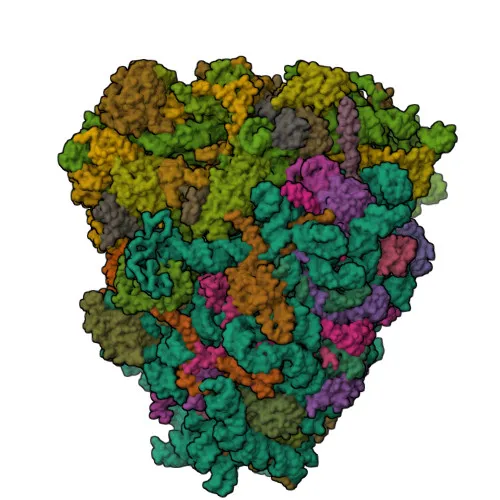
- RPL5 encodes the large ribosomal subunit protein uL18, also known as 60S ribosomal protein L5, a core component of the ribosome responsible for protein synthesis.
- As part of the 5S ribonucleoprotein particle (5S RNP), RPL5 is essential for the formation and maturation of the large ribosomal subunit's rRNAs. Related references: PMID:12962325, PMID:19061985, PMID:23636399
- RPL5 plays a critical role in coupling ribosome biogenesis to p53/TP53 activation; as part of the 5S RNP, it accumulates in the nucleoplasm and inhibits MDM2 when ribosome biogenesis is disrupted, leading to p53 stabilization and activation. Related references: PMID:24120868
- The protein localizes primarily to the cytoplasm and nucleolus, consistent with its ribosomal functions.
- Post-translational modifications include acetylation, phosphorylation, and isopeptide bond formation (Ubl conjugation), which may regulate its activity.
- Mutations in RPL5 are associated with Diamond-Blackfan anemia, highlighting its importance in hematopoiesis.
Experimental Guidance and Technical Tips
- The immunogen corresponds to the N-terminal region (amino acids 1-95) of human RPL5, which may confer specificity for the target.
- For Western blot, consider a starting dilution based on standard polyclonal antibody concentrations and validate in lysates from human, mouse, or rat cells, given the reported cross-reactivity.
- In IHC-P, antigen retrieval and tissue fixation conditions should be optimized, and expression of RPL5 in nucleoli and cytoplasm may serve as staining pattern indicators.
- ELISA performance should be assessed using recombinant RPL5 protein or cell extracts, with appropriate controls.
CamelBio: Your One-Stop Sourcing Bridge
CamelBio provides diagnostic manufacturers, labs, and research institutes with one-stop access to IVD raw materials, technical services, and consulting—covering every stage from concept to clinic. For ribosomal protein targets like RPL5, we offer validated antibody pairs, optimized monoclonal/polyclonal antibodies, bulk ancillary reagents, and rare target raw-material sourcing to support your research and assay development needs.
REQUEST A QUOTE
Our professional team will reply to you within one business day. Please feel free to contact us!