Polyclonal Antibodies
Anti-RPL13 Polyclonal Antibody for WB, IHC-P, IF/ICC, ELISA - P26373
Item Number : CM0026772
Price varies based on specs and customizations
- Application
- WB, IHC-P, IF/ICC, ELISA
- Cross Reactivity
- Human, Mouse, Rat
- Protein Weight
- 24kDa

Shipping:
Contact us to get shipping details Enjoy On-time Dispatch Guarantee.
Why Choose Us
Easy ordering process, quality products, and dedicated support for your business success.
Core Product Specifications and Parameters
| Parameter | Value |
|---|---|
| Product Name | RPL13 Rabbit pAb |
| Remarks/Alias | L13; BBC1; eL13; D16S44E; SEMDIST; D16S444E; RPL13 |
| Species | Human |
| Gene ID (Human) | 6137 |
| Immunogen | Recombinant fusion protein containing a sequence corresponding to amino acids 1-211 of human RPL13 (NP_150254.1). |
| Source | Rabbit |
| Category | Polyclonal Antibodies |
| Application | WB, IHC-P, IF/ICC, ELISA |
| Cross Reactivity | Human, Mouse, Rat |
| SWISS | P26373 |
| Protein Weight | 24kDa |
| Shipping | Ice bag |
Biological Background: RPL13 (60S Ribosomal Protein L13) Function and Localization
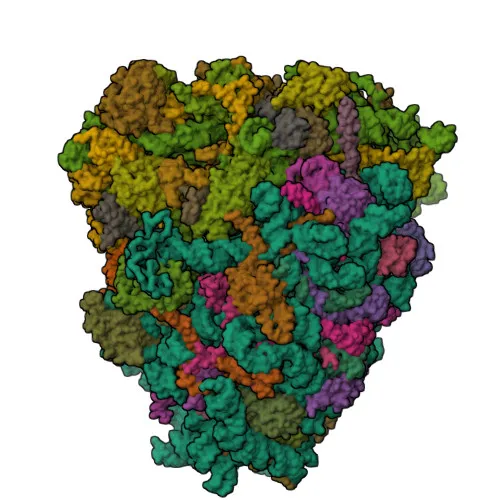
- RPL13, also known as 60S ribosomal protein L13 or Breast basic conserved protein 1 (BBC1), is encoded by the RPL13 gene in humans (GeneID: 6137). It belongs to the universal ribosomal protein eL13 family.
- As a core component of the large ribosomal subunit (LSU), RPL13 is essential for ribosome biogenesis and protein synthesis. It participates in the peptidyl transferase center-mediated formation of peptide bonds during translation elongation (Probable). Related references: PMID:23636399, PMID:31630789, PMID:32669547
- RPL13 also contributes to the maturation of ribosomal RNAs (rRNAs) and the structural integrity of the LSU, ensuring proper ribosome assembly and function (PubMed:31630789). Related references: PMID:31630789
- Beyond its ribosomal role, RPL13 is implicated in bone development, with mutations linked to skeletal dysplasia (PubMed:31630789). Related references: PMID:31630789
- RPL13 is primarily localized in the cytoplasm, consistent with its ribosomal function.
- The protein is subject to post-translational modifications including acetylation, phosphorylation, and ubiquitin-like conjugation, which may regulate its activity or stability.
- Tissue-specific expression analysis indicates higher RPL13 levels in benign breast lesions compared to carcinomas, suggesting a potential role in tumor biology.
Experimental Guidance and Technical Tips
- The immunogen spans the full-length human RPL13 protein (aa 1-211), raising polyclonal antibodies that recognize multiple epitopes. This design may provide robust detection across applications.
- For Western blotting, a band at approximately 24 kDa is expected. Validate in human, mouse, or rat lysates due to known cross-reactivity.
- For immunohistochemistry (IHC-P) and immunofluorescence (IF/ICC), consider antigen retrieval and fixation optimization, as ribosomal proteins may require permeabilization.
- In ELISA, the antibody can be used as capture or detection reagent; however, dilution factors should be empirically determined.
- Cross-reactivity with mouse and rat RPL13 has been reported, but we recommend verifying species-specific reactivity in your experimental system.
CamelBio: Your One-Stop Sourcing Bridge
As a leading IVD raw material supplier, CamelBio offers this high-quality anti-RPL13 polyclonal antibody alongside validated antibody pairs, optimized monoclonal/polyclonal antibodies, and bulk ancillary reagents for your assay development needs. Whether you require rare target sourcing or customized antibody production, our team bridges the gap from concept to clinic, supporting ribosomal protein research and beyond.
REQUEST A QUOTE
Our professional team will reply to you within one business day. Please feel free to contact us!