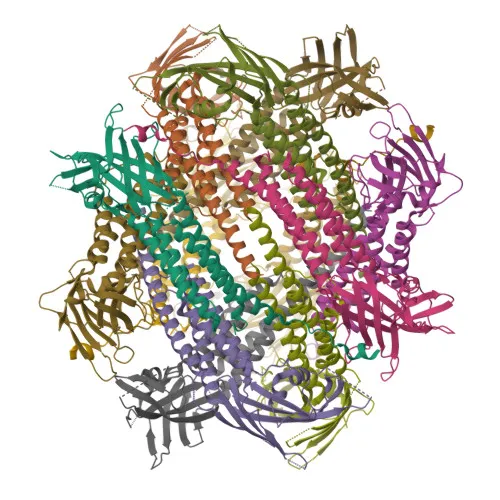
Polyclonal Antibodies
Anti-ROGDI Polyclonal Antibody for WB, ELISA - Q9GZN7
Item Number : CM0025354
Price varies based on specs and customizations
- Application
- WB, ELISA
- Cross Reactivity
- Mouse, Rat
- Protein Weight
- 32kDa

Shipping:
Contact us to get shipping details Enjoy On-time Dispatch Guarantee.
Why Choose Us
Easy ordering process, quality products, and dedicated support for your business success.
Core Product Specifications and Parameters
| Parameter | Value |
|---|---|
| Product Name | ROGDI Rabbit pAb |
| Remarks/Alias | KTZS; RAV2; ROGD1; ROGDI |
| Species | Human |
| Gene ID (Human) | 79641 |
| Gene ID | 79641 |
| Immunogen | Recombinant fusion protein containing a sequence corresponding to amino acids 1-140 of human ROGDI (NP_078865.1) |
| Source | Rabbit |
| Category | Polyclonal Antibodies |
| Application | WB, ELISA |
| Cross Reactivity | Mouse, Rat |
| SWISS | Q9GZN7 |
| Protein Weight | 32kDa |
| Shipping | Ice bag |
Biological Background: ROGDI Function and Localization
- ROGDI (Protein rogdi homolog) is a conserved protein encoded by the ROGDI gene, with orthologs across many species.
- Its exact molecular function remains poorly defined, but it localizes to multiple subcellular compartments, including the nuclear envelope, presynapse, axon, perikaryon, dendrite, and synaptic vesicles.
- Widely expressed in human tissues, with highest expression in the spinal cord, brain, heart, and bone marrow; also detected in fetal brain and liver.
- Post-translational modifications include acetylation, as identified through proteomic analyses.
- Mutations in the ROGDI gene are associated with Kohlschütter-Tönz syndrome (KTZS), a rare disorder featuring epilepsy, intellectual disability, and amelogenesis imperfecta.
- The protein is a component of the nuclear envelope and synaptic vesicles, suggesting potential roles in nuclear-cytoplasmic transport or synaptic function.
- Keywords: 3D-structure, Acetylation, Amelogenesis imperfecta, Cell projection, Cytoplasmic vesicle, Epilepsy, Nucleus, Proteomics identification, Reference proteome, Synapse.
Experimental Guidance and Technical Tips
- For Western blot, consider using protein lysates from human, mouse, or rat brain or spinal cord tissues, where ROGDI expression is high; the predicted molecular weight is ~32 kDa, but confirm actual migration with appropriate controls.
- The immunogen corresponds to the N-terminal region (amino acids 1–140); thus, the antibody may recognize full-length protein as well as potential N-terminal fragments or isoforms.
- Cross-reactivity with mouse and rat indicates epitope conservation, making this antibody suitable for translational studies in rodent models; however, always validate specificity in the model system used (e.g., via knockdown or knockout controls).
- For ELISA applications, consider using recombinant ROGDI protein or cell lysate as coating antigen, and optimize antibody dilution using standard checkerboard titration.
- Note that the antibody is supplied as rabbit polyclonal, which may exhibit lot-to-lot variability; it is advisable to evaluate each new lot for consistent performance.
CamelBio: Your One-Stop Sourcing Bridge
CamelBio serves as a comprehensive partner for IVD raw material procurement, offering a wide range of antibodies, antigens, and ancillary reagents. This anti-ROGDI antibody supports neuroscience and genetic disease research, and can be integrated into larger assay development projects with additional validated materials from our catalog. We also provide customized sourcing for rare targets and bulk supply options to meet diagnostic manufacturing requirements.
REQUEST A QUOTE
Our professional team will reply to you within one business day. Please feel free to contact us!