Polyclonal Antibodies
Anti-RNF31 Polyclonal Antibody for WB, IF, ELISA - Q96EP0
Item Number : CM0016423
Price varies based on specs and customizations
- Application
- WB, IF-P, ELISA
- Cross Reactivity
- Human, Mouse
- Protein Weight
- 120kDa

Shipping:
Contact us to get shipping details Enjoy On-time Dispatch Guarantee.
Why Choose Us
Easy ordering process, quality products, and dedicated support for your business success.
Core Product Specifications and Parameters
| Parameter | Value |
|---|---|
| Product Name | RNF31 Rabbit pAb |
| Remarks/Alias | HOIP; Paul; ZIBRA; RNF31 |
| Species | Human |
| GeneID (Human) | 55072 |
| GeneID | 55072 |
| Immunogen | Recombinant fusion protein containing a sequence corresponding to amino acids 500-700 of human RNF31 (NP_060469.4) |
| Source | Rabbit |
| Category | Polyclonal Antibodies |
| Application | WB, IF-P, ELISA |
| Cross Reactivity | Human, Mouse |
| SWISS | Q96EP0 |
| Protein Weight | 120kDa |
| Shipping | Ice bag |
Biological Background: RNF31 Function and Localization
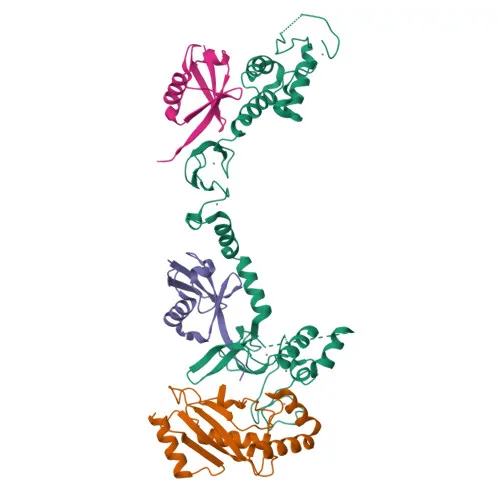
- RNF31 (HOIP) is the catalytic component of the linear ubiquitin chain assembly complex (LUBAC), which generates Met1-linked (linear) polyubiquitin chains.
- LUBAC conjugates linear polyubiquitin to substrates like IKBKG (NEMO) and RIPK1, essential for canonical NF-κB and JNK signaling pathway activation. Related references: PMID:17006537, PMID:19136968, PMID:20005846
- Linear ubiquitination by LUBAC prevents TNF-induced cell death and inflammation, highlighting its anti-apoptotic and anti-inflammatory roles. Related references: PMID:21455173, PMID:28189684
- RNF31 is recruited to the TNF receptor signaling complex via polyubiquitin scaffolds formed by BIRC2/3, where it linearly ubiquitinates components to stabilize the complex. Related references: PMID:20005846, PMID:27458237
- In innate immunity, RNF31 and LUBAC conjugate linear polyubiquitin chains onto cytosolic bacteria, forming an 'eat-me' signal for xenophagy and promoting NF-κB activation. Related references: PMID:28481331, PMID:34012115
- RNF31 also linear ubiquitinates BCL10 to enhance TCR-induced NF-κB signaling and participates in Wnt pathway regulation during angiogenesis. Related references: PMID:27777308, PMID:23708998
- Predominantly localized to the cytoplasm, consistent with its role in cytosolic signaling complexes and bacterial coat formation.
- Expressed in both normal and transformed breast epithelial cell lines, with post-translational modifications including phosphorylation and zinc-binding domains.
Experimental Guidance and Technical Tips
- The immunogen spans residues 500-700, a region predicted to be surface-accessible and specific to RNF31, reducing cross-reactivity with other RING finger proteins.
- For Western blotting, expect a band near 120 kDa; optimize loading and transfer conditions for large proteins.
- In immunofluorescence (IF-P), nuclear and cytoplasmic staining may be observed depending on cell type and activation state; include appropriate controls.
- For ELISA, consider using the antibody as capture or detection reagent after confirming reactivity with native and recombinant RNF31.
- Cross-reactivity with mouse RNF31 is reported, but validate in your experimental system due to potential species-specific differences.
CamelBio: Your One-Stop Sourcing Bridge
CamelBio supports diagnostic manufacturers and research laboratories with comprehensive access to IVD raw materials, including validated antibody pairs, optimized monoclonal/polyclonal antibodies, and bulk ancillary reagents. For studies on ubiquitin signaling and NF-κB pathways, we offer this RNF31 polyclonal antibody as a reliable detection tool. If your project requires customized antibody formats, rare target material sourcing, or scale-up support, our technical team is ready to assist from concept to clinic.
REQUEST A QUOTE
Our professional team will reply to you within one business day. Please feel free to contact us!