Polyclonal Antibodies
Anti-RIPK1/RIP Rabbit Polyclonal Antibody for WB, IHC-P, IF/ICC, IP, ELISA - Q13546
Item Number : CM0030178
Price varies based on specs and customizations
- Application
- WB, IHC-P, IF/ICC, IP, ELISA
- Cross Reactivity
- Human, Mouse, Rat
- Protein Weight
- 76kDa

Shipping:
Contact us to get shipping details Enjoy On-time Dispatch Guarantee.
Why Choose Us
Easy ordering process, quality products, and dedicated support for your business success.
Core Product Specifications and Parameters
| Parameter | Value |
|---|---|
| Product Name | RIPK1/RIP Rabbit pAb |
| Remarks/Alias | RIP; RIP1; AIEFL; IMD57; RIP-1; RIPK1/RIP |
| Species | Human |
| GeneID (human) | 8737 |
| GeneID | 8737 |
| Immunogen | Synthetic peptide corresponding to a sequence within amino acids 100-200 of human RIPK1/RIP (NP_003795.2) |
| Source | Rabbit |
| Category | Polyclonal Antibodies |
| Application | WB, IHC-P, IF/ICC, IP, ELISA |
| Cross Reactivity | Human, Mouse, Rat |
| SWISS | Q13546 |
| Protein Weight | 76kDa |
| Shipping | Ice bag |
Biological Background: RIPK1/RIP Function and Localization
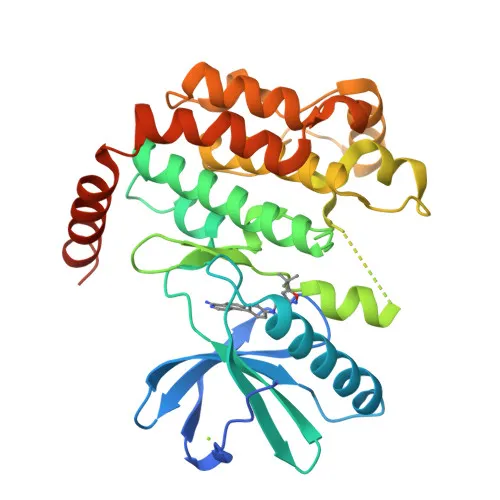
- RIPK1 (Receptor-interacting serine/threonine-protein kinase 1) is a key regulator of tumor necrosis factor (TNF)-mediated apoptosis, necroptosis, and inflammatory pathways. Related references: PMID:17703191 PMID:24144979 PMID:31827280
- It exhibits kinase activity-dependent functions that regulate cell death and kinase-independent scaffold functions that promote cell survival via canonical NF-kappa-B activation. Related references: PMID:11101870 PMID:19524512 PMID:19524513
- Upon activation, RIPK1 regulates assembly of death-inducing complexes: complex IIa (RIPK1-FADD-CASP8) driving apoptosis, and complex IIb (RIPK1-RIPK3-MLKL) driving necroptosis.
- RIPK1 inhibits RIPK3-mediated necroptosis by recruiting FADD and CASP8, which cleaves RIPK1 to limit TNF-induced necroptosis. Related references: PMID:19524512 PMID:19524513 PMID:29440439
- RIPK1 promotes transcriptional production of pro-inflammatory cytokines, such as interleukin-6 (IL6). Related references: PMID:31827280 PMID:31827281
- Localizes to the cytoplasm and cell membrane; genetic variants are associated with autoinflammatory and immunodeficiency disorders (IMD57).
Experimental Guidance and Technical Tips
- For Western blot (WB), expect a predominant band near 76 kDa; validate specificity in positive control lysates from human, mouse, or rat cells.
- For immunohistochemistry (IHC-P), optimize antigen retrieval conditions; test on relevant tissue sections such as lymphoid organs or tumor biopsies where RIPK1 expression is expected.
- For immunofluorescence (IF/ICC), consider appropriate fixation and permeabilization protocols to preserve cytoplasmic and membrane localization; include isotype controls.
- For immunoprecipitation (IP), use gentle lysis buffers to maintain protein interactions; verify enrichment by immunoblotting.
- As a polyclonal antibody, confirm lot-to-lot consistency by parallel testing; titrate antibody concentration for each application.
- The immunogen covers amino acids 100–200; note that alternative splice isoforms may vary in this region; confirm epitope availability in your system of interest.
- Cross-reactivity across human, mouse, and rat allows multispecies studies; validate performance in each species' specific sample context.
CamelBio: Your One-Stop Sourcing Bridge
CamelBio supports diagnostic manufacturers and research teams by providing validated IVD raw materials with reliable supply chains. For RIPK1-focused apoptosis, necroptosis, and inflammation research, we offer optimized antibody pairs, monoclonal and polyclonal bulk reagents, and ancillary biochemicals. Our portfolio extends to rare-target sourcing, ensuring you can advance from concept to clinic with confidence.
Product Datasheet
Anti-RIPK1/RIP Rabbit Polyclonal Antibody for WB, IHC-P, IF/ICC, IP, ELISA - Q13546
REQUEST A QUOTE
Our professional team will reply to you within one business day. Please feel free to contact us!