Polyclonal Antibodies
Anti-Rhodopsin Rabbit Polyclonal Antibody for WB, IHC-P, ELISA - P08100
Item Number : CM0019980
Price varies based on specs and customizations
- Application
- WB, IHC-P, ELISA
- Cross Reactivity
- Mouse, Rat
- Protein Weight
- 39kDa

Shipping:
Contact us to get shipping details Enjoy On-time Dispatch Guarantee.
Why Choose Us
Easy ordering process, quality products, and dedicated support for your business success.
Core Product Specifications and Parameters
| Parameter | Value |
|---|---|
| Product Name | Rhodopsin Rabbit pAb |
| Remarks/Alias | RP4; OPN2; CSNBAD1; Rhodopsin |
| Species | Human |
| GeneID (Human) | 6010 |
| GeneID | 6010 |
| Immunogen | Synthetic Peptide: A synthetic peptide corresponding to a sequence within amino acids 200 to the C-terminus of human Rhodopsin (NP_000530.1) |
| Source | Rabbit |
| Category | Polyclonal Antibodies |
| Application | WB, IHC-P, ELISA |
| Cross Reactivity | Mouse, Rat |
| SWISS | P08100 |
| Protein Weight | 39kDa |
| Shipping | Ice bag |
Biological Background: Rhodopsin Function and Localization
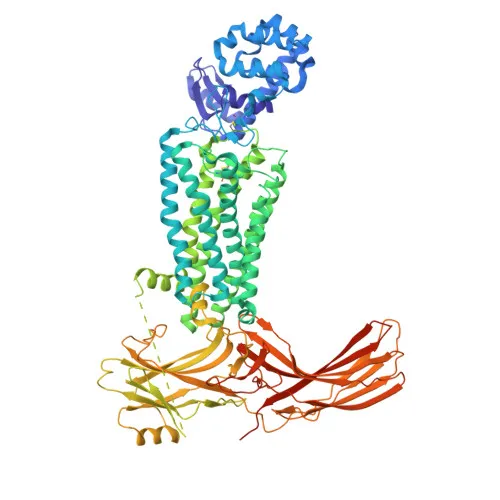
- Rhodopsin (also known as Opsin-2) is a G protein-coupled photoreceptor protein encoded by the RHO gene in humans, essential for vision under low-light conditions.
- It functions by activating the G protein transducin (Gt) signaling cascade upon photon absorption by its covalently attached 11-cis-retinal chromophore, which isomerizes to all-trans-retinal, inducing a conformational change that triggers phototransduction. Related references: PMID:6140680 PMID:7846071 PMID:8107847
- This receptor is required for postnatal photoreceptor cell viability and is critical for the formation of rod outer segments. Related references: PMID:12566452 PMID:2215617
- Signal termination occurs through receptor phosphorylation, which promotes binding of arrestin (SAG) and displacement of the G protein alpha subunit. Related references: PMID:26200343
- Rhodopsin is localized exclusively to the membrane of photoreceptor outer segments, where it constitutes the major protein component of rod cell discs.
- The protein undergoes several post-translational modifications including acetylation, palmitoylation, phosphorylation, and glycosylation, and contains an essential disulfide bond; it binds the chromophore retinal and a zinc ion.
- It is specifically expressed in rod-shaped photoreceptor cells, which mediate scotopic (dim light) vision.
- Mutations in RHO are associated with retinal diseases such as retinitis pigmentosa and congenital stationary night blindness.
Experimental Guidance and Technical Tips
- The immunogen is a synthetic peptide corresponding to the C-terminal region (amino acids 200–348) of human Rhodopsin (NP_000530.1). This region is relatively conserved, which may contribute to the reported cross-reactivity with mouse and rat.
- For Western blotting, the predicted molecular weight of unmodified human Rhodopsin is approximately 39 kDa; however, glycosylation and other modifications may cause band shifts. Include appropriate positive controls (e.g., retinal tissue lysate) and consider the membrane protein nature of the target.
- For immunohistochemistry (paraffin), antigen retrieval conditions should be optimized for retinal sections; signal is expected in photoreceptor outer segments. Endogenous peroxidase blocking and appropriate tissue fixation are recommended.
- ELISA applications may require peptide competition assays to confirm specificity; consider coating with immunogen peptide or recombinant protein.
- As with any polyclonal antibody, lot-to-lot variability is possible; validate new lots in the relevant sample system before large-scale use.
CamelBio: Your One-Stop Sourcing Bridge
CamelBio provides diagnostic manufacturers and research institutes with a one-stop sourcing solution for IVD raw materials, covering the entire development chain from concept to clinic. This anti-Rhodopsin polyclonal antibody supports projects in ophthalmology and G protein-coupled receptor research, and we can assist in sourcing validated antibody pairs, optimized monoclonal/polyclonal antibodies, bulk ancillary reagents, and rare target raw materials to accelerate your assay development. Whether you need consistent supply, technical consulting, or customized raw-material solutions, CamelBio is your reliable B2B partner.
Product Datasheet
Anti-Rhodopsin Rabbit Polyclonal Antibody for WB, IHC-P, ELISA - P08100
REQUEST A QUOTE
Our professional team will reply to you within one business day. Please feel free to contact us!