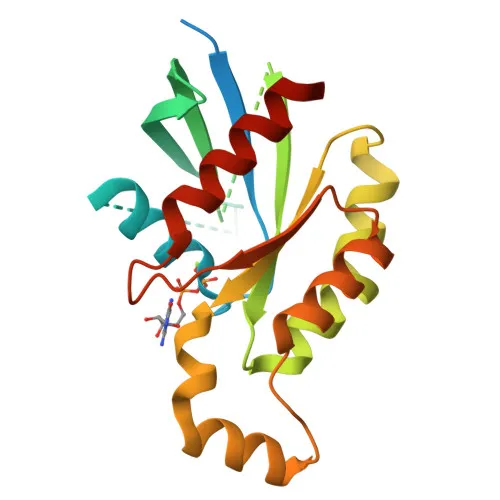
Polyclonal Antibodies
Anti-RHOD Polyclonal Antibody for WB, IHC-P, IF/ICC, ELISA - O00212
Item Number : CM0028433
Price varies based on specs and customizations
- Application
- WB, IHC-P, IF/ICC, ELISA
- Cross Reactivity
- Human, Mouse, Rat
- Protein Weight
- 23kDa

Shipping:
Contact us to get shipping details Enjoy On-time Dispatch Guarantee.
Why Choose Us
Easy ordering process, quality products, and dedicated support for your business success.
Core Product Specifications and Parameters
| Parameter | Value |
|---|---|
| Product Name | RHOD Rabbit pAb |
| Remarks/Alias | Rho; ARHD; RHOM; RHOHP1; RHOD |
| Species | Human |
| GeneID (human) | 29984 |
| GeneID | 29984 |
| Immunogen | Synthetic peptide corresponding to a sequence within amino acids 101-200 of human RHOD (NP_055393.1) |
| Source | Rabbit |
| Category | Polyclonal Antibodies |
| Application | WB, IHC-P, IF/ICC, ELISA |
| Cross Reactivity | Human, Mouse, Rat |
| SWISS | O00212 |
| Protein Weight | 23kDa |
| Shipping | Ice bag |
Biological Background: RHOD Function and Localization
- Rho-related GTP-binding protein RhoD (also known as RhoHP1) is a member of the Rho family of small GTPases, serving as a molecular switch in signal transduction cascades.
- RHOD is involved in endosome dynamics and coordinates membrane transport with cytoskeletal function, facilitating the internalization and trafficking of activated tyrosine kinase receptors such as PDGFRB.
- Through interaction with WHAMM, RHOD regulates reorganization of the actin cytoskeleton, promoting filopodia formation and actin filament bundling.
- RHOD can modulate the effect of DAPK3 in actin cytoskeleton reorganization and focal adhesion dissolution, influencing cell adhesion and motility.
- The protein localizes predominantly to the cell membrane and early endosomes, consistent with its role in endosomal trafficking and membrane-cytoskeleton coupling.
- Tissue expression is highest in heart, placenta, liver, skeletal muscle, and pancreas, with weaker expression in several other tissues.
- Key structural and functional features include GTP binding, prenylation, and association with cellular membranes, as reflected by keywords such as hydrolase, lipoprotein, and nucleotide-binding.
Experimental Guidance and Technical Tips
- The immunogen corresponds to amino acids 101–200 of human RHOD (NP_055393.1). Consider verifying antibody specificity against the target protein in relevant cell or tissue lysates.
- For Western blotting, RHOD migrates at approximately 23 kDa. Use positive control lysates from heart, liver, or skeletal muscle tissues known to express RHOD.
- In IHC-P and IF/ICC, staining is expected at the cell membrane and early endosomal compartments; validate localization patterns in your model system.
- For ELISA, the synthetic peptide immunogen can serve as a positive control to confirm antibody reactivity.
CamelBio: Your One-Stop Sourcing Bridge
CamelBio offers a comprehensive, one-stop sourcing solution for IVD raw materials, supporting diagnostic manufacturers and researchers from concept to clinic. This anti-RHOD polyclonal antibody aids in studies of Rho GTPase signaling, membrane trafficking, and cytoskeletal dynamics. We provide validated antibody pairs, optimized monoclonal and polyclonal antibodies, bulk ancillary reagents, and rare target raw-material sourcing to meet your development needs.
REQUEST A QUOTE
Our professional team will reply to you within one business day. Please feel free to contact us!
Related Articles
ROX in qPCR: The Quiet Reference That Makes Diagnostic Signals Trustworthy
Learn how ROX normalizes qPCR fluorescence, stabilizes Ct calls, and shapes the trade-off between instrument compatibility and multiplexing.
ROX in Real-Time PCR: The Optical Trade-Off Behind Precision and Multiplexing
Understand how ROX normalization corrects qPCR signal variation, how optics consume channels, and how to choose the right master mix.
From Fluorescence to Diagnostic Truth: Choosing Passive Reference Dyes for qPCR Master Mixes
Learn how passive reference dyes stabilize qPCR signals, improve diagnostic reproducibility, and guide ROX formulation across instrument platforms.
ROX, Optical Architecture, and the Hidden Ceiling of Multiplex qPCR
How instrument optics determine ROX requirements, consume detection channels, and shape multiplex qPCR design, reagent logistics, and kit strategy.
The Silent Correction Behind Reliable qPCR: Passive Reference Dyes, Rn, and Assay Design
Learn how passive reference dyes normalize qPCR noise, how Rn is calculated, and when ROX affects compatibility, accuracy, and multiplexing.