Polyclonal Antibodies
Anti-RGS7 Polyclonal Antibody for WB and ELISA - P49802
Item Number : CM0025518
Price varies based on specs and customizations
- Application
- WB, ELISA
- Cross Reactivity
- Human, Mouse, Rat
- Protein Weight
- 58kDa

Shipping:
Contact us to get shipping details Enjoy On-time Dispatch Guarantee.
Why Choose Us
Easy ordering process, quality products, and dedicated support for your business success.
Core Product Specifications and Parameters
| Parameter | Value |
|---|---|
| Product Name | RGS7 Rabbit pAb |
| Remarks/Alias | RGS7 |
| Species | Human |
| GeneID (human) | 6000 |
| GeneID | 6000 |
| Immunogen | Recombinant protein |
| Source | Rabbit |
| Category | Polyclonal Antibodies |
| Application | WB, ELISA |
| Cross Reactivity | Human, Mouse, Rat |
| SWISS | P49802 |
| Protein Weight | 58kDa |
| Shipping | Ice bag |
Biological Background: RGS7 Function and Localization
-
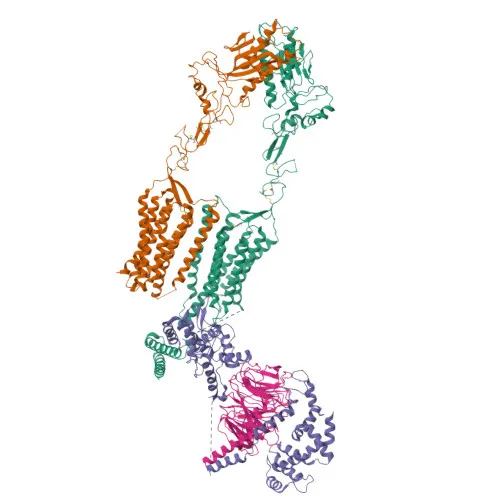
RGS7 acts as a GTPase-activating protein (GAP) component of the RGS7-GNB5 complex, accelerating GTP hydrolysis on G protein alpha subunits such as GNAO1 to terminate GPCR signaling. Related references: PMID:10521509 PMID:10862767
-
The RGS7-GNB5 complex inhibits signal transduction by promoting the inactive GDP-bound state of G protein alpha subunits, thereby regulating downstream effector pathways. Related references: PMID:10521509 PMID:10862767 PMID:31189666
-
Modulates the activity of potassium channels activated by GNAO1 in response to muscarinic acetylcholine receptor M2/CHRM2 signaling, influencing neuronal excitability. Related references: PMID:15897264
-
May play a role in synaptic vesicle exocytosis, potentially through its GTPase-regulating function (Probable). Related references: PMID:12659861
-
Localizes to the cytoplasm, cytosol, and cell membrane, consistent with its role in membrane-proximal signaling events.
-
Post-translational modifications include palmitoylation and phosphorylation, and alternative splicing generates multiple isoforms, contributing to functional diversity.
Experimental Guidance and Technical Tips
- For Western blot analysis, consider using whole-cell lysates from human, mouse, or rat tissues and validate the detection of a band near 58 kDa corresponding to RGS7.
- The immunogen spans residues 1-300 (N-terminal region); for experiments targeting C-terminal regions or specific isoforms, verify sequence coverage.
- For ELISA, titrate the antibody to determine optimal coating or detection concentrations, and include appropriate negative controls to confirm specificity.
- Due to the polyclonal nature, each new lot should be validated for consistency in your specific assay conditions.
- Cross-reactivity with other RGS family members has not been tested; validate specificity using recombinant proteins or knockout controls if required.
CamelBio: Your One-Stop Sourcing Bridge
CamelBio provides diagnostic manufacturers and research laboratories with a one-stop sourcing solution for IVD raw materials, including validated antibody pairs, optimized polyclonal and monoclonal antibodies, and ancillary reagents. This anti-RGS7 polyclonal antibody supports studies in GPCR signaling and neurological research, and we can assist with bulk procurement, rare-target sourcing, and custom development. We simplify the journey from concept to clinic, ensuring reliable supply for your diagnostic and research applications.
REQUEST A QUOTE
Our professional team will reply to you within one business day. Please feel free to contact us!